The rupiah weakened back through the 18,000 per dollar level on Friday as investors reacted to a Morgan Stanley Capital International proposal that could downgrade Indonesia’s equity market status, raising concerns about foreign portfolio flows and market liquidity.
Indonesia rupiah slips on MSCI downgrade proposal
The currency closed at 18,027 per dollar, down 89 rupiah or 0.50%, according to Bloomberg data, after touching the psychologically important 18,000 mark. On a weekly basis, the rupiah lost 0.71%, while the Bank Indonesia Jisdor reference rate fell 0.58% on the day to 18,052 and was down 0.94% for the week.
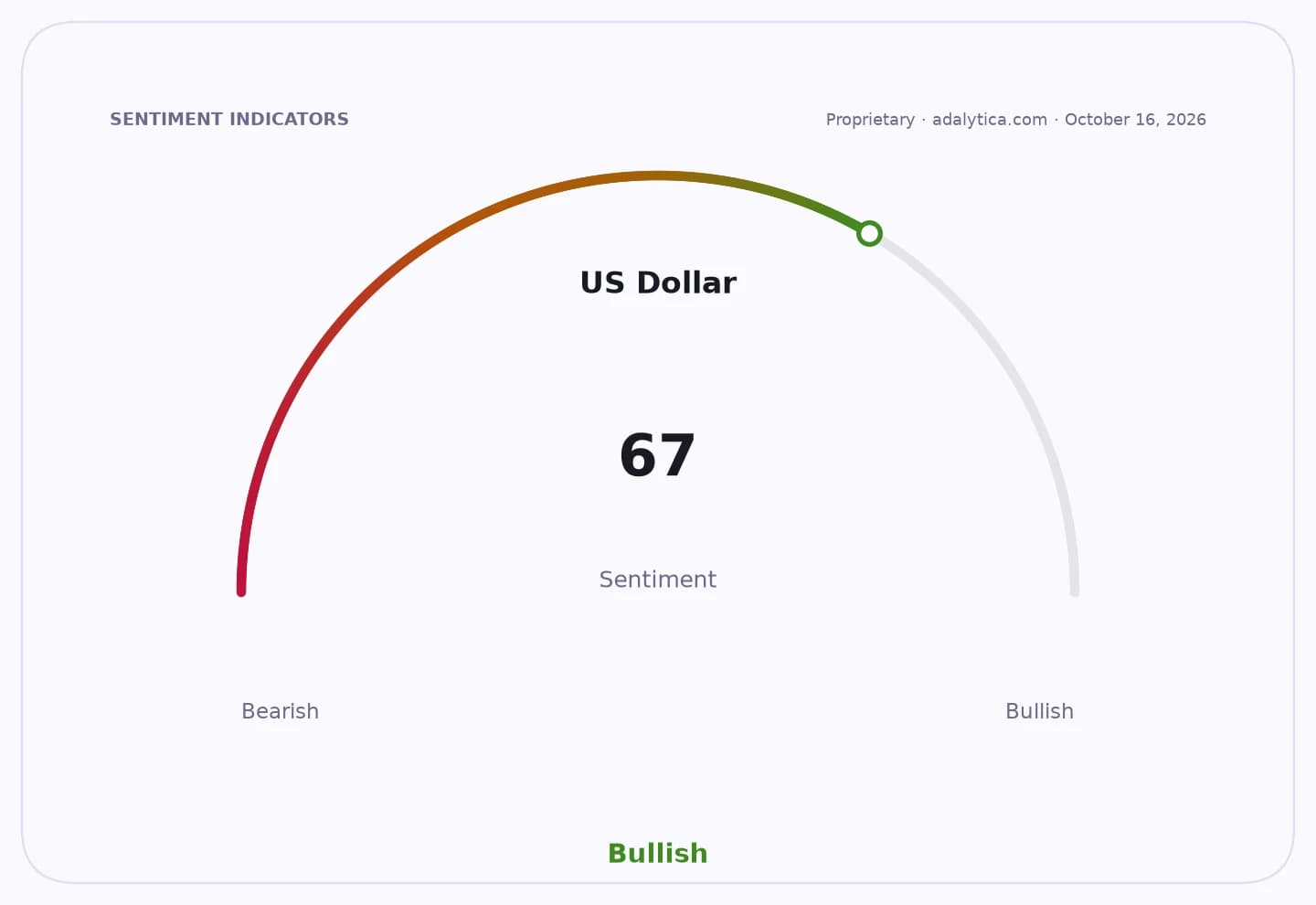
Sentiment IndicatorsⓘProprietary · adalytica.com · October 20, 2026
This is a snapshot — live sentiment, awareness and momentum for 130+ markets update continuously in the dashboard.Open AlphaPulse
The immediate market risk is not just a weaker currency, but the possibility that Indonesia could be pushed out of the emerging-market universe and into standalone status if MSCI follows through. That would likely reduce the country’s weighting in global benchmark portfolios, potentially forcing passive funds to cut exposure and making it harder and more expensive for domestic assets to attract fresh foreign money.
The selloff also fed through to Indonesian equities and exchange-traded products. The iShares MSCI Indonesia ETF fell to $10.30 on Tuesday from $11.89 a week earlier, while technical readings show the fund still trading below its 50-day and 200-day moving averages, a sign the market remains under pressure despite a modest rebound. The Jakarta Composite Index also slipped to 9.28 from 11.42 in late August, underscoring how quickly investor sentiment has turned.
Analyst Ibrahim Assuaibi said the MSCI proposal reflects concerns over market governance and alleged coordinated trading on the local bourse. He said the final decision on Indonesia’s classification is not due until June 30, 2027, leaving a long period in which headlines around market integrity could continue to weigh on the rupiah and local assets.
Bank Indonesia and the Financial Services Authority have been signaling tighter oversight and continued market repairs to preserve Indonesia’s appeal to investors. For traders, the next key risks are further MSCI developments, central bank intervention and any new pressure from the stronger US dollar, with the 18,000 level now acting as a near-term line in the sand for the rupiah.
| Entity | Gains | Losses |
|---|---|---|
| Bank Indonesia | ▲Stability role | ▼FX intervention burden |
| MSCI | ▲Benchmark influence | ▼Criticism over impact |
| Foreign investors | ▲Potential governance clarity | ▼Exposure to de-rating risk |
| Indonesian equities | ▲None immediate | ▼Outflows, lower index weighting |