Soybean prices in Indonesia have climbed to about Rp 11,600 a kilogram, squeezing tofu and tempe producers, but the government is signaling it will not rush into broad intervention unless prices move above its formal threshold.
Indonesia Soybean Prices Near Rp 12,000 Intervention Level
That stance matters because soybeans are a politically sensitive staple for millions of small food businesses and a key input for affordable protein. Letting prices stay elevated without automatic subsidies shifts more of the burden onto processors and consumers, while also testing Jakarta’s effort to balance food inflation, fiscal discipline and support for domestic farmers.
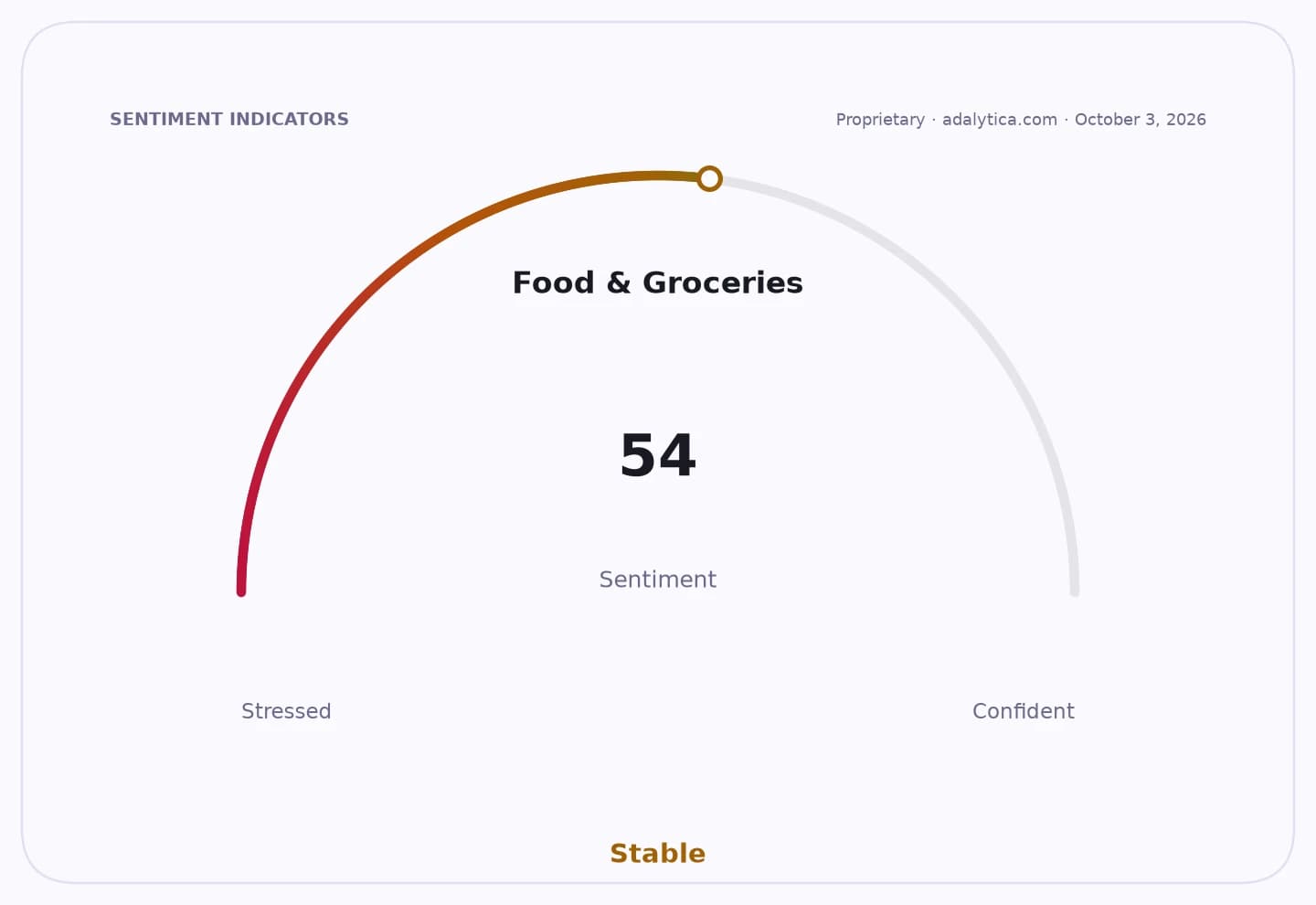
Sentiment IndicatorsⓘProprietary · adalytica.com · October 3, 2026
This is a snapshot — live sentiment, awareness and momentum for 130+ markets update continuously in the dashboard.Open AlphaPulse
The Ministry of Agriculture said the rally reflects a structural supply gap, with domestic production still too small to meet demand. Plt Director General of Food Crops Gunawan said local output shortages are one reason prices remain high. To lift supply, the ministry is providing seed assistance for 50,000 hectares this year, with expected output of about 50,000 tons, or more than 75,000 tons if fertilizer and pesticide support are added.
For traders and food makers, the key issue is not just the current price level but the government’s intervention rule. The National Food Agency said its soybean price-stabilization program is not an automatic subsidy. For tofu and tempe producers, the reference price for imported soybeans is Rp 12,000/kg, and the program is triggered only when prices rise above that level. At present, the average price in Java — a major hub for tofu and tempe makers — is about Rp 11,623/kg, still below the imported-soybean benchmark. In eastern Indonesia, however, prices average around Rp 12,097/kg, already above the threshold.
That split explains why the government is avoiding a blanket response. A broad subsidy would likely be costly and could distort incentives just as officials are trying to expand domestic planting. Instead, the plan is to keep intervention targeted and measured, with stronger rules for 2026 that would use a decree from the Ministry of Cooperatives to formalize assignments to state logistics firm Bulog.
The policy stance also highlights the wider tension in Indonesia’s food market: high consumer prices versus the need to preserve margins for farmers and small processors. If authorities lean too heavily on imports or subsidies, they may cap prices but weaken the economics of local production. If they wait too long, tofu and tempe producers face higher costs, and food inflation could spread through a low-income diet staple.
For investors, the story is a reminder that Indonesian food policy remains highly managed, but not fully automatic. That reduces the chance of abrupt state intervention, yet keeps the door open if prices break above Rp 12,000/kg or regional shortages worsen. The next catalyst will be whether the harvest support program delivers enough supply relief before price pressure becomes a broader inflation problem.
| Entity | Gains | Losses |
|---|---|---|
| Soybean farmers | ▲Higher farm-gate prices | ▼Input-cost pressures remain |
| Tofu and tempe producers | ▲Targeted relief if triggered | ▼Margin squeeze from pricey beans |
| Indonesian consumers | ▲Stable prices if intervention works | ▼Higher protein-food costs |
| Government / Bapanas | ▲Fiscal restraint, policy flexibility | ▼Political pressure if prices rise |