Being listed in Mexico’s credit bureau no longer automatically reduces the size of an Infonavit mortgage, a shift that widens access to housing finance for workers even if they have had past delinquencies or active debt.
Infonavit eases bureau-based mortgage cuts in Mexico
The change matters because Infonavit is one of the country’s most important mortgage lenders, and its rules influence how quickly formal housing credit reaches workers across the income spectrum. From 2025, the institute says a borrower who authorizes the bureau check can receive up to 100% of the maximum loan amount available to them, regardless of the score shown in the credit file. In practical terms, a negative mark, a late payment on a credit card or simply appearing in the bureau is no longer enough on its own to shrink the financing ceiling.
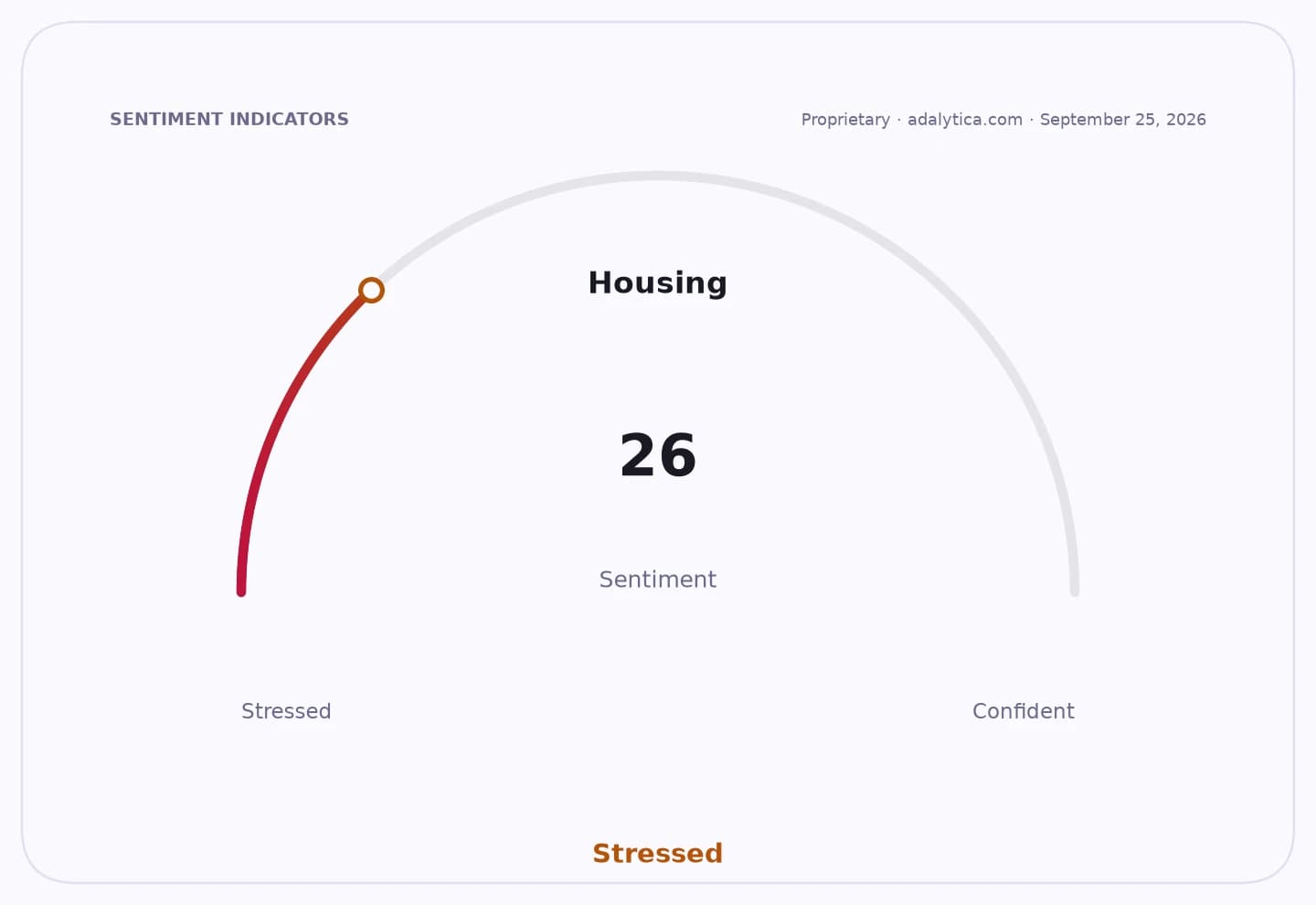
Sentiment IndicatorsⓘProprietary · adalytica.com · September 7, 2026
This is a snapshot — live sentiment, awareness and momentum for 130+ markets update continuously in the dashboard.Open AlphaPulse
For households, that is a meaningful easing of a longstanding constraint. In a market where affordability is already tight and monthly budgets are under pressure, the ability to preserve the full loan amount can determine whether a worker can buy a home at all, or only a smaller one farther from employment centers. The policy also aligns with a broader credit environment in which debt stress remains elevated even as consumer borrowing behavior continues to normalize in some segments. Adalytica’s credit card usage sentiment is in “Extreme Greed,” while household debt stress reads “Neutral,” suggesting consumers remain active but financially stretched.
Infonavit’s position also separates credit access from credit history quality. The institute still requests authorization to review the bureau during the application process, but says the information is no longer used to reduce the amount it can lend. Only specific cases — such as records tied to death, fraud or extreme over-indebtedness — can trigger a clarification process with the bureau before the application proceeds. That narrows the conditions under which bureau data can interfere with the mortgage application and shifts the emphasis toward income, employment, savings in the housing subaccount, age and contribution history.
That is significant for investors and lenders because it points to a more permissive mortgage origination framework at a time when credit markets are under scrutiny. Banks have been moving more carefully on lending, and consumer credit quality has become a bigger policy issue. If Infonavit keeps opening the door to borrowers with imperfect bureau records, it could support housing demand and transaction volumes, but it also raises questions about repayment resilience if borrowers are already carrying other obligations. The institute is effectively betting that mortgage underwriting based on labor status and housing savings is a better filter than a blunt bureau score.
For the housing market, the near-term winners are workers seeking formal financing and developers of lower- and middle-income housing, who may see a broader pool of eligible buyers. The losers are borrowers who assume a bureau blemish bars them from approval, and potentially lenders that remain more conservative on consumer credit. The key issue going forward is not whether bureau data is checked — it still is — but whether Mexico’s main social housing lender is signaling a more inclusive credit model that prioritizes repayment capacity over credit stigma.
| Entity | Gains | Losses |
|---|---|---|
| Infonavit borrowers | ▲Full loan amount access | ▼Bureau-score penalties |
| Homebuyers with past delinquencies | ▲Higher approval chances | ▼Automatic exclusion fears |
| Housing developers | ▲Larger pool of buyers | ▼Tighter-risk screening |
| Conservative lenders | ▲None | ▼More competition for borrowers |