Iraq’s Development Road project is being pitched as a way to build major transport infrastructure without saddling Baghdad with new borrowing, a financing model that could ease pressure on a country still vulnerable to debt stress and oil-price swings.
Iraq Development Road Uses Oil Revenue Funding
Officials and experts said at a SETA panel in Ankara that the project’s funding structure would route oil revenues into a dedicated fund, which would then pay for rail and highway construction. Burak Aykan, a senior official at Turkey’s transport ministry, said Iraq would not incur borrowing costs or interest expenses under the mechanism, and that direct Turkish government involvement should also lower financing costs for contractors.
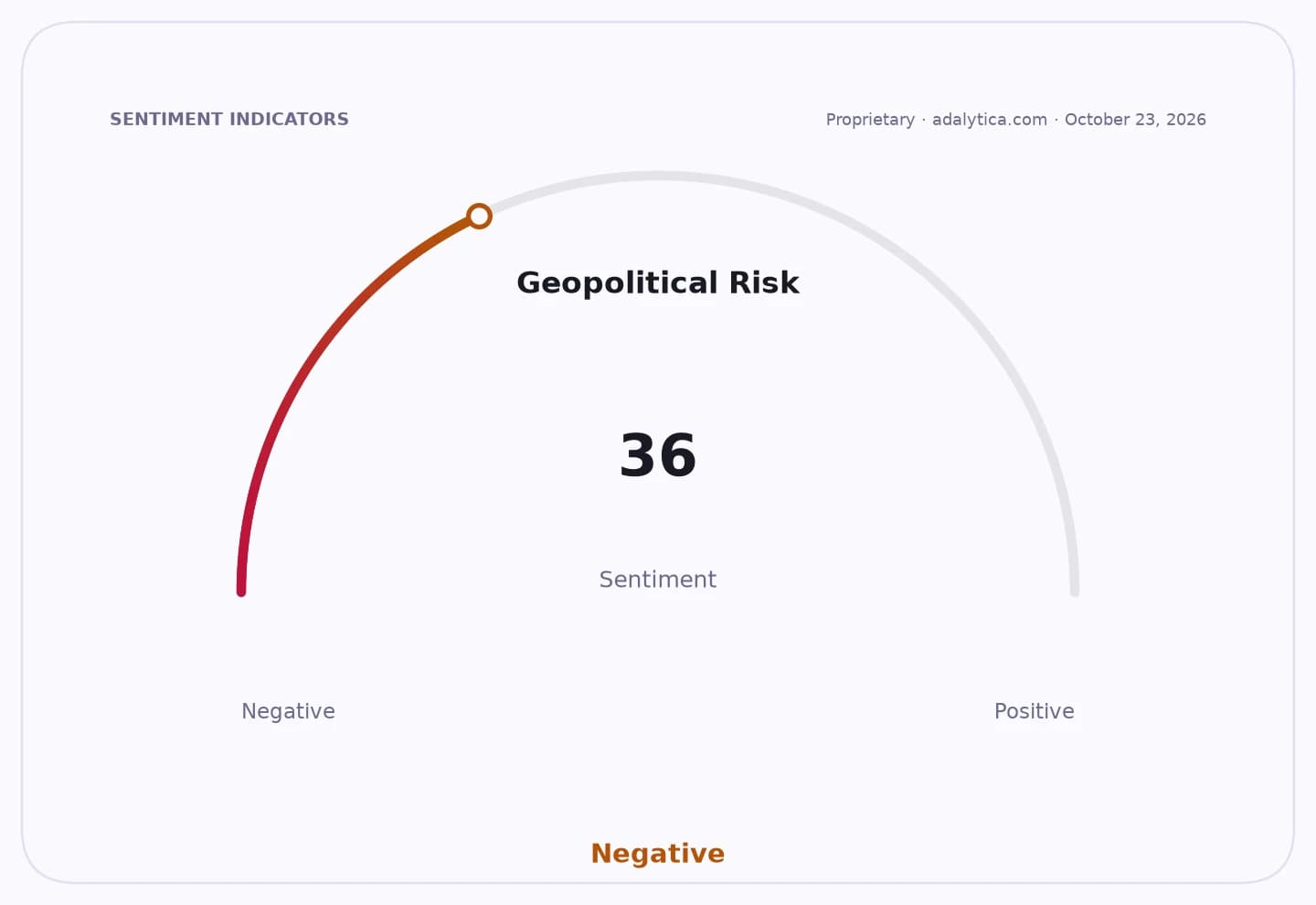
Sentiment IndicatorsⓘProprietary · adalytica.com · October 23, 2026
This is a snapshot — live sentiment, awareness and momentum for 130+ markets update continuously in the dashboard.Open AlphaPulse
That matters because Iraq has long struggled to translate its energy wealth into durable infrastructure without increasing fiscal fragility. A project financed through monetized oil flows rather than sovereign debt could reduce pressure on public finances while giving Baghdad a politically easier path to deliver a flagship regional project.
The Development Road is designed to connect Iraq and Turkey through a single logistics corridor spanning road and rail links. Turkish officials said technical designs are complete and that both sides have agreed on a relatively simple mechanism to move forward, underscoring a push to turn the corridor from concept into an implementable cross-border project.
The broader economic pitch is that the route would do more than move cargo. Speakers said it could deepen Turkey-Iraq strategic cooperation, support construction activity, and help integrate Iraq’s economy with wider regional trade flows. Analysts at the panel also said the corridor could strengthen governance links and create a new balance of power in the Middle East if completed.
For investors, the key question is whether the project can convert a geopolitical concept into bankable infrastructure with manageable execution risk. An oil-backed funding structure may improve credit optics for Iraq, but the project still depends on political coordination, security stability and sustained capital commitments from both sides.
The immediate catalyst is whether Ankara and Baghdad can finalize the funding architecture and start phased implementation. If they do, the corridor could become one of the region’s more consequential trade and infrastructure plays; if they do not, it risks remaining another high-profile plan with limited market impact.
| Entity | Gains | Losses |
|---|---|---|
| Iraq government | ▲No new sovereign debt | ▼Less fiscal flexibility if oil revenues weaken |
| Turkey contractors | ▲Lower financing costs | ▼Exposure to project delays |
| Regional trade route proponents | ▲Stronger connectivity thesis | ▼Competing routes and logistics hubs |
| Debt holders / creditors | ▲Less new Iraq issuance risk | ▼Fewer high-yield opportunities |