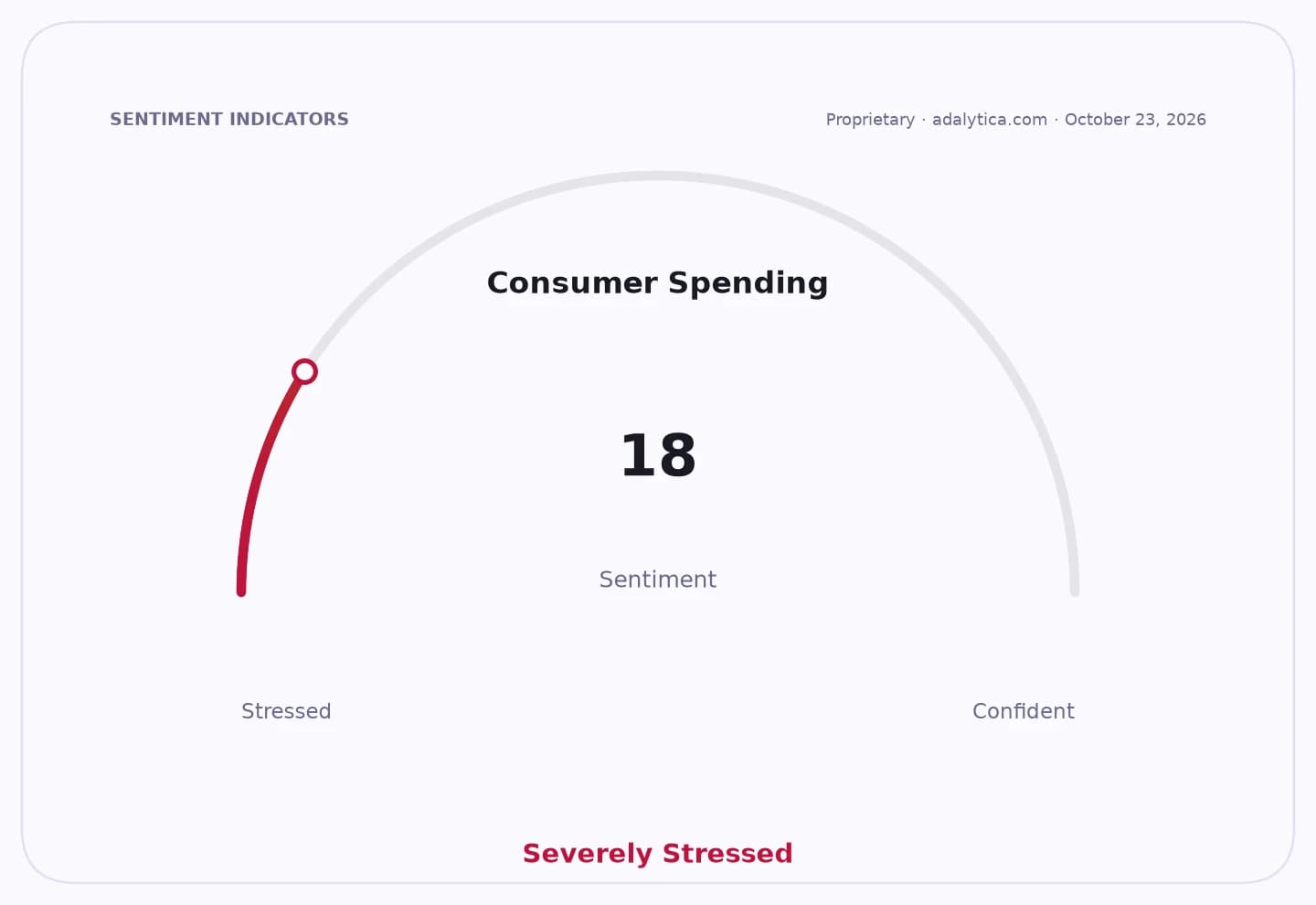
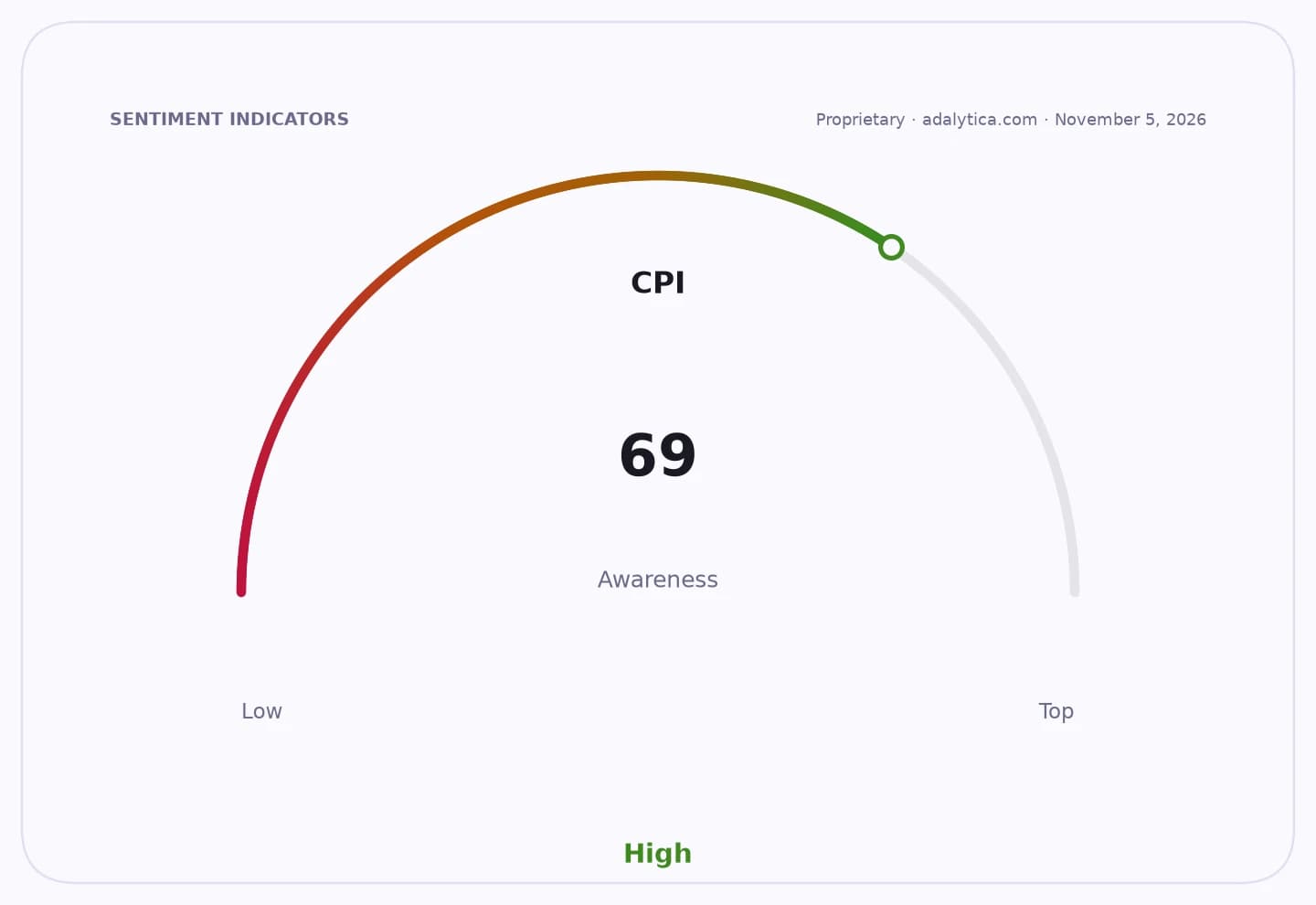
Irish consumer confidence rose slightly in October, a small but economically important sign that households are beginning to feel less strain from still-elevated living costs.
Ireland consumer confidence rises slightly in October

The improvement matters because consumer sentiment is often one of the earliest indicators of whether spending will hold up into the next quarter. For Ireland, where domestic demand has been supported by a strong labor market but constrained by housing and energy costs, even a modest recovery in confidence can help stabilize retail activity and broader private consumption.
The move also fits a wider pattern seen in other economies where easing fuel prices has provided quick relief to households. Lower gas and transport costs do not erase the pressure from inflation, but they can improve perceptions of financial security fast enough to influence discretionary spending decisions. That is particularly relevant for retailers, hospitality firms and consumer-facing listed companies that depend on confidence to convert into actual demand.
Still, the gain should be read as a stabilization rather than a surge. Consumers remain sensitive to price levels, and confidence can reverse quickly if energy costs rise again or if wage growth fails to keep up with household expenses. The latest reading suggests the worst of the recent drag may be easing, but it does not yet point to a broad-based acceleration in spending.
For investors, the key question is whether the improvement translates into stronger tills, better volumes and more resilient margins in the months ahead. If confidence holds, it would support Irish domestic demand and reduce downside risk for consumer-linked businesses. If it fades, the recovery in sentiment may prove too fragile to change the wider growth picture.
| Entity | Gains | Losses |
|---|---|---|
| Irish households | ▲Slight relief in budgets | ▼Still face elevated living costs |
| Retailers and consumer firms | ▲Better spending backdrop | ▼Demand remains vulnerable |
| Energy-sensitive consumers | ▲Lower fuel pressure | ▼Noisy inflation outlook |
| Domestic economy | ▲Support for private consumption | ▼Weak confidence reversal risk |