Ireland’s dependence on U.S. Big Tech is moving from a political embarrassment to a real economic and market issue, as pressure builds on Dublin to curb the data-centre model that has made the country a hub for Microsoft, Google and Amazon.
Ireland Data Center Scrutiny Hits Big Tech

That matters because Ireland is no longer just hosting the digital economy — it is underwriting it. The country’s low-tax, lightly contested regime has helped U.S. tech giants anchor European operations there, but the same setup has left Ireland vulnerable to accusations of corporate capture, rising scrutiny from academics and activists, and a growing backlash over the energy and climate burden of data centres. If that pressure hardens into policy, it would hit a pillar of Ireland’s growth model while forcing investors to reassess where the next wave of AI infrastructure can actually be built.
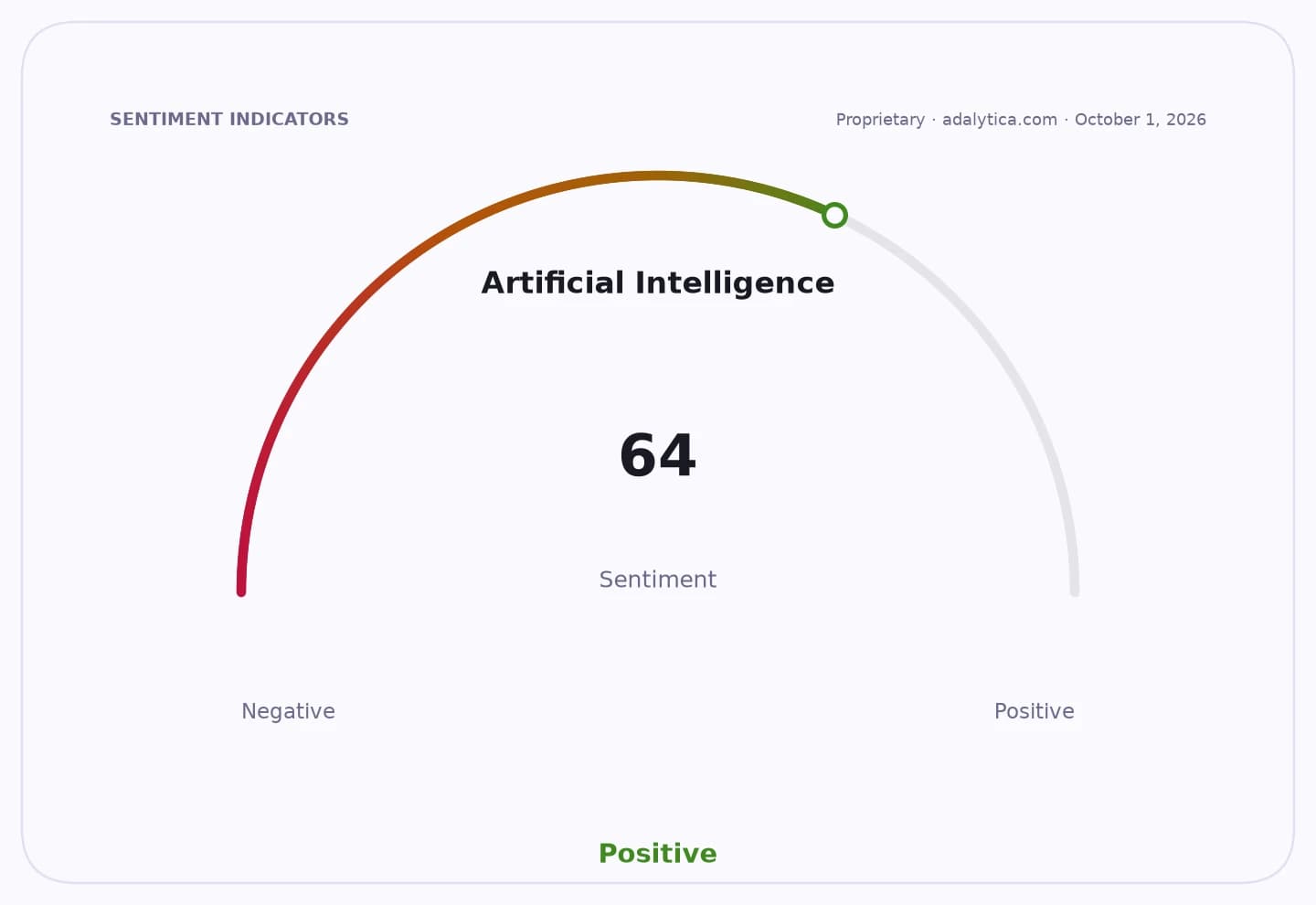
Sentiment IndicatorsⓘProprietary · adalytica.com · October 23, 2026
This is a snapshot — live sentiment, awareness and momentum for 130+ markets update continuously in the dashboard.Open AlphaPulse
The issue is especially sensitive because the political case against Ireland’s tech dependence is widening beyond climate campaigners. A recent Guardian opinion piece called Ireland “Big Tech’s lapdog”, while an open letter from 60 leading academics urged the state to recuse itself from tech-related EU negotiations. That is not just reputational noise. It speaks to a broader concern that corporate influence is shaping public policy, public spending priorities and even the tone of Ireland’s role inside the European Union.
For investors, the key question is not whether data-centre demand keeps rising — it likely does — but whether the operating environment around that demand becomes more expensive, slower and more restrictive. Microsoft, Alphabet and Amazon all remain deeply embedded in Ireland, and their shares have already been trading like winners in the AI buildout. Microsoft’s stock has climbed to about $533, while Alphabet has pushed to roughly $335 and Amazon to about $262. But the market is increasingly pricing the AI boom as if infrastructure can expand smoothly everywhere at once. Ireland is a reminder that this is not true.
The stock tape also suggests investors are still comfortable with the capex story. Microsoft’s technical setup remains strong, with the shares above both the 50-day and 200-day moving averages, even after a choppy stretch. Amazon has also held above its 50-day and 200-day averages. That strength reflects the market’s belief that AI infrastructure spending will keep flowing into the large platforms. Yet if Ireland tightens planning, energy or water constraints around data centres, the beneficiaries may not be the incumbents that want more capacity — they may be the grid builders, power providers and infrastructure suppliers that can make the next phase of growth possible elsewhere.
That is why this debate matters far beyond Dublin. Ireland may be small, but it sits at the centre of the European operating model for U.S. tech giants, and its decisions carry outsized weight in Brussels, corporate tax planning and cloud infrastructure strategy. If Ireland is forced to choose between preserving the current model and asserting more control over land, energy and regulation, the market will have to price in a slower, more contested AI expansion cycle.
Our thesis is simple: the market underestimates how much friction is being created around the physical footprint of AI. The next big opportunity is not just in the megacaps that train the models, but in the companies that own the scarce assets the models need — power, transmission, cooling, chips, industrial software and grid equipment. If Ireland becomes less welcoming to data centres, that is not the end of the AI trade. It is a signal that the trade is broadening.
| Entity | Gains | Losses |
|---|---|---|
| Irish public sector | ▲Policy leverage | ▼Tech-dependent growth |
| Microsoft, Google, Amazon | ▲Existing EU footprint | ▼Easier expansion in Ireland |
| Grid, power and cooling suppliers | ▲More infrastructure demand | ▼Less direct data-centre concentration |
| Data-centre opponents | ▲Regulatory momentum | ▼Faster AI buildout |