A new far-right party in Italy has risen to become the country’s fourth most popular force, sharpening the challenge to Prime Minister Giorgia Meloni’s governing coalition and underscoring how far-right politics are now competing not just with the center left, but within the nationalist camp itself.
Italy far-right party rises, pressures Meloni
The development matters economically because Italy is the euro zone’s third-largest economy and one of its most politically sensitive. Any shift in voter support that weakens coalition discipline raises the odds of policy drift, slower reform and renewed friction with Brussels over spending, migration and fiscal targets. For investors, that can translate into a wider risk premium on Italian assets, even if markets have so far taken the latest polling in stride.
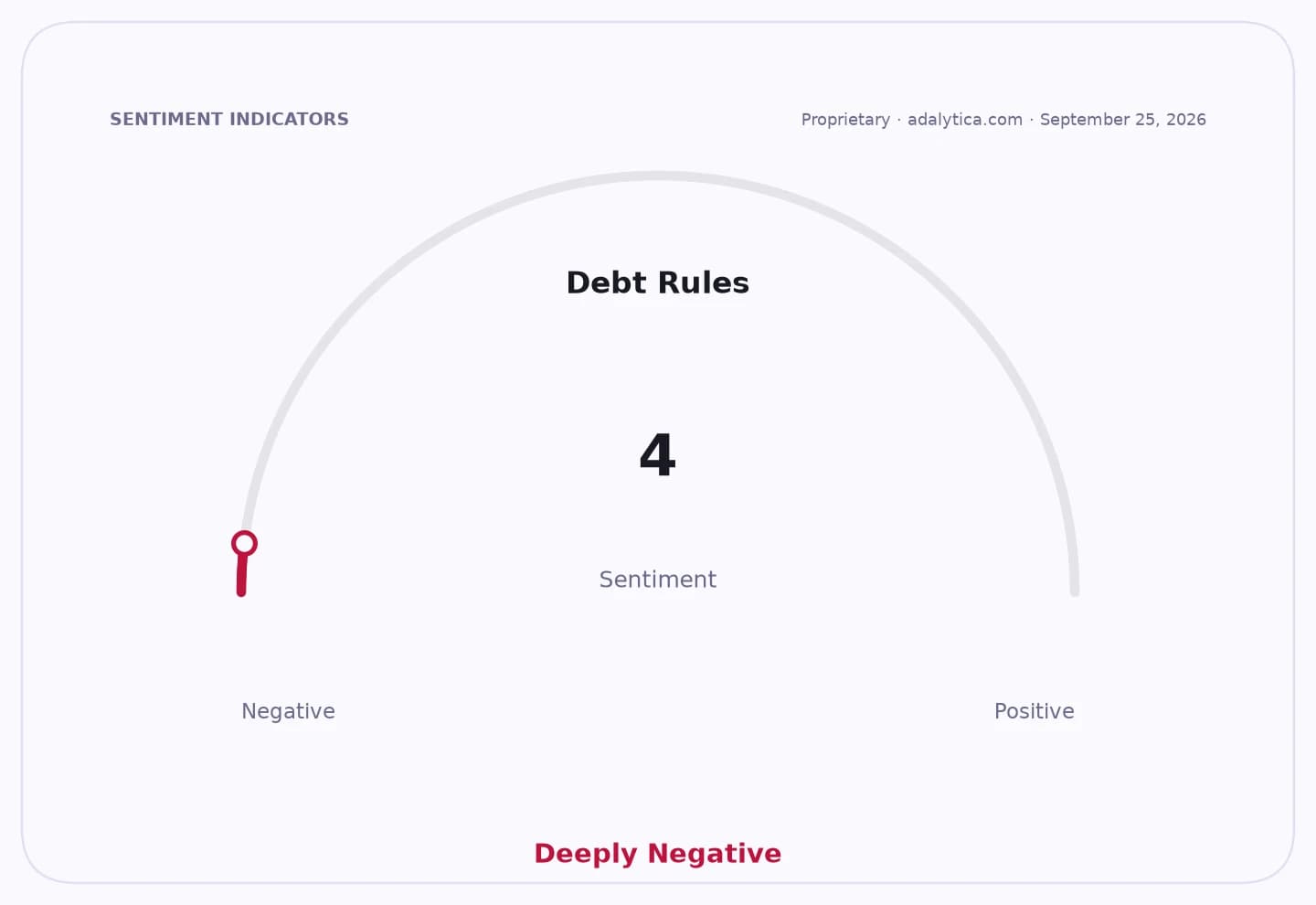
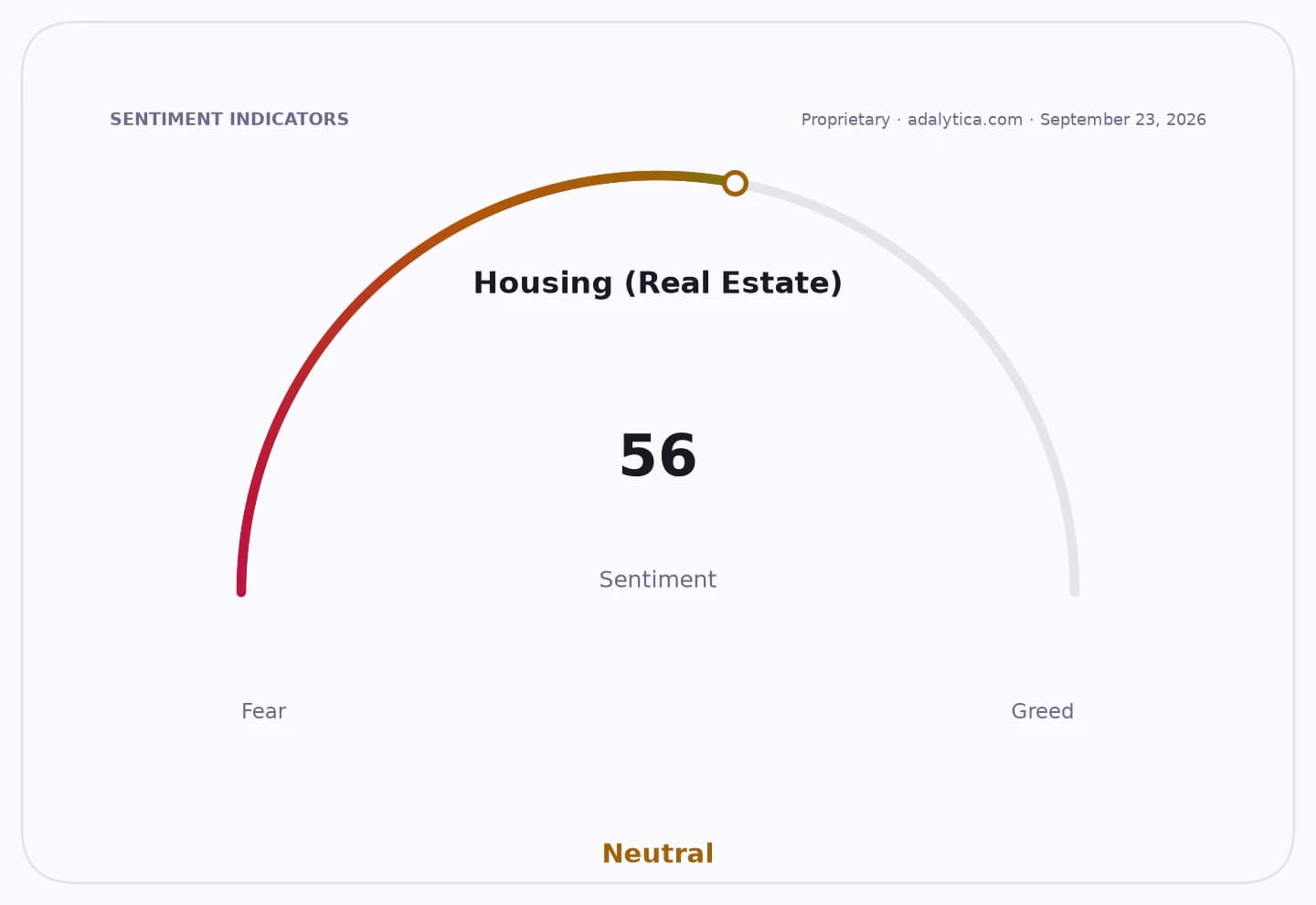
Sentiment IndicatorsⓘProprietary · adalytica.com · September 1, 2026
This is a snapshot — live sentiment, awareness and momentum for 130+ markets update continuously in the dashboard.Open AlphaPulse
The broader narrative is not simply that the far right is gaining ground. It is that Italy’s political center of gravity is fragmenting further to the right, forcing Meloni’s Brothers of Italy to defend its base while managing the constraints of government. That is a more complicated backdrop for bondholders, banks and euro traders than a straightforward rightward lurch, because it can produce both more nationalist rhetoric and less coherent policymaking.
There is already evidence that investors are watching the political temperature closely. The euro’s trade signals from Adalytica have slipped into fear territory, while global stability sentiment has weakened sharply over the past week, pointing to increased caution around European political and geopolitical risk. Those gauges do not drive fundamentals on their own, but they reflect a market environment that is less forgiving of domestic instability in major euro area economies.
Italian equities, meanwhile, have not been immune to the broader uncertainty. The iShares MSCI Italy ETF, EWI, has recovered to around 61.76 after earlier volatility this year, and it remains above its 200-day moving average, suggesting the market is not pricing in outright stress. But momentum has cooled from recent highs, with the ETF trading below its 50-day average and RSI readings easing from overbought levels. That points to a market that is still constructive on Italy, but increasingly sensitive to political headlines.
For the government, the rise of a new far-right competitor is awkward. Meloni has built her appeal on nationalist and anti-establishment themes, but a more crowded right-wing field can split the same electorate that carried her to power. That can encourage harder lines on migration and sovereignty, but it can also make coalition management more brittle if parties compete to prove ideological purity.
The bull case for investors is that a stronger right wing may still keep Italy broadly pro-business, supportive of tax restraint and cautious on fiscal excess, especially if market pressure disciplines the coalition. The bear case is that rivalry on the right pushes policy toward headline-grabbing confrontations with the EU, making budget planning less predictable and increasing the chance of investor nerves around Italian debt.
For now, the key question is whether the new party’s rise is a temporary protest surge or the beginning of a more durable reshaping of Italy’s right. If it endures, it could complicate Meloni’s political runway and keep Italian assets more exposed to polling cycles, coalition tensions and the next budget fight.
| Entity | Gains | Losses |
|---|---|---|
| New far-right party | ▲Visibility and support | ▼Still untested in power |
| Meloni’s coalition | ▲Harder-right voter pull | ▼Fragmented support base |
| Italian bonds | ▲Policy continuity if coalition holds | ▼Higher risk premium if tensions rise |
| Euro zone policymakers | ▲No immediate crisis | ▼More friction over fiscal and migration policy |