Italy’s retail sector posted a mixed July reading, with sales up 0.8% in value but down 0.6% in volume from a year earlier, underscoring how higher prices are masking weaker underlying demand.
Italy retail sales rise 0.8%, volume falls 0.6%
The data from Istat matters because household spending is a key driver of Italy’s economy, and the split between nominal and real sales suggests consumers are buying less even as they pay more. That points to fragile demand at a time when inflation pressures, still-elevated borrowing costs and uneven wage gains continue to squeeze purchasing power.
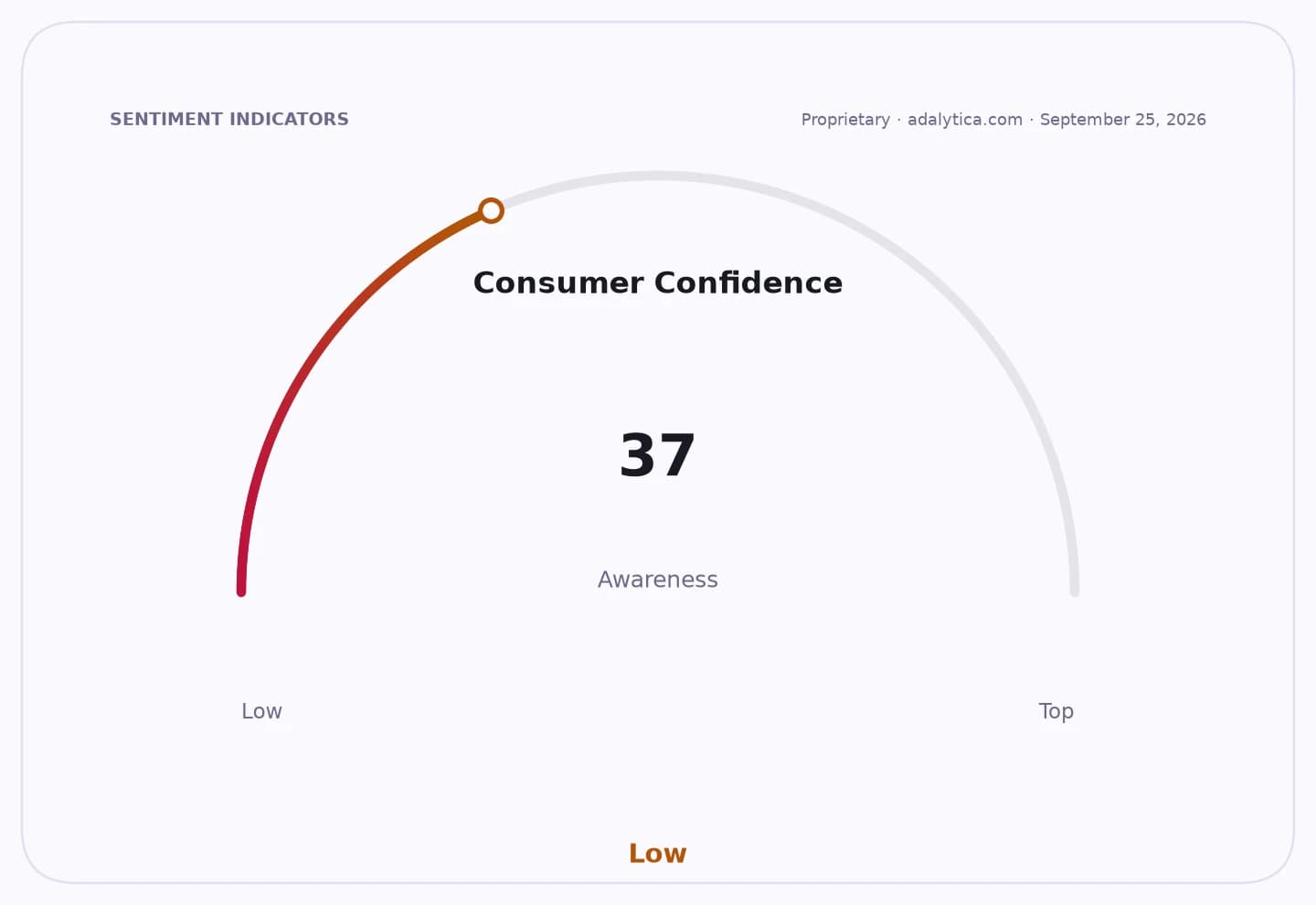
Sentiment IndicatorsⓘProprietary · adalytica.com · September 4, 2026
This is a snapshot — live sentiment, awareness and momentum for 130+ markets update continuously in the dashboard.Open AlphaPulse
On a monthly basis, retail sales fell 0.4% in value and 0.5% in volume, marking a second straight decline and reinforcing the picture of cooling consumption into the summer. Growth was positive only for large-scale distribution and e-commerce on a year-on-year basis, while both food and non-food categories saw slower value growth and lower volumes.
For investors, the report is a warning sign for Italian consumer-facing businesses, from retailers to packaged-food groups and discretionary spenders, which may struggle to pass through costs without further volume erosion. It also supports the view that the euro-zone’s third-largest economy may rely more heavily on exports and public investment than domestic demand for near-term growth.
The read-through is that Italy’s consumer recovery remains shallow and uneven, leaving retail margins and broad consumption-linked earnings vulnerable if spending does not firm in coming months.
| Entity | Gains | Losses |
|---|---|---|
| Large-scale retailers | ▲Online and organized sales mix | ▼Smaller shops and weak foot traffic |
| E-commerce platforms | ▲Higher sales activity | ▼Brick-and-mortar volumes |
| Consumer staples | ▲Price-led revenue support | ▼Real demand growth |
| Italian households | ▲Some spending access | ▼Purchasing power and discretionary budgets |