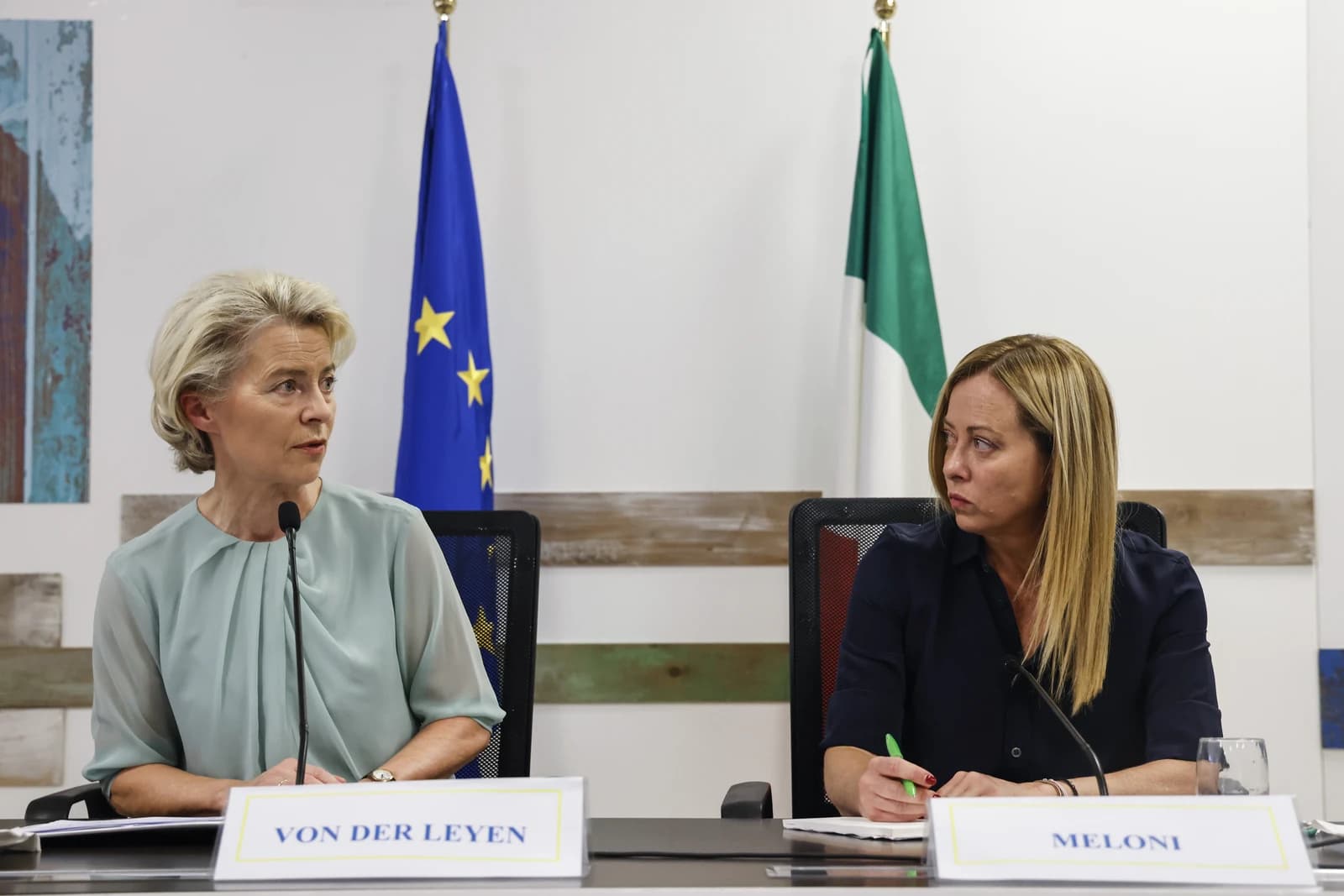
Italy's Deputy Prime Minister Matteo Salvini has been re-elected to lead the far-right League for another four years, cementing his grip on one of the three pillars of Prime Minister Giorgia Meloni's governing coalition at a time when investors are watching Rome for continuity.
Italy's Salvini Re-Elected to Lead League Through 2030
That matters because Italy is not just a political story; it is one of the euro area's largest economies and one of its most indebted. For investors in Italian stocks, bonds and the broader European market, leadership stability in a major coalition party can reduce the odds of policy surprises, even if it does not erase the fiscal and geopolitical tensions hanging over the government.
Sentiment Indicators
Salvini was confirmed as party secretary on Sunday with 465 votes, according to Ansa, after a meeting he called to secure consensus and show support. He will remain in the role until 2030, giving him a long runway to shape the League's stance inside Meloni's right-wing alliance.
The re-election also keeps a familiar voice in place on some of Europe's most sensitive issues. Salvini has previously questioned further aid to Ukraine, arguing it could "fuel corruption," and in April called for Russian gas flows to resume. Those positions matter to investors because Italy remains exposed to energy prices, European sanctions policy and the wider direction of EU diplomacy.
For markets, the immediate read is not dramatic, but it is meaningful. A steady leadership structure in the coalition lowers the probability of an abrupt internal reset, and that is important in a country where political fragmentation has historically made fiscal planning and reform harder than it should be. Italy's parliament recently approved an electoral reform designed to give a governing majority to the coalition that wins the most votes, a sign that political actors are still trying to build more durable governments.
Even so, investors should not mistake continuity for complacency. Salvini's re-election keeps alive the tensions between populist instincts and fiscal discipline, between pro-EU pragmatism and nationalist rhetoric. The League may be less dominant than Meloni's Brothers of Italy, but it still has leverage in a coalition that must balance markets, Brussels and domestic voters.
Over the longer run, the bigger question is whether Italy can pair political stability with economic reform. If it can, that would support lower risk premiums on Italian assets and help attract capital. If coalition friction resurfaces, investors could quickly revisit the country's old pattern of policy drift and periodic volatility.
For now, the message is straightforward: Salvini's renewed mandate is a win for internal party control, but the real test is whether Italy's right-wing government can turn leadership stability into economic credibility. Worth watching, not panicking over.
| Entity | Gains | Losses |
|---|---|---|
| Matteo Salvini / League | ▲Party control | ▼Internal challengers |
| Meloni coalition | ▲Short-term continuity | ▼Policy flexibility |
| Italian bondholders | ▲Lower near-term uncertainty | ▼Abrupt reform risk premium |
| Ukraine aid / EU hawks | ▲— | ▼Harder pro-Ukraine consensus |