Japan’s government bond market is losing some of the fear premium it picked up during last week’s global stock selloff, as a rebound in technology shares and firmer U.S. rate expectations push investors back toward risk.
Japan 10-year JGB yield rises to 2.7%

The benchmark 10-year Japanese government bond yield climbed 6.5 basis points to 2.7%, recovering part of Friday’s drop when investors rushed into sovereign debt amid a sharp unwind in artificial intelligence-related stocks. That move matters because higher yields reflect weaker demand for bonds and a fading appetite for defensive assets, a shift that can ripple through borrowing costs across Japan’s economy.
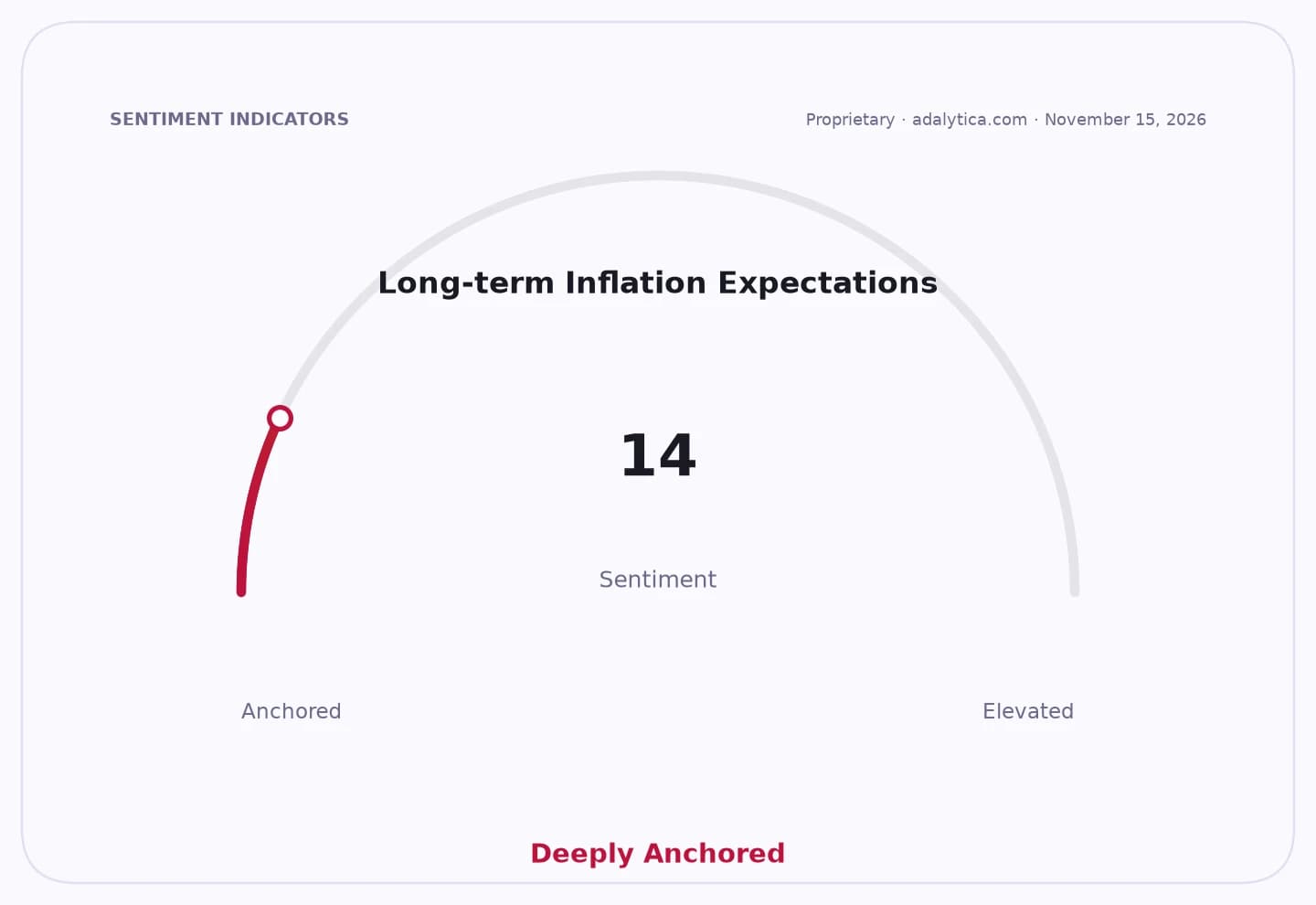
Sentiment Indicators
The immediate catalyst was the rebound in Japan’s Nikkei 225, which bounced on Monday after tumbling 6% in the previous session. When equities steady, the bid for traditional havens such as JGBs usually cools. U.S. Treasuries also sold off after stronger-than-expected payroll data lifted expectations that the Federal Reserve could keep rates higher for longer, adding to upward pressure on global yields.
For investors, the bigger question is whether last week’s rush into bonds was an overreaction or the start of a more durable repricing. The speed of the earlier drop in yields has raised the prospect of a near-term correction, and the latest move suggests that at least some of that safe-haven demand is unwinding just as the market recalibrates around three forces: volatile AI valuations, a less forgiving U.S. rate backdrop and a Bank of Japan that is sounding more hawkish.
That BOJ backdrop is important. Markets are increasingly pricing in a December rate hike to 1.5%, even though the central bank has held policy steady since September. Governor Kazuo Ueda’s comment on Friday that underlying inflation is expected to stay near the BOJ’s 2% target, while acknowledging upside risks, reinforced the view that Japan’s policy normalization is not over. For bond investors, that means JGB yields are not just being driven by foreign turbulence — they are also being pushed by domestic policy expectations.
The result is a market that looks more balanced than panicked. Safe-haven buying can return quickly if the AI selloff deepens again or global growth fears intensify, but for now the bond market is being pulled in the opposite direction by the same forces that sparked the selloff in the first place: a risk rebound, firmer U.S. yields and a central bank moving closer to tightening.
For long-term investors, this is a reminder that Japanese bonds are no longer just a passive refuge from global stress. They are becoming a live expression of BOJ policy risk, inflation expectations and worldwide tech-driven market volatility. That makes them worth watching, especially for anyone looking to understand how the next phase of Japan’s market normalization may unfold.
| Entity | Gains | Losses |
|---|---|---|
| Japanese banks and insurers | ▲Higher yield income | ▼Mark-to-market pressure on bond holdings |
| JGB bulls | ▲Temporary bounce opportunity | ▼Fading safe-haven bid |
| Equity investors | ▲Risk rebound supports stocks | ▼Less protection from bond rally |
| BOJ hawks | ▲Stronger case for tightening | ▼Dovish policy camp |