Japan’s decision to open the door to exports of lethal weapons for the first time in nearly eight decades is the biggest policy break in its defense posture since the postwar era — and it is already sharpening tensions with China while giving investors a clearer reason to reprice the region’s security risk.
Japan Opens Arms Exports, Raises China Tensions
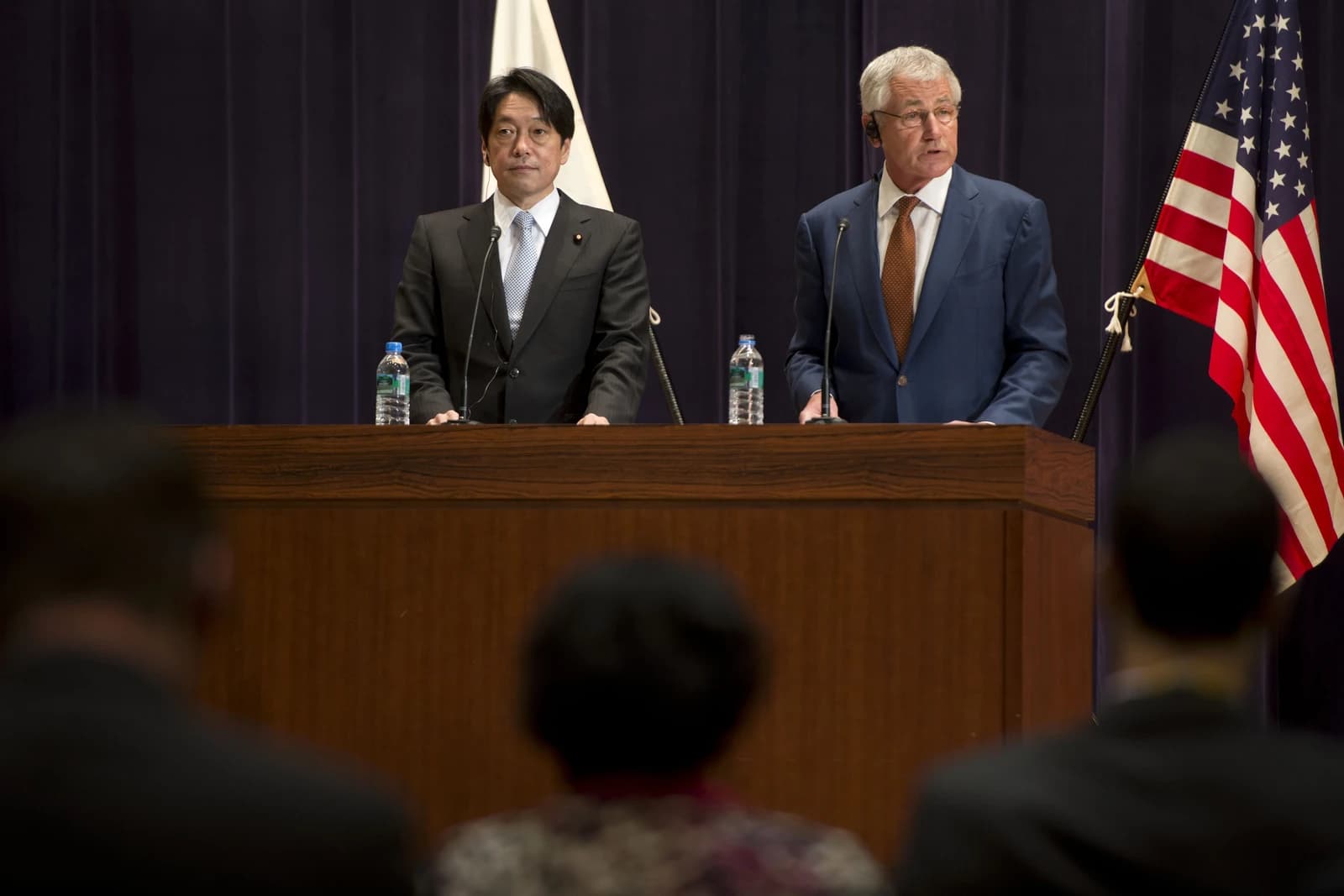
Prime Minister Sanae Takaichi’s government approved a sweeping rewrite of the country’s Three Principles on Transfer of Defense Equipment and Technology on April 21, allowing Tokyo to sell finished weapons such as missiles, warships, combat drones and fighter jets to third countries. The move removes long-standing limits that had confined Japan mostly to non-lethal exports and marks a shift from a largely inward-facing defense industry to one that can compete in the global arms market.
Sentiment IndicatorsⓘProprietary · adalytica.com · October 22, 2026
This is a snapshot — live sentiment, awareness and momentum for 130+ markets update continuously in the dashboard.Open AlphaPulse
That matters economically because Japan is trying to turn defense into an industrial growth engine at the same time it spends more on its own military. Tokyo has set a record defense budget of more than $58 billion for 2026, a push that would make Japan the world’s third-largest military spender and could help sustain domestic producers that have long struggled with high costs and no meaningful export market. For companies such as Mitsubishi Heavy Industries, the policy offers a path to larger production runs, better margins and more investment in next-generation systems.
The geopolitical impact is immediate. Beijing denounced the change as “neo-militarism” and said it would stay “highly vigilant,” reflecting fears in China that Japan is moving beyond self-defense and toward a broader regional military role. China has also already restricted rare earth exports to Japan amid the wider diplomatic rupture, raising the stakes for Japan’s high-tech and defense supply chains.
The policy shift also feeds into a wider market narrative of rising defense spending across the Western Pacific. Japan’s willingness to export weapons to partners such as the Philippines, and its collaboration with Britain and Italy on future fighter jets, increases the odds of more procurement across allied states and more friction with China in the South China Sea and around Taiwan.
Defense shares have already been volatile, reflecting how sensitive the sector is to budget headlines, export rules and regional tension. In the U.S., RTX closed at $194.82 on Oct. 22, above its 50-day moving average of $197.68 but still below its 200-day average of $194.20, while Italy’s Leonardo-equivalent theme in the region and broader aerospace names have been trading against the same backdrop of rising military demand and policy uncertainty. IEFA, which tracks developed markets ex-U.S., ended at $96.05, underscoring that investors are still watching Europe and Asia for spillover effects from the security reset rather than just U.S. defense spending.
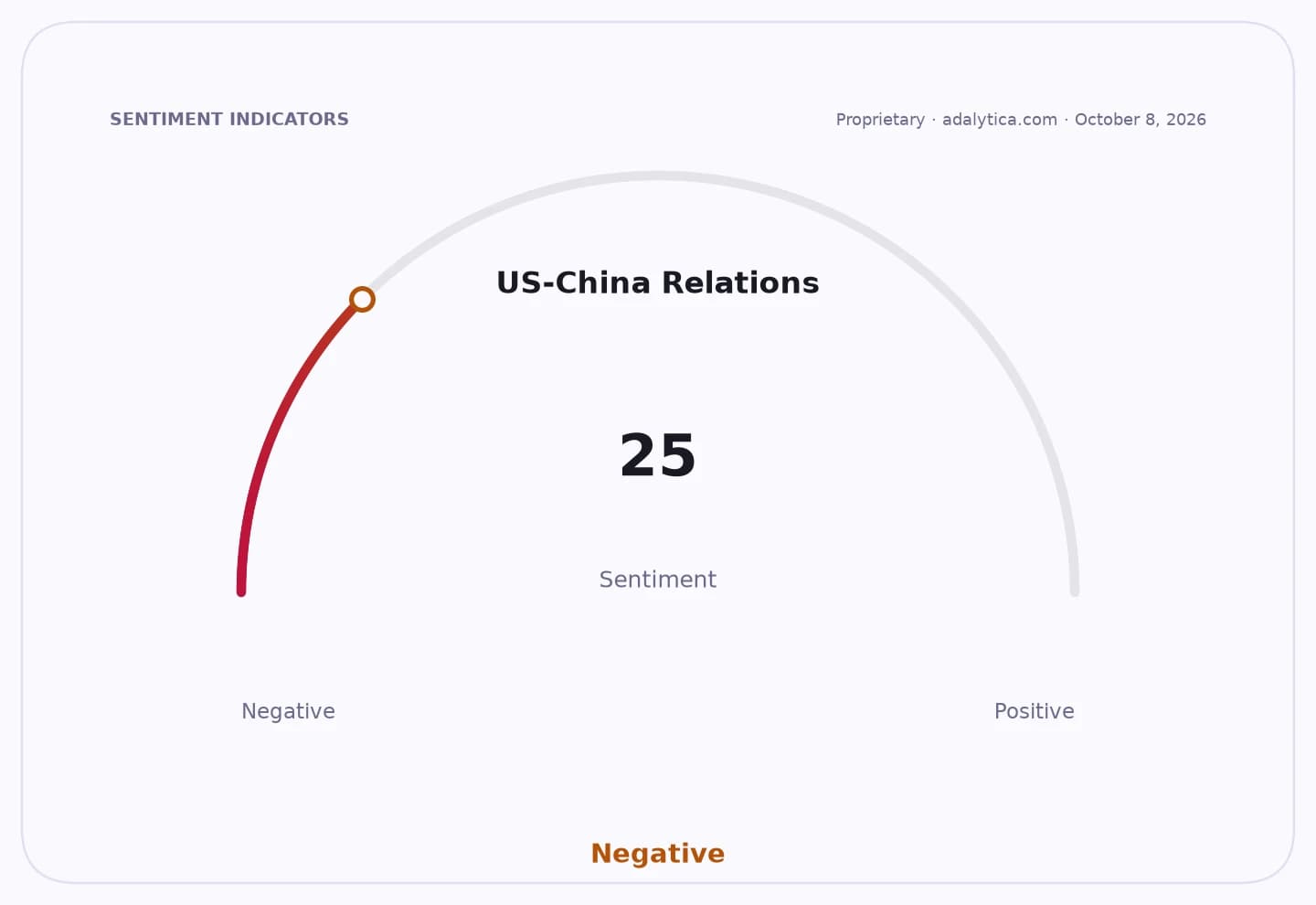
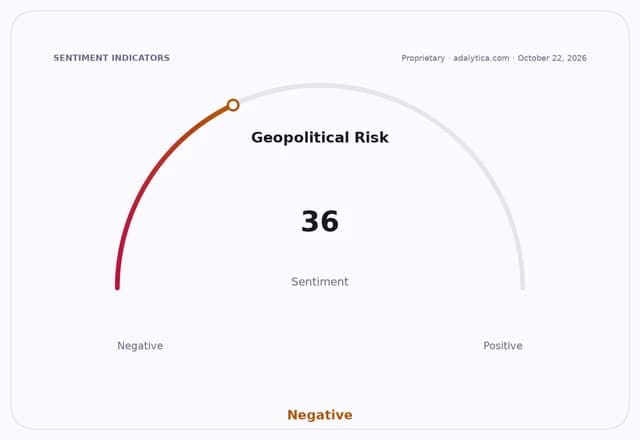
Adalytica’s US–China relations gauge shows sentiment at 39, with awareness in “extreme fear,” while its global stability sentiment stands at 36, also in “extreme fear,” suggesting markets are treating the Japan-China standoff as part of a broader deterioration in geopolitical conditions rather than a bilateral flare-up alone.
The next catalysts are political as much as commercial: implementation details for Japan’s export approvals, any follow-through on sales to partners in Asia, and Beijing’s response in trade, diplomacy or military posture. For investors, the key question is whether Japan’s policy shift turns into a durable procurement cycle for defense contractors or triggers retaliation that complicates supply chains and limits the economic upside.
| Entity | Gains | Losses |
|---|---|---|
| Japanese defense contractors | ▲Bigger export market | ▼Domestic pricing pressure eases slowly |
| Japan government | ▲Stronger deterrence and industry support | ▼Higher diplomatic and trade friction |
| China | ▲Domestic nationalist leverage | ▼Regional security balance shifts against it |
| Defense investors | ▲More spending and deal flow | ▼Volatility from retaliation and export controls |