The Pentagon’s push to lean harder on land-based power in the Indo-Pacific is turning into a bigger investment story than the market may appreciate, because it favors the contractors best positioned to supply missiles, air and missile defense, command systems and other gear needed to make a distributed fight against China more survivable.
Defense Contractors Gain From Indo-Pacific Land Buildout
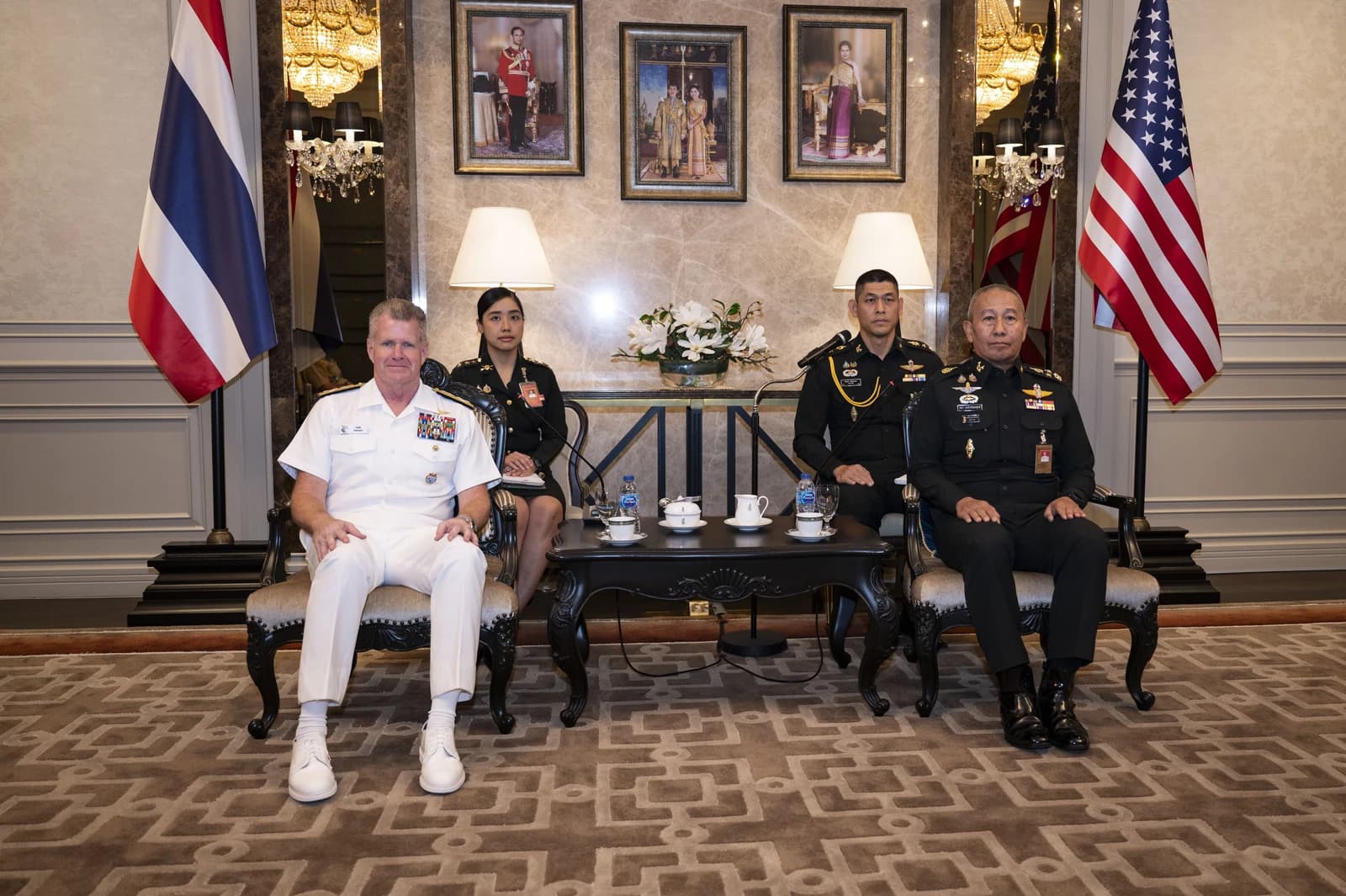
That matters economically because Washington’s strategy is increasingly about building a web of forces that can operate across islands, littoral terrain and contested airspace without relying on a few vulnerable bases. In practice, that means more spending on mobile launchers, integrated air defenses, sensors, communications and long-range strike systems — the kind of programs that flow through Lockheed Martin, RTX and Northrop Grumman.
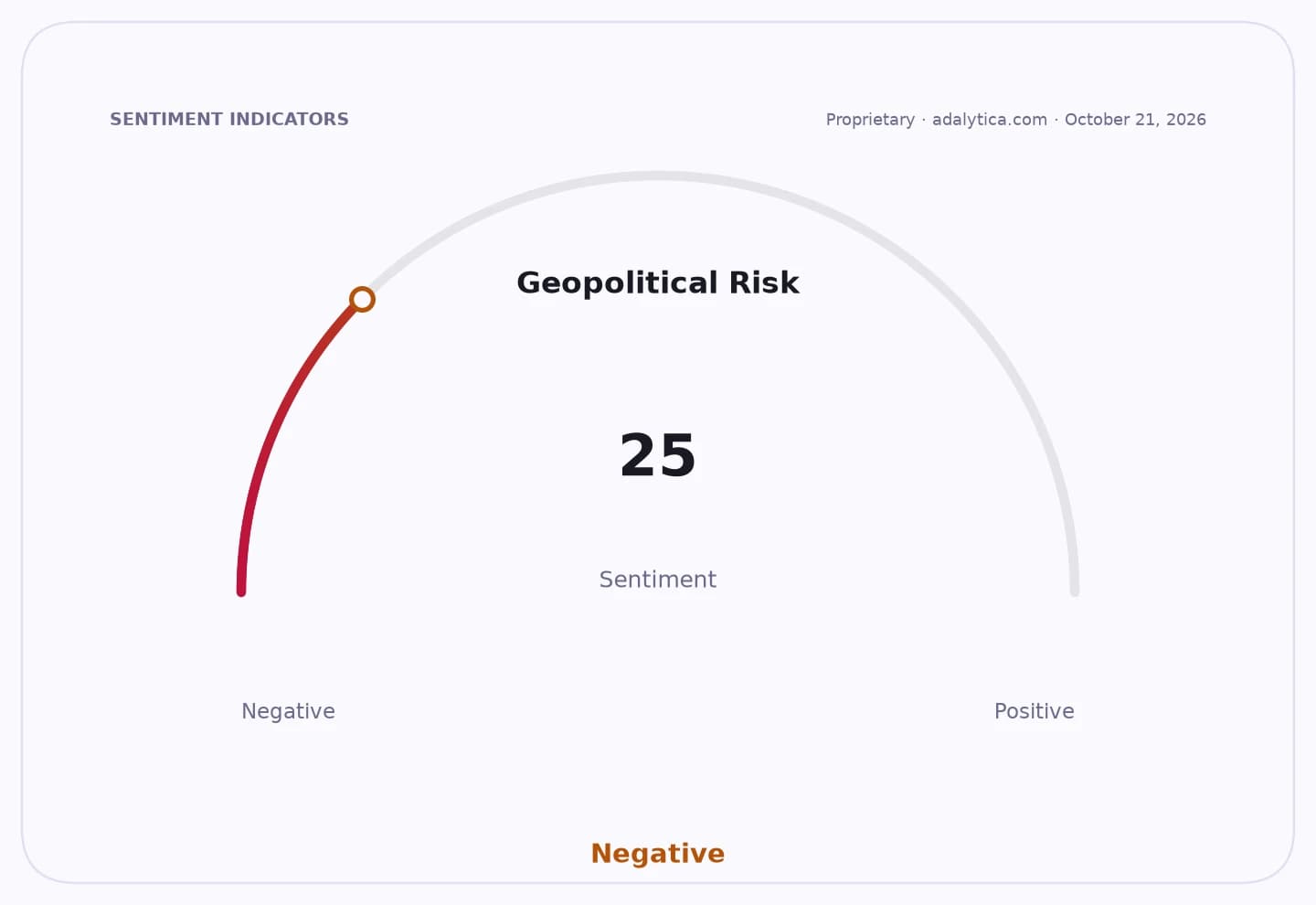
Sentiment IndicatorsⓘProprietary · adalytica.com · October 21, 2026
This is a snapshot — live sentiment, awareness and momentum for 130+ markets update continuously in the dashboard.Open AlphaPulse
The market is already rewarding the theme, but not evenly. Lockheed Martin has climbed back toward the top of its recent range after a sharp midyear selloff, with its shares closing at $548.71 on Oct. 20, above the 50-day moving average of $540.20 and just under a recent Bollinger upper band near $550.03. That recovery is notable because the stock had been as low as $499.22 earlier this month. RTX has also stabilized, ending at $193.34 on Oct. 20, just above the 50-day average of $198.86 and with improving momentum as the MACD has narrowed its gap with the signal line. Northrop Grumman has been the standout, closing at $534.00 on Oct. 20 after rebounding from $473.46 on Oct. 7, even as it still trades below its 200-day moving average, suggesting the rerating is still in its early stages.
The underlying thesis is straightforward: if the Indo-Pacific becomes the central theater for deterrence, then the winners are not just the companies selling fighter jets or ships, but the ones building the land-based systems that let U.S. and allied forces fight from dispersed positions and keep Chinese planners guessing. That is exactly where demand is likely to compound. Northrop’s air and missile defense and command-and-control exposure, Lockheed’s missile portfolio, and RTX’s sensors and interceptors all fit the architecture of a ground-centric denial strategy.
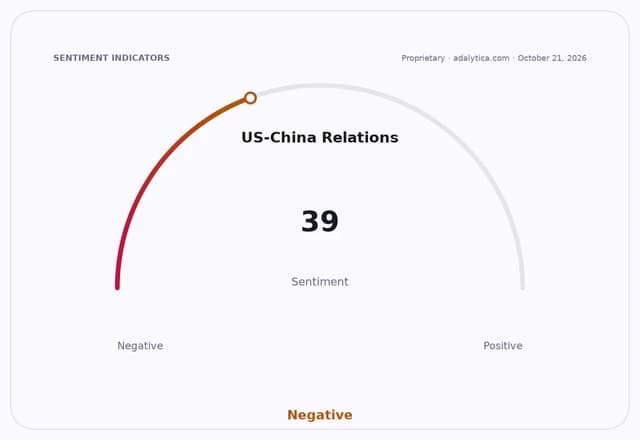
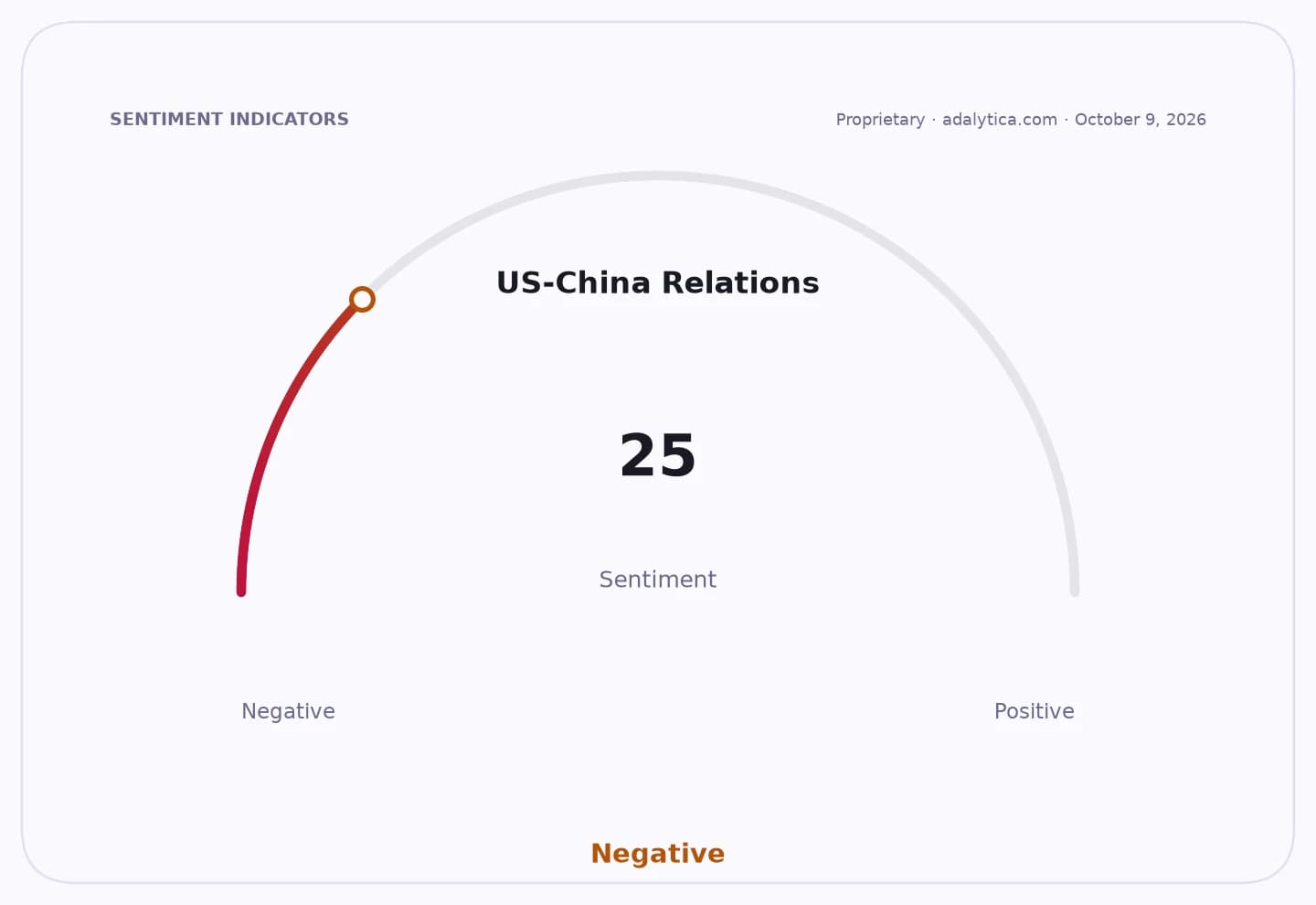
The backdrop is also supportive. U.S.-China relations sentiment on Adalytica.com has slipped to 39, labeled neutral, while awareness sits at an extreme-fear reading of 4, underscoring how quickly geopolitical tension can reshape procurement priorities even when broader market sentiment wobbles. At the same time, defense contractors themselves are warning that the Western Pacific remains a flashpoint. Northrop’s latest filing explicitly pointed to heightened tensions in the Pacific region, while RTX said global conflicts and geopolitical risks can affect its defense businesses.
For investors, the opportunity is not to chase the headline defense rally blindly, but to own the companies with the clearest exposure to a land-based Indo-Pacific buildup before the next budget cycle and theater modernization wave fully show up in orders. Northrop Grumman looks especially compelling on that frame because its recent rebound comes after a much deeper drawdown than peers. Lockheed offers broader missile and strike leverage. RTX gives more diversified exposure to the sensors and air-defense layer that any Pacific posture requires.
I believe the market is still underpricing how durable this shift could be. The Indo-Pacific is not a temporary crisis trade; it is a multi-year capital cycle driven by geography, deterrence and the need to harden U.S. force posture. If land power becomes the backbone of that strategy, the investment play is already clear: own the picks-and-shovels of Pacific denial before the next wave of spending becomes consensus.
| Entity | Gains | Losses |
|---|---|---|
| Lockheed Martin | ▲Missile demand | ▼Platform-only bias |
| RTX | ▲Air-defense orders | ▼Base exposure risk |
| Northrop Grumman | ▲C2 and sensors | ▼Slow budget awards |
| China | ▲Strategic uncertainty | ▼Freedom of maneuver |