The market is finally pricing the first island chain for what it is: not a static line on a map, but a redundancy network that favors the companies building the missiles, sensors and air defenses needed to keep it intact.
Lockheed, Northrop and RTX on Indo-Pacific defense

That matters because the Indo-Pacific contest is not being decided only by carrier groups and headlines about Taiwan. It is being shaped by distributed deterrence — ports, islands, airfields and logistics nodes from Japan through Taiwan to the Philippines — and by the ability of the U.S. and its allies to make each node survivable under pressure. The investment implication is clear: defense primes with exposure to long-range strike, integrated air defense, radars and command-and-control remain the cleanest way to own the region’s militarization.
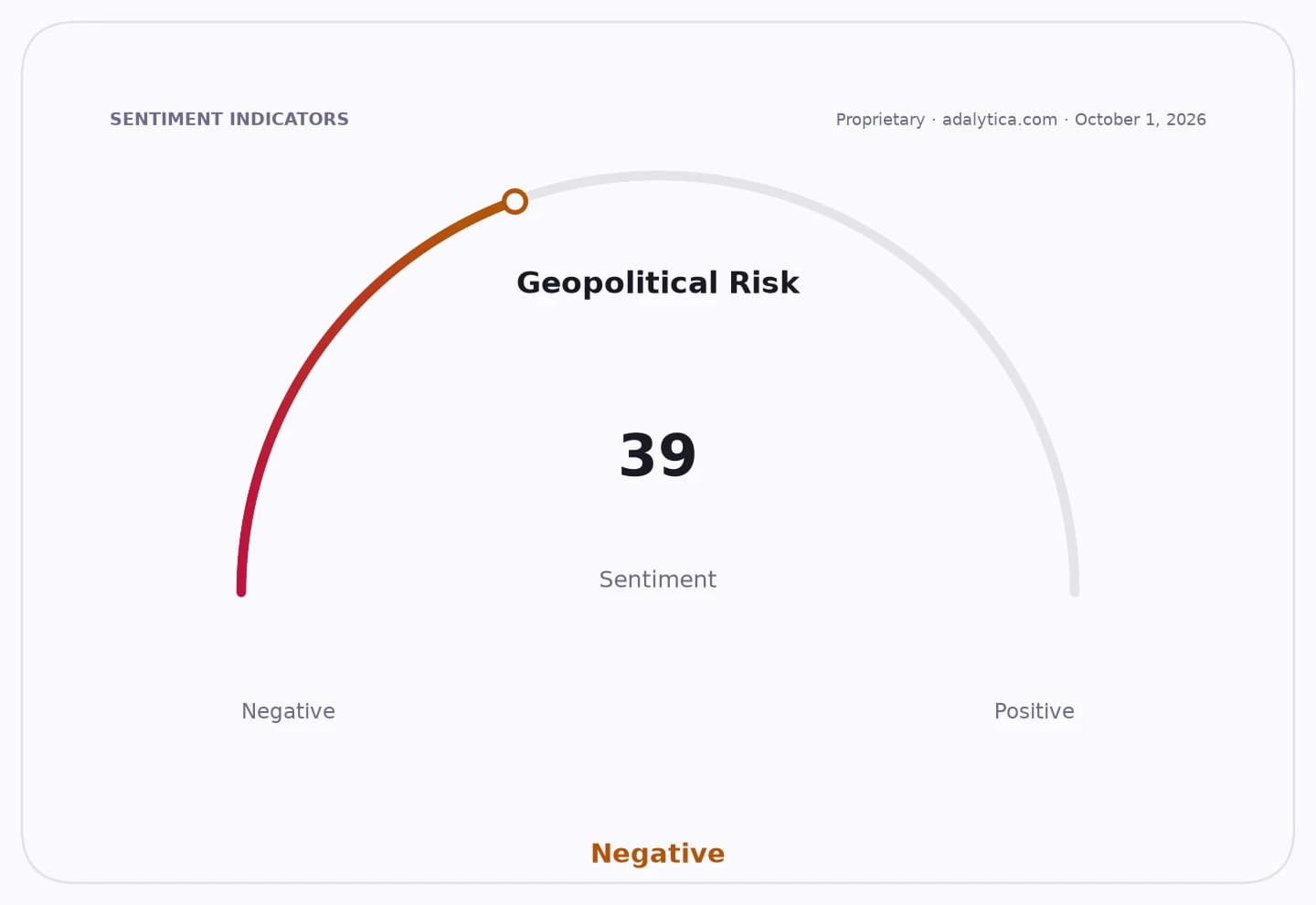
Sentiment IndicatorsⓘProprietary · adalytica.com · October 3, 2026
This is a snapshot — live sentiment, awareness and momentum for 130+ markets update continuously in the dashboard.Open AlphaPulse

Lockheed Martin, Northrop Grumman and RTX sit at the center of that trade. Their shares have already reflected the market’s appetite for Indo-Pacific exposure, but the bigger point is that the spending cycle is still early. Lockheed traded at $505.41 on Oct. 2 after swinging as high as $668.17 in March, while Northrop finished at $478.00 after hitting $761.19 in early March. RTX, the more diversified electronics and missile play, closed at $184.68, well below its August peak of $225.49. The pullbacks do not erase the structural story: defense demand is being reshaped by geography, and geography is not going away.
What investors should understand is that resilience in the first island chain requires redundancy everywhere. That means more interceptors, more mobile launchers, more distributed sensors, more hardened communications and more repairable infrastructure. It is a procurement logic that favors scale and integration, not one-off platforms. Lockheed benefits through missiles and air defense. Northrop gains from autonomous systems, ISR and command networks. RTX remains one of the most direct beneficiaries through sensors, radars and missile defense. In other words, this is not just about ships and fighters; it is about the entire kill chain.
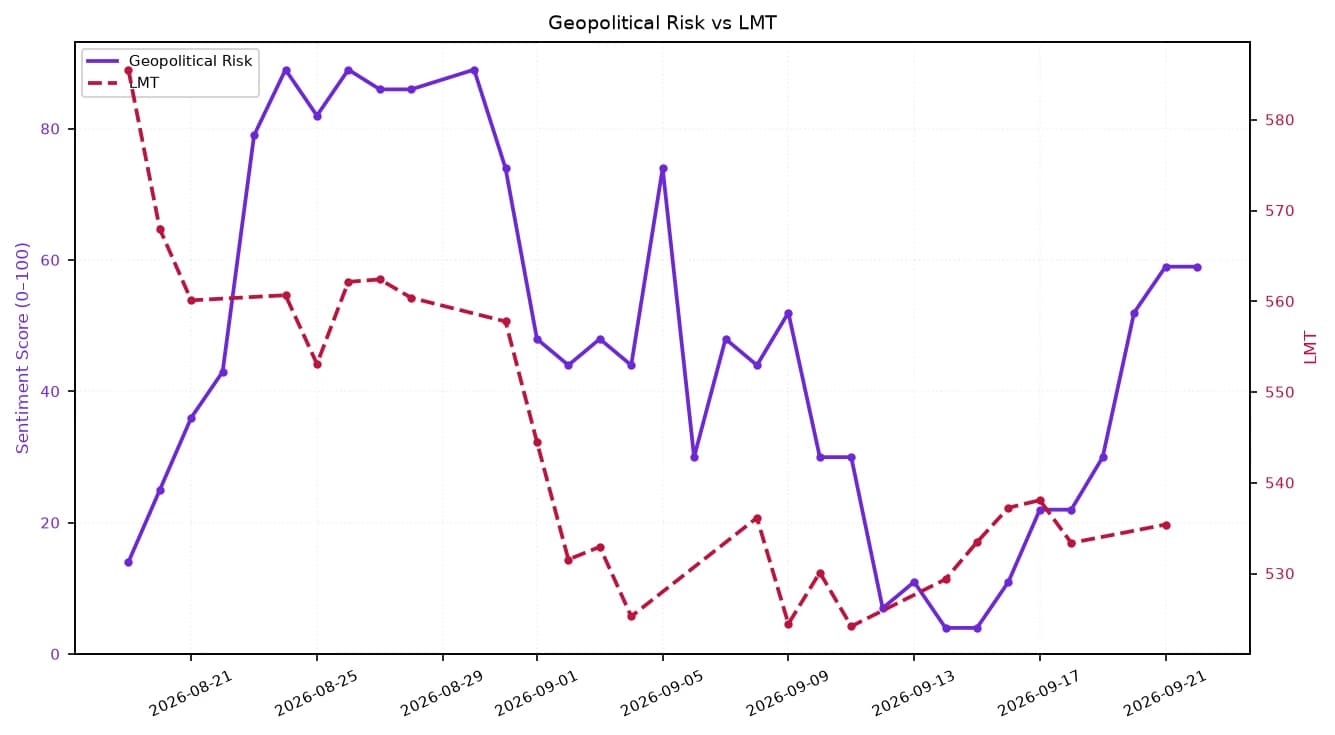
Geopolitical Risk vs LMTadalytica.com
Explore this data interactively — full history, time series and cross-market comparisons.Open AlphaPulse
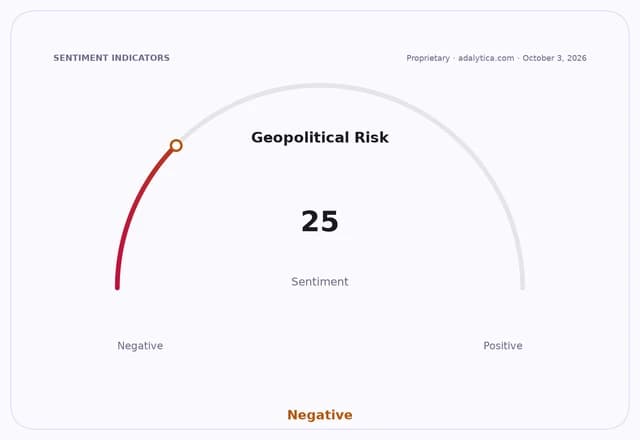
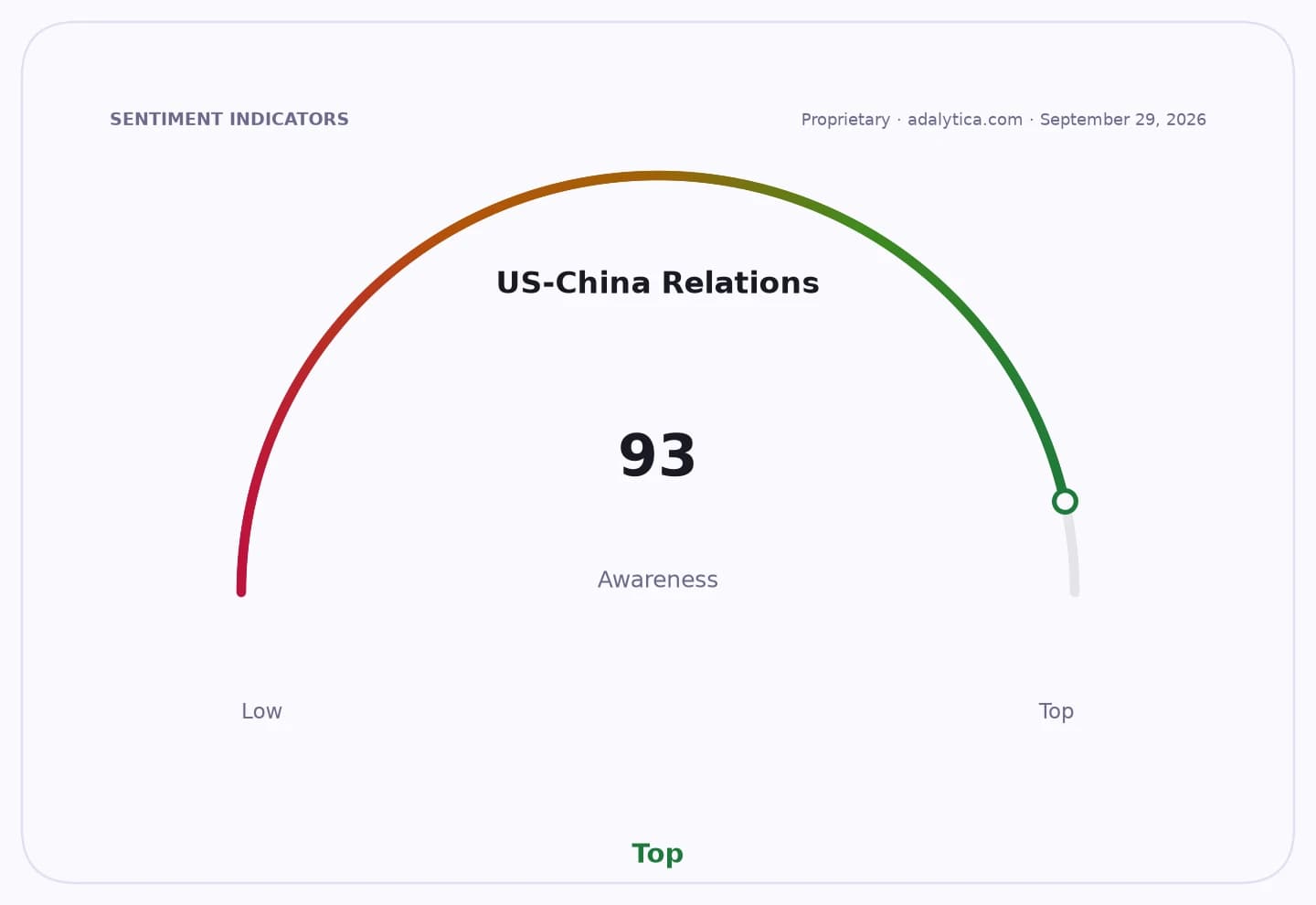
The geopolitical backdrop is only reinforcing the trade. Adalytica’s Global Stability Sentiment has fallen to 25, labeled Fear, with awareness at an Extreme Fear reading of 4, while FX volatility signals remain elevated and the U.S. dollar trade signal is flashing Extreme Fear. That combination points to an environment where geopolitical risk is back on the table and capital is rotating toward defense as a relative safe haven. Investors do not need a full-blown crisis for these names to work; they need a steady stream of budget support, allied rearmament and continuing stress across the Indo-Pacific perimeter.
The stock action also suggests the market still treats defense as cyclical when the better framing is secular. Technical readings show Lockheed and Northrop have been knocked back from overbought levels, while RTX has been cut down to a more defensive valuation zone after a sharp summer run. That creates the kind of entry point long-term investors want in a capital-spending supercycle. If the first island chain is becoming a lattice of resilient nodes rather than a single defensive line, the companies supplying the backbone of that lattice should command a premium, not a discount.
For investors, the play is to stay positioned in the picks-and-shovels names that benefit from every allied reinforcement plan, every missile-defense order and every hardening program across Japan, Taiwan, the Philippines and beyond. The market underestimates how much recurring demand is embedded in redundancy. In the first island chain, survival is purchased with inventory, sensors and interceptors — and that is exactly where the money is going.
| Entity | Gains | Losses |
|---|---|---|
| Lockheed Martin | ▲Missile demand | ▼Platform-only multiples |
| Northrop Grumman | ▲ISR and C2 spending | ▼Passive defense budgets |
| RTX | ▲Radar and air defense orders | ▼Complacent shorts |
| Indo-Pacific allies | ▲Redundant deterrence | ▼Single-point vulnerabilities |