Japan’s August consumer price data show a rare cooling in staple food inflation even as export-linked products and energy costs keep pressure on household budgets, a mix that matters for the Bank of Japan, retailers and investors hunting for the next winners in Japan’s shifting inflation regime.
Japan August CPI: Rice Prices Fall, Tea Costs Rise
The most economically significant development is the 15.7% decline in rice prices from a year earlier, the steepest drop in about 21 years, as a fuller flow of new-crop rice hit the market. Rice is politically sensitive and deeply embedded in Japan’s consumer basket, so the fall signals that at least one of the country’s most visible food inflation flashpoints is easing. That should help modestly relieve pressure on households, but it does not mean inflation is fading broadly: consumer prices excluding fresh food rose 1.7% in August, and food excluding fresh produce still climbed 2.7%.
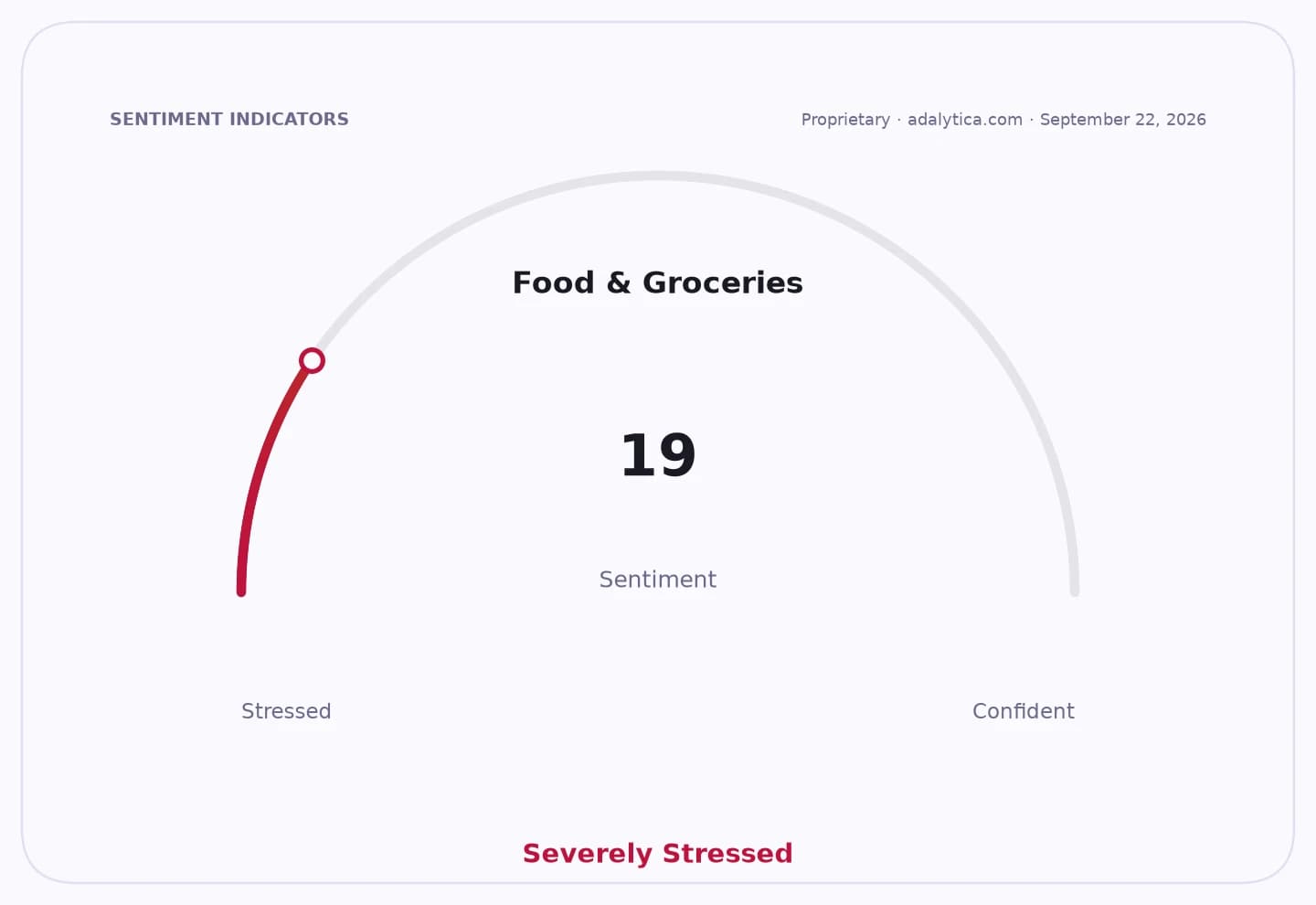
Sentiment IndicatorsⓘProprietary · adalytica.com · September 19, 2026
This is a snapshot — live sentiment, awareness and momentum for 130+ markets update continuously in the dashboard.Open AlphaPulse
What makes the report investable is the split beneath the surface. Japan is not seeing a clean disinflation story. It is seeing a redistribution of pricing power. Green tea prices surged 31.5%, the biggest increase on record, as matcha demand from abroad drove up costs. Household consumables such as detergents and garbage bags jumped 10.1% on the back of higher crude prices tied to Middle East tensions. Energy prices fell 0.7% overall, helped by renewed government subsidies for electricity and gas bills, but that support is temporary and does not remove the underlying cost pressure from imported commodities.
For investors, that creates a clear second-order thesis: the market should not treat Japanese food inflation as one trade. Staples exposed to domestic supply recovery may see relief, while branded or export-sensitive categories can still enjoy pricing power. The companies most tied to rice and basic staples face margin pressure as consumers gain some respite, but producers and processors with premium, globally marketed products — such as green tea and matcha-related businesses — can still pass through higher prices. Retailers and restaurant chains will likely keep facing a tug-of-war between volume sensitivity and cost inflation, especially if energy and packaging costs remain sticky.
The broader policy implication is equally important. The Bank of Japan has been looking for evidence that inflation is becoming more durable and less dependent on imported costs. August’s data support a more nuanced conclusion: headline and core pressures are still present, but the composition is improving in some food categories while worsening in others. That makes the next move in rates more data-dependent and keeps the yen, JGBs and domestic consumer equities in play.
For investors, the message is to look past the headline inflation rate and into the winners and losers inside the basket. I believe the better opportunity is not in chasing the broad consumer trade, but in owning businesses with genuine pricing power, export demand and premium food branding while remaining cautious on names exposed to basic staples, household volume pressure and cost inflation. Japan’s inflation story is becoming more selective — and that selectivity is where returns will be made.
| Entity | Gains | Losses |
|---|---|---|
| Rice buyers | ▲Lower staple costs | ▼Rice farmers, mills |
| Green tea exporters | ▲Stronger pricing power | ▼Domestic tea consumers |
| Household retailers | ▲Easier rice comparisons | ▼Margin pressure from packaging and fuel |
| BOJ doves | ▲More room to wait | ▼BOJ hawks seeking tighter policy |