Japan’s biggest banks have moved stablecoins from theory to treasury-grade infrastructure, a shift that could reshape how corporate money moves through the world’s third-largest economy and put fresh competitive pressure on XRP-linked payment rails.
Japan banks test yen stablecoin for corporate payments
Mitsubishi UFJ Financial Group, Mizuho Financial Group and Sumitomo Mitsui Banking Corp. said they completed joint trials of a yen-backed stablecoin with Mitsubishi UFJ Trust and TISI, testing issuance, cross-border settlement and redemption into yen for Mitsubishi Corp. under the supervision of Japan’s Financial Services Agency. The token was structured as a trust beneficiary right, a design that fits Japan’s regulatory framework and signals the banks are aiming for a commercially usable product, not a crypto experiment.
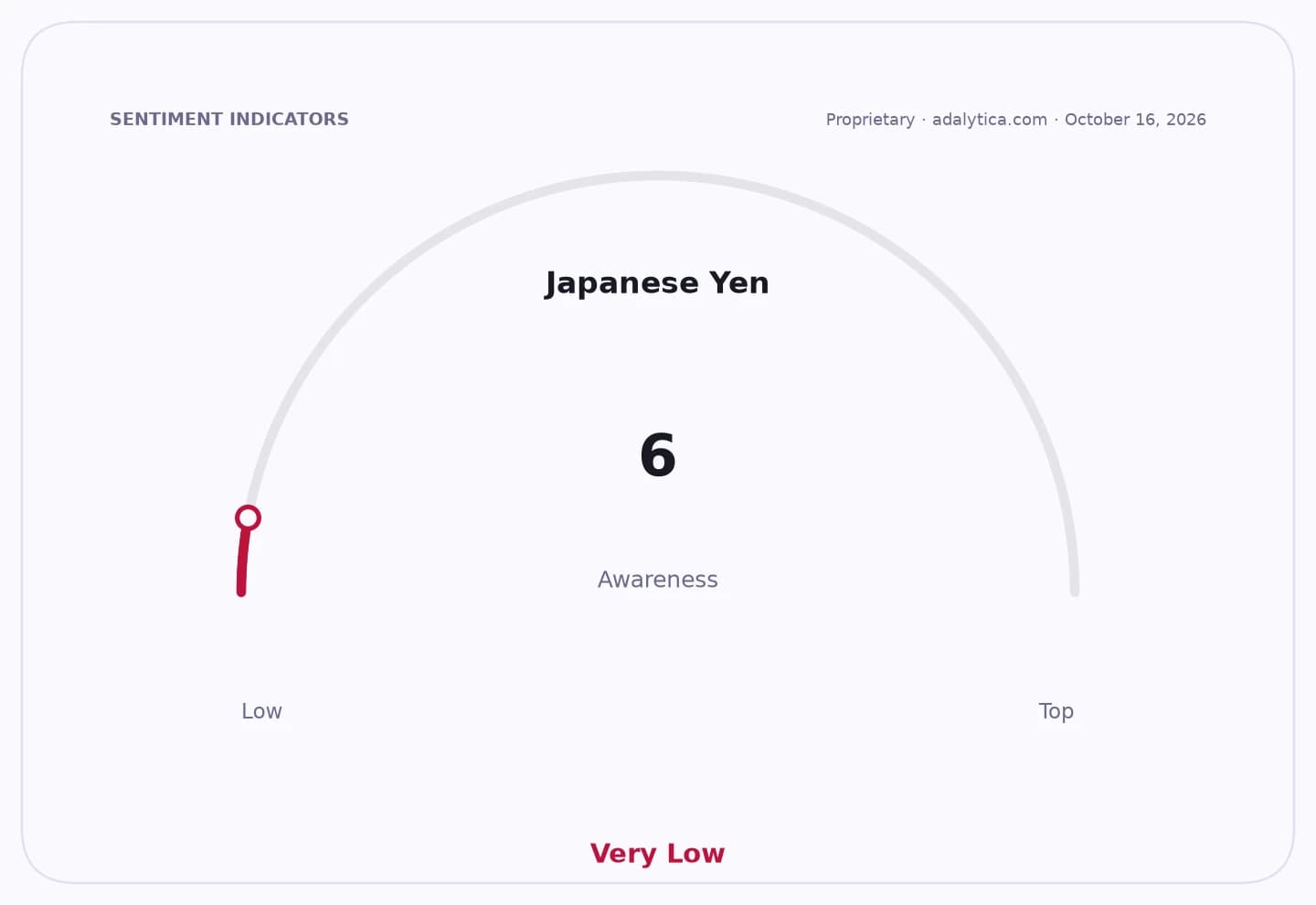
Sentiment IndicatorsⓘProprietary · adalytica.com · October 20, 2026
This is a snapshot — live sentiment, awareness and momentum for 130+ markets update continuously in the dashboard.Open AlphaPulse
That matters because Japan is one of the clearest case studies for where stablecoins can win. If the megabanks can bring a regulated yen token to market before fiscal year-end, they could capture a large share of domestic corporate settlements, lower transaction frictions and keep payment flows inside bank-controlled rails. For companies with international operations, the appeal is straightforward: faster settlement, clearer compliance and fewer intermediaries. For banks, it is a chance to defend fee pools that could otherwise migrate to crypto-native networks.
The pilot also lands squarely in a market that has long been linked to Ripple and XRP. MUFG, Mizuho and SMBC took part in an SBI Ripple Asia consortium in 2017, and Mizuho and an SMBC investment affiliate have since explored Ripple-related tokenization and decentralized finance projects. But a bank-led yen stablecoin could compete directly with XRP-based payment solutions, especially if corporates prefer an infrastructure they already trust and regulators can more easily supervise. Japan’s Progmat platform, backed by MUFG and built on Avalanche technology, gives the banks another route to control costs, compliance and corporate payment workflows.
Investors should see this less as an either-or winner-takes-all battle and more as a market segmentation story. Bank-issued yen stablecoins can become the default for regulated corporate settlements at home, while XRP and XRPL may still retain a role in cross-border liquidity, tokenized assets and open financial applications, especially with SBI’s continued involvement and its planned rollout of Ripple’s RLUSD stablecoin. But the burden of proof has shifted. If megabanks can commercialize a yen stablecoin at scale, XRP’s Japan narrative becomes more crowded and its payment moat less exclusive.
The broader investment message is that regulated stablecoins are moving into the financial plumbing phase. That is bullish for the infrastructure picks-and-shovels around custody, compliance, blockchain settlement and tokenization, and it raises the stakes for assets whose use case depends on being the preferred bridge for payments. The next catalyst will be the commercial launch: if adoption comes quickly, Japan could become a template for bank-led digital money elsewhere in Asia.
| Entity | Gains | Losses |
|---|---|---|
| MUFG, Mizuho, SMBC | ▲Payment fees, control of rails | ▼Legacy transfer friction |
| Mitsubishi Corp. and corporates | ▲Faster settlement, compliance | ▼FX and intermediaries |
| Ripple / XRP | ▲Niche liquidity use cases | ▼Japan payments share |
| Progmat / stablecoin infrastructure | ▲Adoption, transaction volume | ▼Crypto-native rivals |