Japan’s higher-rate environment is turning plain-vanilla savings into a real investment decision, and for households with cash parked at Japan Post Bank the better 5-year return now belongs to individual government bonds.
Japan Post Bank Deposit vs 5-Year Government Bond
On 1 million yen, the gap is material: Japan Post Bank’s five-year time deposit pays 1%, while the October issue of Japan’s fixed-rate five-year retail government bond pays 2.39%. Over the full term, that works out to roughly 70,000 yen more in interest before tax for the bond, or about 55,000 yen after tax.
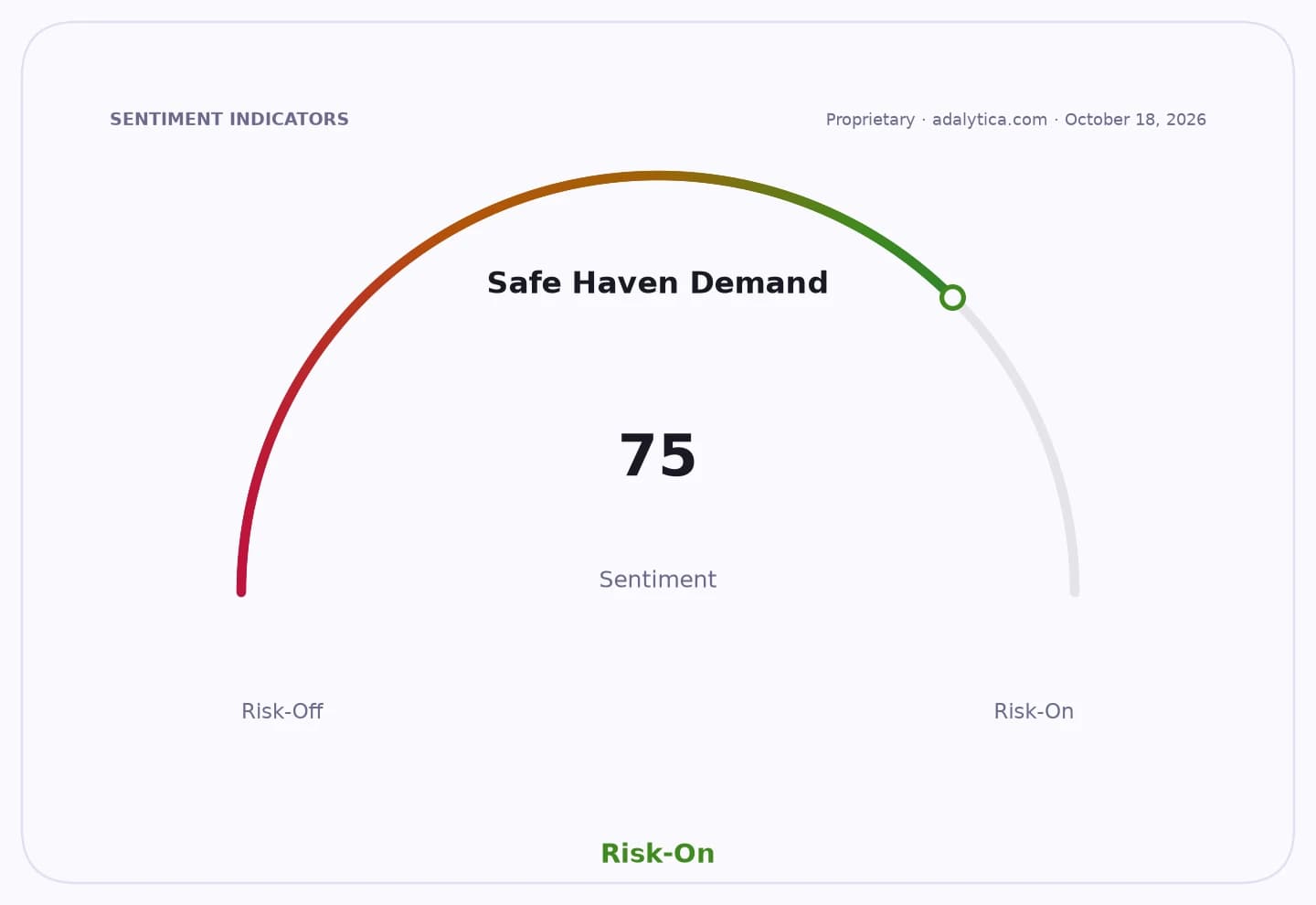
Sentiment IndicatorsⓘProprietary · adalytica.com · October 21, 2026
This is a snapshot — live sentiment, awareness and momentum for 130+ markets update continuously in the dashboard.Open AlphaPulse
That spread matters because it is a clean sign that Japan’s long period of near-zero returns is ending. As the Bank of Japan keeps normalizing policy, retail savers are being forced to compare bank deposits, government paper and other low-risk assets on yield again. In a country where households still sit on large cash balances, even a modest pickup in returns can shift flows away from deposits and toward government securities.
The math is straightforward. A 1 million yen deposit at 1% generates about 10,000 yen a year, or about 50,000 yen over five years before compounding. The government bond, yielding 2.39%, produces about 23,900 yen a year and 119,500 yen over five years if held to maturity. Japan Post Bank’s deposit does have the advantage of semiannual compounding, so the final payout is a little higher than the simple estimate. But the bond still wins decisively on yield.
Investors should care because this is not just a retail-saver comparison; it is a window into Japan’s changing capital allocation. Higher domestic yields make yen assets more competitive, supporting the currency and gradually reducing the pressure for households to chase riskier investments purely for income. That is one reason the yen has been drawing attention again, with Adalytica’s Japanese yen trading signals showing extreme-greed sentiment even as conventional technical indicators point to a firmer short-term tone.
There are trade-offs. Japan Post Bank’s deposit can be redeemed early, albeit at a penalty, while the retail bond generally cannot be cashed in during the first year and then carries an adjustment if sold early. The deposit is also covered by Japan’s deposit insurance regime up to 10 million yen plus interest, while the bond is backed by the state. For savers who may need liquidity soon, the deposit still has utility. But for money that can be locked away, the bond is the better income play.
The bigger investment narrative is that Japan’s rate normalization is beginning to matter at the household level, not just in headlines from the Bank of Japan. As yields rise, the winners are savers, insurers and government bond buyers. The losers are low-yield deposit products, rate-sensitive borrowers and anyone still assuming Japanese cash will stay stuck earning almost nothing.
For investors, the takeaway is simple: Japan’s “cash is dead” trade is over. The next phase is about where that cash goes, and the first beneficiaries are Japanese government bonds, the yen and domestic financial assets that can finally compete on yield.
| Entity | Gains | Losses |
|---|---|---|
| Individual government bonds | ▲Higher retail demand | ▼Bank deposits |
| Japan Post Bank deposit holders | ▲Liquidity and insurance | ▼Yield income |
| Japanese savers | ▲Better cash returns | ▼Idle cash balances |
| Yen | ▲Support from higher domestic rates | ▼Yen-funded carry trades |