Japan’s core machinery orders jumped 5.2% in August, a stronger-than-expected signal that corporate capital spending is still being pulled forward by artificial intelligence, chips and related industrial investment.
Japan core machinery orders rise 5.2% in August
That matters because machinery orders are one of Japan’s best forward-looking gauges of business investment, and this latest reading suggests the country’s capex cycle is still alive even as broader external demand softens. The Cabinet Office kept its assessment unchanged at “showing signs of picking up,” reinforcing the view that Japanese companies are not pausing their spending plans despite a volatile global backdrop.
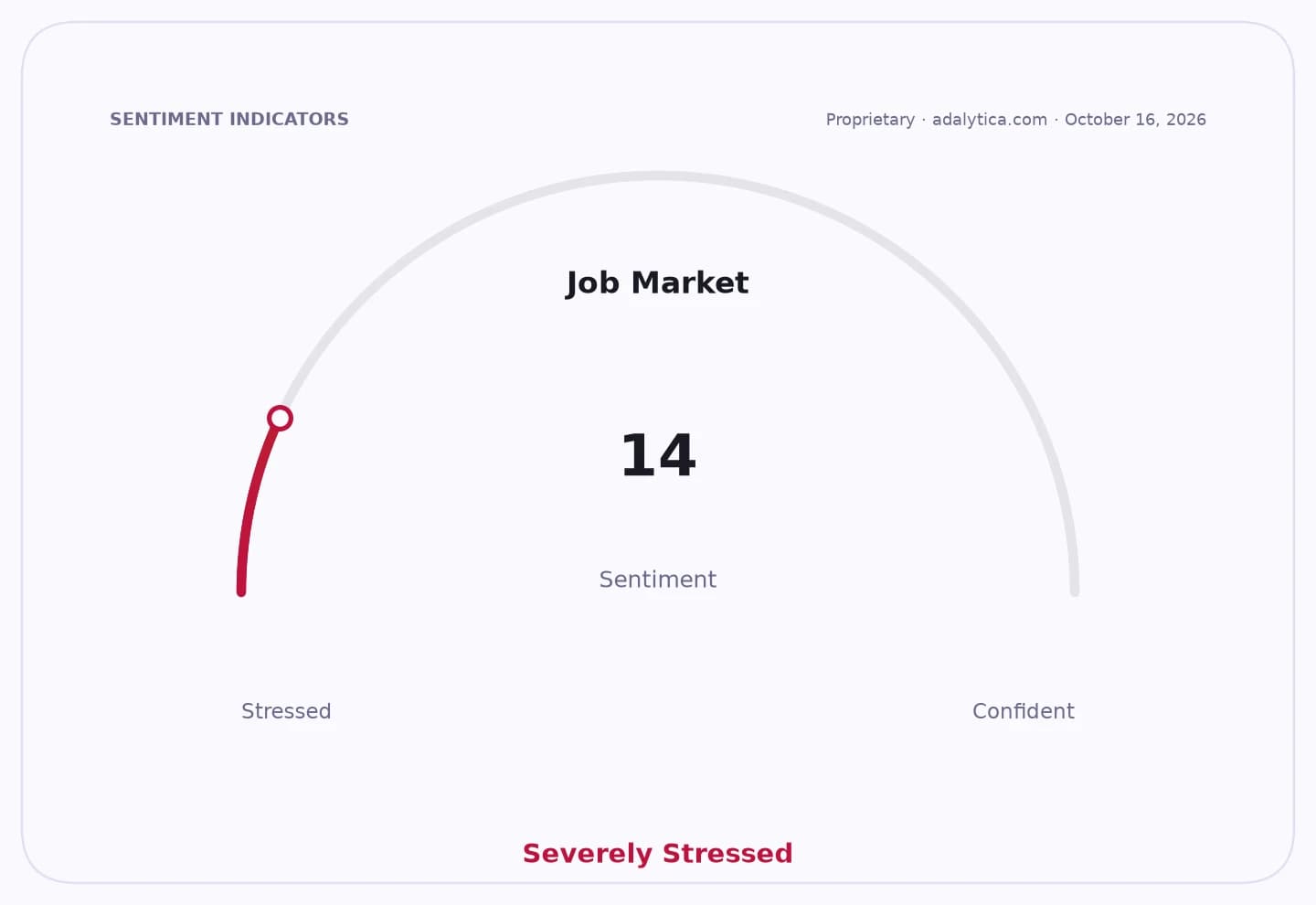
Sentiment IndicatorsⓘProprietary · adalytica.com · October 17, 2026
This is a snapshot — live sentiment, awareness and momentum for 130+ markets update continuously in the dashboard.Open AlphaPulse
The 1,069.8 billion yen reading for core private-sector orders was driven by both manufacturers and non-manufacturers. Manufacturing orders rose 1.6%, while non-manufacturing orders climbed 2.9%, showing the pickup is broadening beyond a single industry. Orders from general-purpose and production machinery makers, which include semiconductor equipment suppliers, increased 9.3% as AI and chip-related demand filtered through the industrial chain.
That is the key investable story. Japan is not just participating in the global AI buildout; it is becoming one of its quieter beneficiaries through the picks-and-shovels layer — machine tools, semiconductor manufacturing equipment, industrial components and precision equipment. When AI capex remains this strong, it supports a longer runway for Japanese industrial exporters and domestic suppliers tied to factory automation and advanced manufacturing.
The details point to a constructive second-half setup. Large orders, including heat exchangers used in industrial plants, helped drive a 2.3-fold surge in non-ferrous metals orders, while aircraft and machine tools also contributed. On the non-manufacturing side, brisk digital investment supported leasing, telecoms and retail, suggesting Japan’s corporate spending impulse is not confined to factories.
For investors, that makes the industrial complex worth watching closely. Names tied to semiconductor tools, factory automation and industrial machinery remain leveraged to a multi-quarter capex cycle, while logistics, telecom and leasing firms can benefit from the digital-investment spillover. The flip side is that weaker public-sector and overseas demand means the recovery still depends heavily on domestic corporate spending and the AI supply chain, not a broad export rebound.
The market’s message is straightforward: the AI buildout is still moving upstream into real economy spending. If that continues, Japan’s machinery makers could stay ahead of consensus and keep delivering operating leverage well into 2027.
| Entity | Gains | Losses |
|---|---|---|
| Japanese machinery makers | ▲AI-linked order growth | ▼Weak overseas demand |
| Semiconductor equipment suppliers | ▲9.3% order pickup | ▼Cyclical end-market caution |
| Non-manufacturing capex sectors | ▲Digital investment demand | ▼Public-sector weakness |
| Export-dependent industrials | ▲Higher factory spending | ▼Softer external orders |