Newly harvested rice in Japan is already selling below last year’s levels, and in some stores it is now cheaper than older stock — a reversal that underscores how quickly the market has swung from shortage to surplus and is leaving farmers and wholesalers with unsold grain and thinner margins.
Japan rice prices fall below last year’s levels
The price inversion matters because rice is one of Japan’s most politically sensitive staples, and the move from scarcity to glut changes everything from farm incomes to retail pricing and inventory management. At a Fujigran store in Hiroshima, 5 kilograms of locally grown Koshihikari newly arrived this month were priced at about 3,500 yen including tax, or roughly 30% below the level seen when last year’s new crop first appeared, according to the retailer. By contrast, rice harvested last year was still being sold at more than 4,000 yen for 5 kilograms, creating the unusual situation in which older rice is pricier than fresh product.
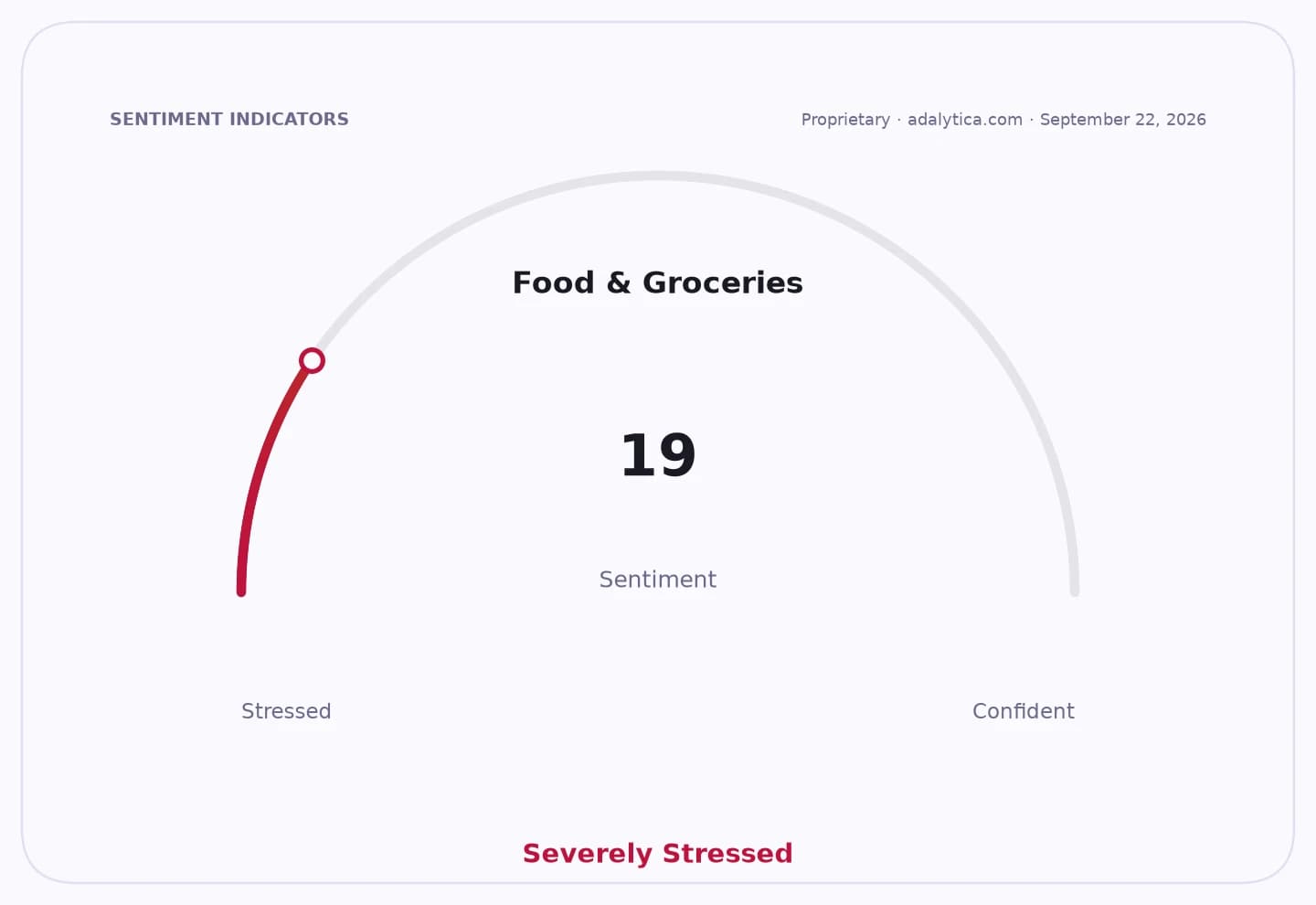
Sentiment IndicatorsⓘProprietary · adalytica.com · September 10, 2026
This is a snapshot — live sentiment, awareness and momentum for 130+ markets update continuously in the dashboard.Open AlphaPulse
That reversal is a direct consequence of last year’s shortages, which pushed growers and traders to boost production. The result this year is oversupply, a classic agricultural whiplash that hits farmers first. They face lower selling prices just as their costs remain elevated, making it harder to clear inventories profitably. JA officials in the market are already signaling the pressure, saying old rice must be sold even at a loss, a clear sign that the sector is moving from scarcity pricing to defensive liquidation.
For consumers, the shift is welcome in the short term. After months of higher rice bills, shoppers are seeing relief at the shelf and more choice across origins and grades. Retailers also benefit from being able to refresh assortments with new crop rice, which can lift foot traffic and accelerate turnover if they clear older stock. But for the broader rice industry, the price gap is a warning that margins are tightening and that some producers may cut plantings or leave the sector if prices remain under pressure.
The economic implications go beyond agriculture. Rice remains a core household food item in Japan, so falling prices can help ease food inflation, even as policymakers remain wary of triggering production losses that could recreate shortages later. The government has already been trying to balance supply security with inflation control, including stockpiling and channeling rice through official distribution mechanisms. That makes the current price reversal politically delicate: too much downward pressure risks farm abandonment, but too little relief leaves consumers paying up.
Investors focused on Japanese food distributors, agricultural cooperatives and upstream farm inputs should watch whether the new-crop discount widens into a longer downcycle. If prices keep falling, the near-term winners are consumers and retailers able to move volume; the losers are growers, wholesalers carrying expensive old inventory, and any policy effort aimed at preserving domestic production. The key question now is whether this is a seasonal adjustment or the start of a more durable reset in Japan’s rice market.
| Entity | Gains | Losses |
|---|---|---|
| Consumers | ▲Lower rice prices | ▼None immediately |
| Retailers | ▲Faster inventory turnover | ▼Margin pressure on old stock |
| Farmers | ▲None | ▼Lower farm-gate prices |
| Wholesalers / JA | ▲Ability to clear inventory | ▼Losses on old rice |