A Chinese beauty influencer’s shock return after three years off social media has underscored how much premium livestream commerce still depends on trusted personalities, not just discounting.
Jiang Chenglan Returns With 30 Million Yuan Livestream Sales
Cheng Shi’an, now using her real name Jiang Chenglan, sold more than 100,000 makeup sets and generated nearly 30 million yuan in two livestreams on Douyin and Xiaohongshu, according to reports in Vietnamese media citing platform rankings and sales data. The first broadcast on Douyin on Sept. 15 drew more than 10.68 million views and briefly topped both the platform’s overall commerce chart and its beauty category, while a follow-up session on Xiaohongshu also reached the top of that site’s shopping rankings.
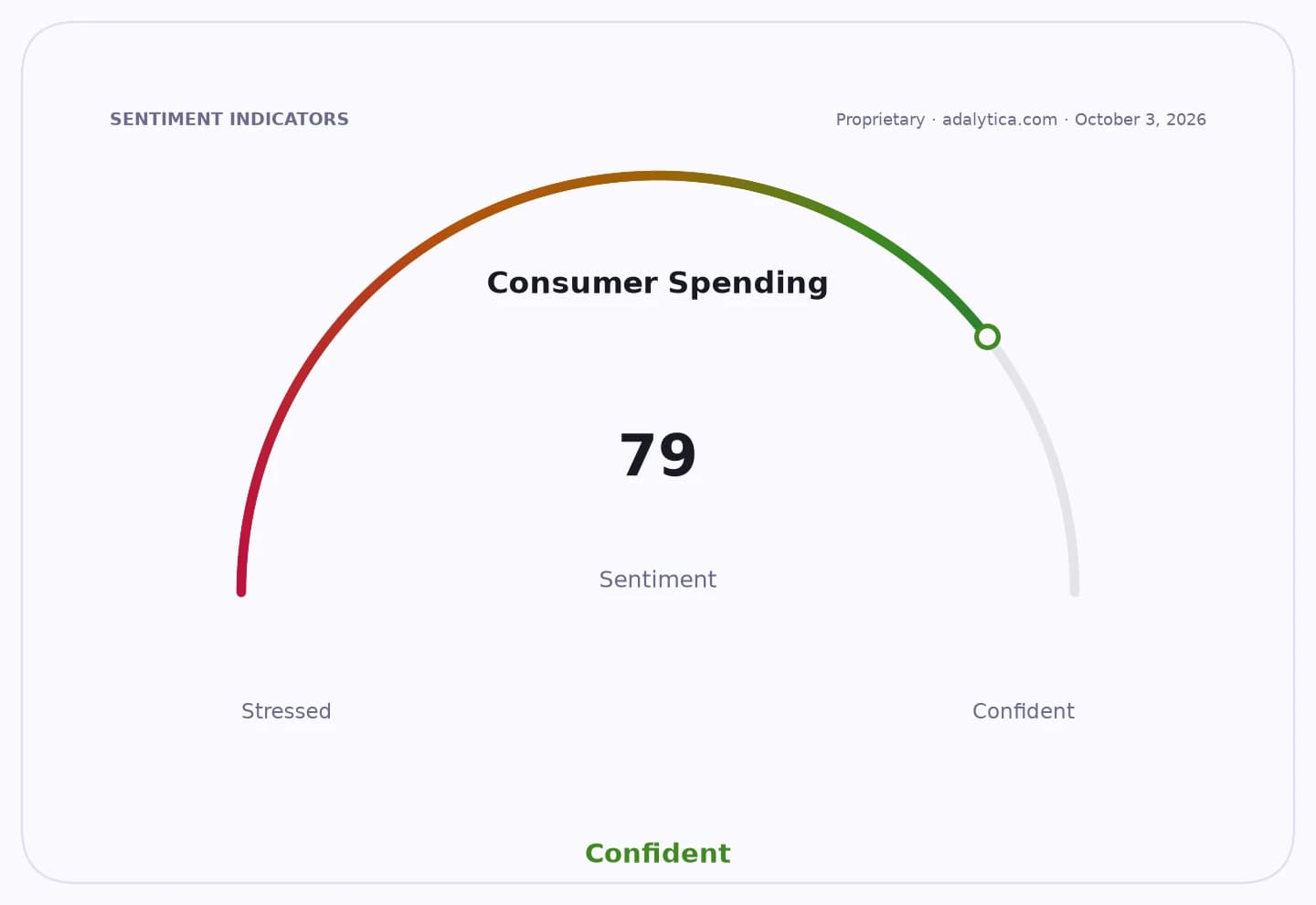
Sentiment IndicatorsⓘProprietary · adalytica.com · October 3, 2026
This is a snapshot — live sentiment, awareness and momentum for 130+ markets update continuously in the dashboard.Open AlphaPulse
The comeback matters because it shows that in China’s crowded cosmetics market, a high-profile creator can still create immediate demand even after a long absence and a legal dispute. Jiang’s “starter makeup” bundle, priced at 286 yuan versus a suggested retail value of 889 yuan for the nine-item set, sold out quickly despite resale listings rising above 350 yuan. That kind of demand implies not only fan loyalty but also pricing power for creators who can package curation, education and product selection into a single transaction.
For beauty brands, the episode is a reminder that influencer marketing has not become obsolete, but it is changing. Jiang’s appeal was not built on deep discounting alone. She previewed the products in videos, explained why each item was chosen and highlighted their drawbacks, turning the livestream into a guided purchase rather than a flash sale. That approach appears to have resonated with first-time makeup buyers, a segment still large enough in China to reward education-led merchandising.
The timing is also notable for listed cosmetics groups and their investors. Estée Lauder, L’Oréal Paris and Bioderma have all worked with Jiang since she announced plans to return, suggesting prestige brands still see value in creator-led distribution despite a more selective environment. For companies such as Estee Lauder and Coty, which have spent the past year working through inventory, margin pressure and slower consumer demand, China’s live-selling ecosystem remains both an opportunity and a risk: it can move volume quickly, but it also concentrates brand equity in a handful of creators whose reputations can change overnight.
Jiang’s legal overhang makes that dependence more complex. She and her studio were placed under consumption restrictions on Sept. 8 after failing to pay 11.19 million yuan tied to a management contract dispute and a fight over the rights to the “Cheng Shi’an” accounts. That the return still generated heavy sales suggests consumers may separate a creator’s commercial appeal from her legal troubles, at least in the short term. But for brands and investors, the longer-term question is whether that loyalty survives scrutiny.
The broader takeaway is that China’s beauty market is still rewarding authenticity, curation and platform reach over pure price cuts. If Jiang can sustain traffic without a nostalgia bump, it would reinforce the case for content-led commerce in cosmetics. If not, her return will be remembered as a one-off surge rather than a durable business model.
| Entity | Gains | Losses |
|---|---|---|
| Jiang Chenglan / Cheng Shi’an | ▲Sales rebound; renewed relevance | ▼Legal scrutiny; trust risk |
| Beauty brands | ▲Fast volume; creator-driven exposure | ▼Channel dependence; margin pressure |
| Consumers buying starter kits | ▲Curated value; lower entry price | ▼Resale markups; supply shortages |
| Competing influencers | ▲More demand for top creators | ▼Less attention; higher standards |