Kanmu is trying to pull more Japanese shoppers into Amazon.co.jp with a no-entry prize campaign tied to the Visa prepaid Vandle Card, a move that underscores how fiercely e-commerce and payments providers are competing for holiday spending.
Kanmu Vandle Card promo targets Amazon Japan shoppers
The promotion, announced Nov. 20, runs through Dec. 28 and offers 200 winners 10,000 yen apiece in Vandle Card balance if they spend at least 10,000 yen on Amazon.co.jp during the campaign period. The offer is modest in scale, but it is economically relevant because it is designed to stimulate transaction volume on one of Japan’s largest online retail platforms while encouraging repeat use of a prepaid payment product that sits outside the traditional credit card ecosystem.
Sentiment Indicators
For Kanmu, the appeal is straightforward: prepaid cards can generate payment usage and customer stickiness without the underwriting risks of revolving credit. For Amazon, the incentive may help support order frequency during a critical year-end shopping window, even if the retailer is not sponsoring the promotion. The structure also matters because Amazon transactions are often settled at shipment, meaning purchases made inside the campaign window may still miss eligibility if payment posts later — a reminder of how fulfillment timing can affect consumer incentives and merchant accounting.
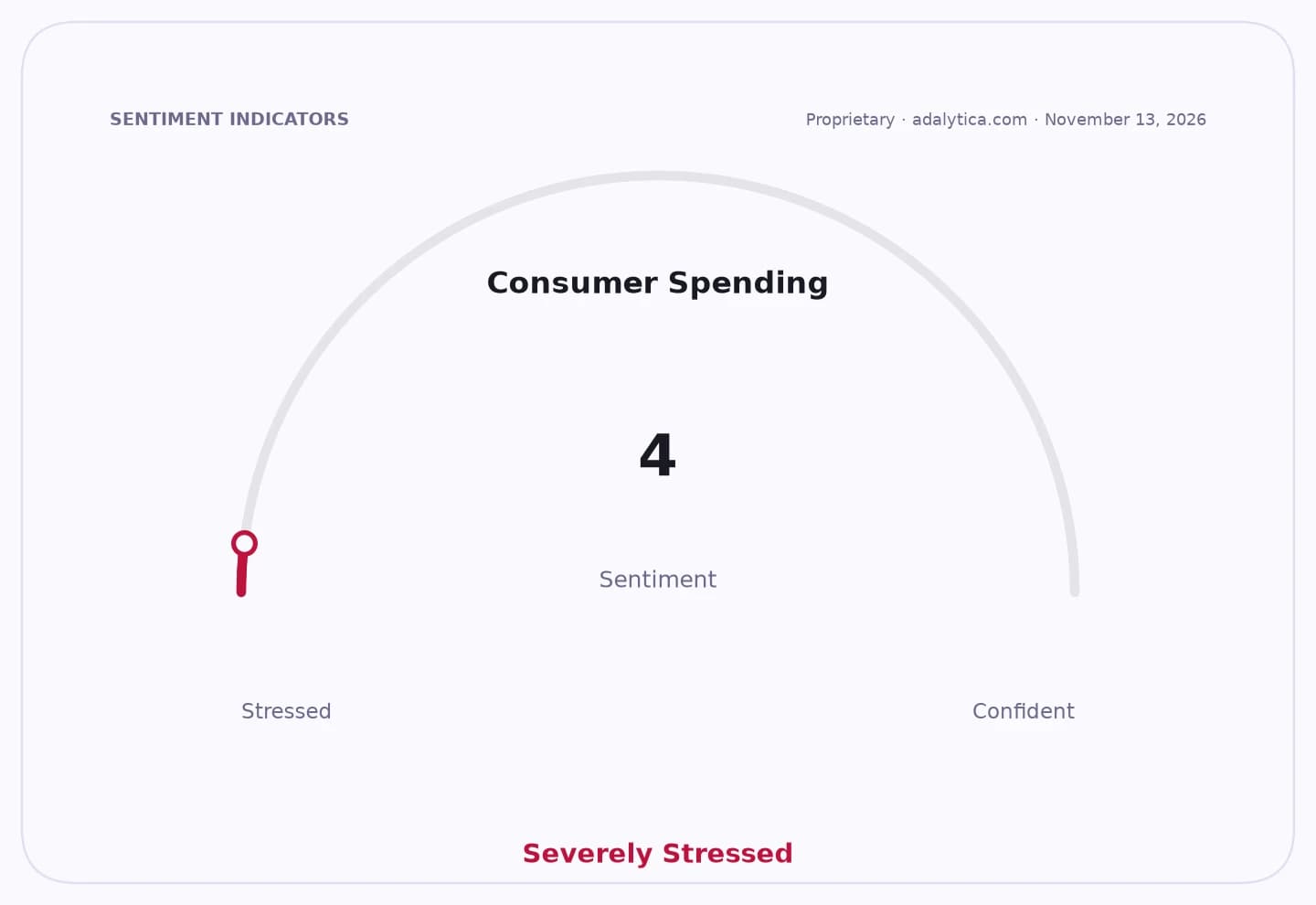
The campaign lands against a backdrop of weak retail sentiment. Adalytica’s Retail Goods Spending Sentiment gauge shows “Extreme Fear” at 4, while broader consumer spending sentiment remains in “Fear” territory at 18, suggesting shoppers are still price-sensitive and promotional offers remain important tools for conversion. In that environment, small-ticket incentives can have outsized influence on basket-building and checkout behavior, especially on platforms where convenience and rewards are key decision factors.
Amazon shares were under pressure on Nov. 20, closing at $246.82 after hitting $259.97 intraday, as the stock slipped back toward its 50-day moving average and remained above its 200-day line. The move is not large enough to attribute to the campaign itself, but it reflects a market still focused on the company’s ability to defend demand and maintain operating leverage heading into the holiday quarter. Amazon’s filing has warned that softer demand can weigh on revenue growth, while payment processing fees and holiday fulfillment costs can pressure margins.
The bull case is that campaigns like this keep Amazon’s checkout funnel active and reinforce the convenience of paying through alternative methods in a market where consumers remain cautious. The bear case is that such promotions are a sign merchants and payment providers still need incentives to drive spending, especially when discretionary demand is fragile.
For investors, the story is less about the size of the giveaway than the behavior it points to: Japanese e-commerce remains promotion-driven, and payment-linked incentives are still part of the fight for consumer share. If holiday spending is weak, offers like this may become more common; if spending stabilizes, they should help payment partners and marketplaces convert traffic without materially changing the broader demand picture.
| Entity | Gains | Losses |
|---|---|---|
| Kanmu / Vandle Card | ▲More card usage | ▼Higher promo cost |
| Amazon.co.jp | ▲More checkout activity | ▼No direct sponsorship benefit |
| Consumers who qualify | ▲Chance at 10,000 yen balance | ▼Must spend first |
| Rival payment providers | ▲None | ▼Share loss in prepaid spend |