Kazakhstan is moving to position itself as a regional AI compute hub, and the most consequential step yet is a U.S.-licensed plan to bring in 45,000 NVIDIA Grace Blackwell chips for a Firebird AI project built with Kazakhtelecom.
Kazakhstan plans 45,000 Nvidia chips for AI hub

The scale matters because artificial intelligence is now constrained as much by power, cooling and data-center capacity as by software talent. For a country better known for energy exports than cloud infrastructure, the project points to a bid to turn surplus industrial and electrical capacity into a higher-value digital business. It also gives NVIDIA another sovereign-style deployment in a market that wants access to frontier AI hardware despite tight export controls and a still-uneven global supply chain.
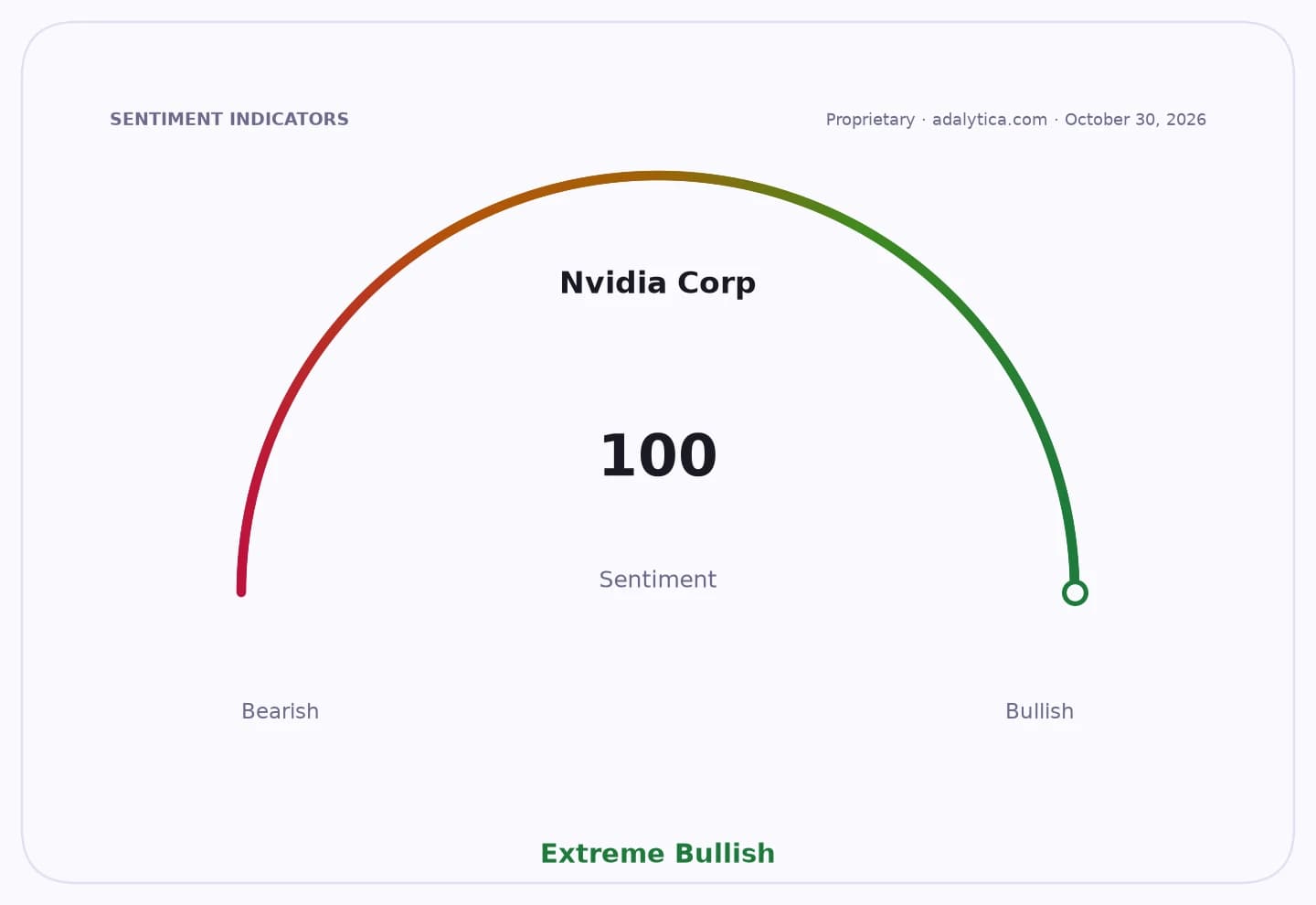
Sentiment Indicators

NVIDIA highlighted the partnership in a social media post after founder and chief executive Jensen Huang visited Astana on Oct. 23, underscoring that the company sees Kazakhstan as more than a one-off customer. The visit drew attention to Data Center Valley in Ekibastuz, a planned cluster that Kazakhtelecom says could ultimately scale to as much as 1 gigawatt, though that figure is a target for the full build-out rather than capacity already in service.
The first phase has 215 megawatts reserved, with a 50-megawatt data center due to start in the second quarter of 2027. Firebird’s first phase at the same site is slated for commercial launch in the third quarter of 2027. Separately, Kazakhtelecom says it has already deployed 880 NVIDIA GPUs in Astana and Almaty, including 400 H200s and 480 B300s, giving the country an initial base of installed compute rather than just promises on paper.
Nvidia Corp
That distinction matters for investors because AI infrastructure is increasingly judged by execution, not announcements. Even the planned 45,000-chip Firebird deployment does not mean all of that hardware has been delivered, installed or activated. But the export licence is a key gatekeeper in a segment where U.S. policy can delay or redirect supply, and it suggests the project has moved beyond concept stage.
For NVIDIA, the deal reinforces demand for its highest-end data-center products at a time when the stock has been volatile. The shares are still trading well above their 200-day moving average, but recent price action has softened and conventional technical indicators such as RSI have rolled lower from overbought levels. That means the market is already wrestling with how much of NVIDIA’s AI growth story is baked into the valuation, even as the company keeps finding new sovereign and enterprise buyers.
For Kazakhtelecom, the upside is strategic. Management wants Kazakhstan to shift from consuming foreign compute to supplying it, using cheap energy and an established industrial base in Ekibastuz to attract international workloads. If it works, the country could generate recurring revenue from compute leasing, cloud services and AI hosting rather than relying only on traditional telecom earnings. If it fails, the risk is stranded capital, power bottlenecks and underused hardware in a capital-intensive business with long payback periods.
| Entity | Gains | Losses |
|---|---|---|
| NVIDIA | ▲More frontier-chip demand | ▼Supply still tightly constrained |
| Kazakhtelecom | ▲Higher-value AI infrastructure business | ▼Heavy capex and execution risk |
| Kazakhstan | ▲Potential AI export hub status | ▼Power and delivery bottlenecks |
| Local AI startups | ▲Access to scarce compute | ▼Dependence on pricing and allocation |