Kazakhstan’s inflation eased to 9.8%, giving policymakers an early sign that higher interest rates and a firmer tenge are starting to work.
Kazakhstan Inflation Eases to 9.8% as Tenge Firms
The slowdown matters because inflation remains the central constraint on Kazakhstan’s growth outlook, household spending and the central bank’s room to maneuver. A retreat below 10% does not amount to a victory, but it suggests price pressures are losing some momentum after a period when imported costs and currency weakness kept inflation sticky. For a commodity exporter exposed to volatile external flows, the exchange rate is doing part of the disinflation work that policy alone could not deliver.
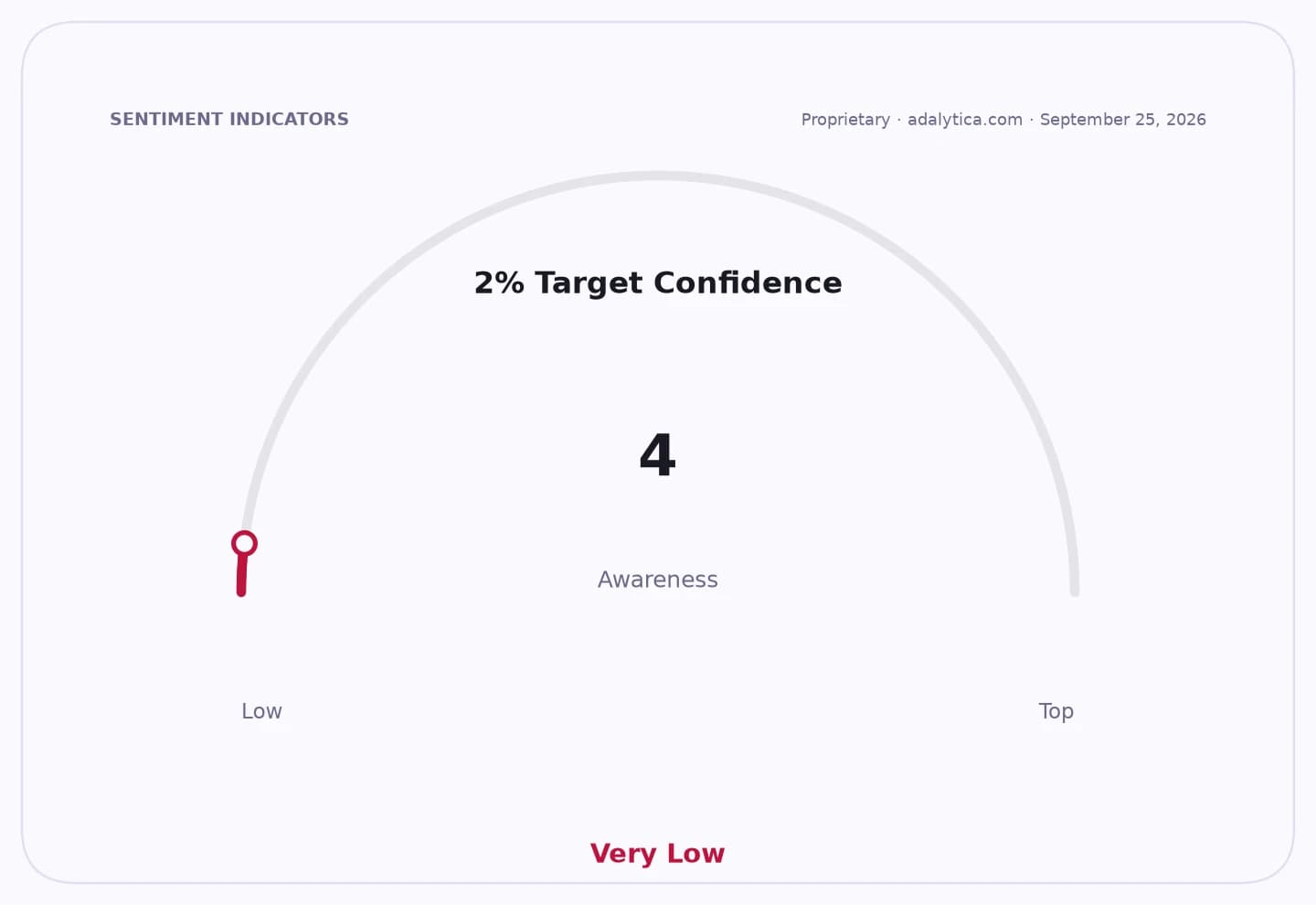
Sentiment IndicatorsⓘProprietary · adalytica.com · September 29, 2026
This is a snapshot — live sentiment, awareness and momentum for 130+ markets update continuously in the dashboard.Open AlphaPulse
The European Bank for Reconstruction and Development said the moderation reflects tight policy conditions and the stronger currency. That combination helps cool demand and makes imported goods cheaper in local terms, which is especially important in Kazakhstan’s economy where trade and administered prices can quickly feed through to the broader consumer basket. If the tenge holds recent gains, the central bank may be able to slow the pace of tightening or at least avoid more aggressive hikes.
For investors, the reading is relevant across assets. Lower inflation improves the odds of real returns holding up in local markets, supports the case for domestic bonds and reduces the risk of a sharper policy squeeze on credit growth and corporate earnings. It also matters for the tenge itself: a credible disinflation path can attract support from carry-oriented flows, while persistent inflation would have kept pressure on the currency and forced policymakers into a tighter stance for longer.
The bigger narrative is that Kazakhstan is trying to break the loop between a weak currency and high inflation. That loop is common in emerging markets with large import exposure, and it often only eases when monetary policy, exchange-rate stability and moderating demand move together. The recent decline shows that dynamic may finally be shifting in Kazakhstan’s favor, even if the battle is far from over.
The key question now is whether the disinflation trend can broaden beyond currency-led relief. If food, utilities and services remain sticky, the central bank will still face a difficult trade-off between protecting price stability and supporting growth. For now, though, the 9.8% reading gives markets a more constructive near-term signal on policy, the tenge and the domestic rate cycle.
| Entity | Gains | Losses |
|---|---|---|
| Kazakhstan central bank | ▲More policy credibility | ▼Less urgency to tighten |
| Tenge | ▲Stronger support | ▼Speculative sellers |
| Local bond investors | ▲Better real yields | ▼Inflation hedges |
| Consumers | ▲Slower price rises | ▼Wage laggards |