Kazakhstan’s central bank has lifted its 2027 inflation forecast, signaling that easing price pressures may take longer than previously expected and narrowing the scope for aggressive interest-rate cuts.
Kazakhstan Central Bank Raises 2027 Inflation Forecast

The National Bank of Kazakhstan now sees inflation at 6.5% to 8.5% in 2027, up from its earlier outlook, while leaving its 2026 forecast unchanged at 9% to 11%. Governor Timur Suleimenov said the revision reflects firmer external inflation, higher assumed regulated prices, and a larger fiscal impulse than in previous government projections. He also pointed to slower disinflation in Russia, Kazakhstan’s key trading partner, as a reason prices may return to target more gradually.
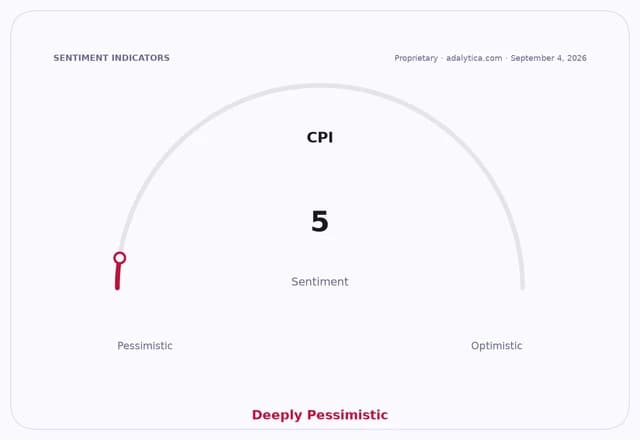
Sentiment IndicatorsⓘProprietary · adalytica.com · September 4, 2026
This is a snapshot — live sentiment, awareness and momentum for 130+ markets update continuously in the dashboard.Open AlphaPulse
For policymakers, the revision matters because it suggests inflation will stay above the bank’s 5% target for longer, even after a recent 50 basis-point cut in the benchmark rate to 16.25%. That keeps the central bank in a cautious position: it can ease only so far before risking renewed price pressure, especially if public spending, tariff reforms and fuel-price adjustments continue to feed through to consumer costs.
The bank said moderate tightening in monetary conditions should still help restrain inflation, but it flagged risks from higher global food and energy prices, geopolitical tensions, uneven supply and demand, and still-unanchored expectations. Those factors are particularly important in an import-dependent economy exposed to Russia’s inflation path and volatile commodity markets.
For investors, the message is that Kazakhstan’s rate path is unlikely to turn decisively dovish soon. Higher-for-longer inflation expectations support nominal yields and may keep local fixed income sensitive to policy surprises. They also imply a slower improvement in real purchasing power, which could weigh on consumption and corporate margins, even as borrowers may welcome the recent rate cut.
The broader narrative is one of central banks trying to pivot toward growth without losing control of prices. Kazakhstan is not alone: inflation forecasts remain sticky across several emerging markets, and the policy trade-off is becoming more visible as fiscal spending and administered prices offset progress from tighter monetary policy.
| Entity | Gains | Losses |
|---|---|---|
| National Bank of Kazakhstan | ▲credibility on inflation control | ▼room for rapid rate cuts |
| Bond investors | ▲higher nominal yields | ▼price gains from dovish policy |
| Borrowers and consumers | ▲slightly cheaper credit after cut | ▼slower fall in living costs |
| Government spending plans | ▲room to support growth | ▼pressure to curb fiscal impulse |