Kazakhstan’s labour market is still struggling to match workers to jobs, with more than 105,000 vacancies posted on the country’s Enbek.kz employment platform since early September, underscoring a shortage that is forcing companies to hire abroad and pushing policymakers to rethink vocational training.
Kazakhstan labor shortage hits construction and energy
The surge in listings, nearly 26% above July levels, shows that demand for labour remains broad-based rather than confined to one sector. Education generated the most openings, followed by health care, manufacturing, agriculture and construction — industries that are central to domestic investment, infrastructure spending and day-to-day economic activity. For an economy trying to sustain growth without overheating wages, the key issue is not whether jobs exist, but whether the available workforce has the right skills, location and incentives to fill them.
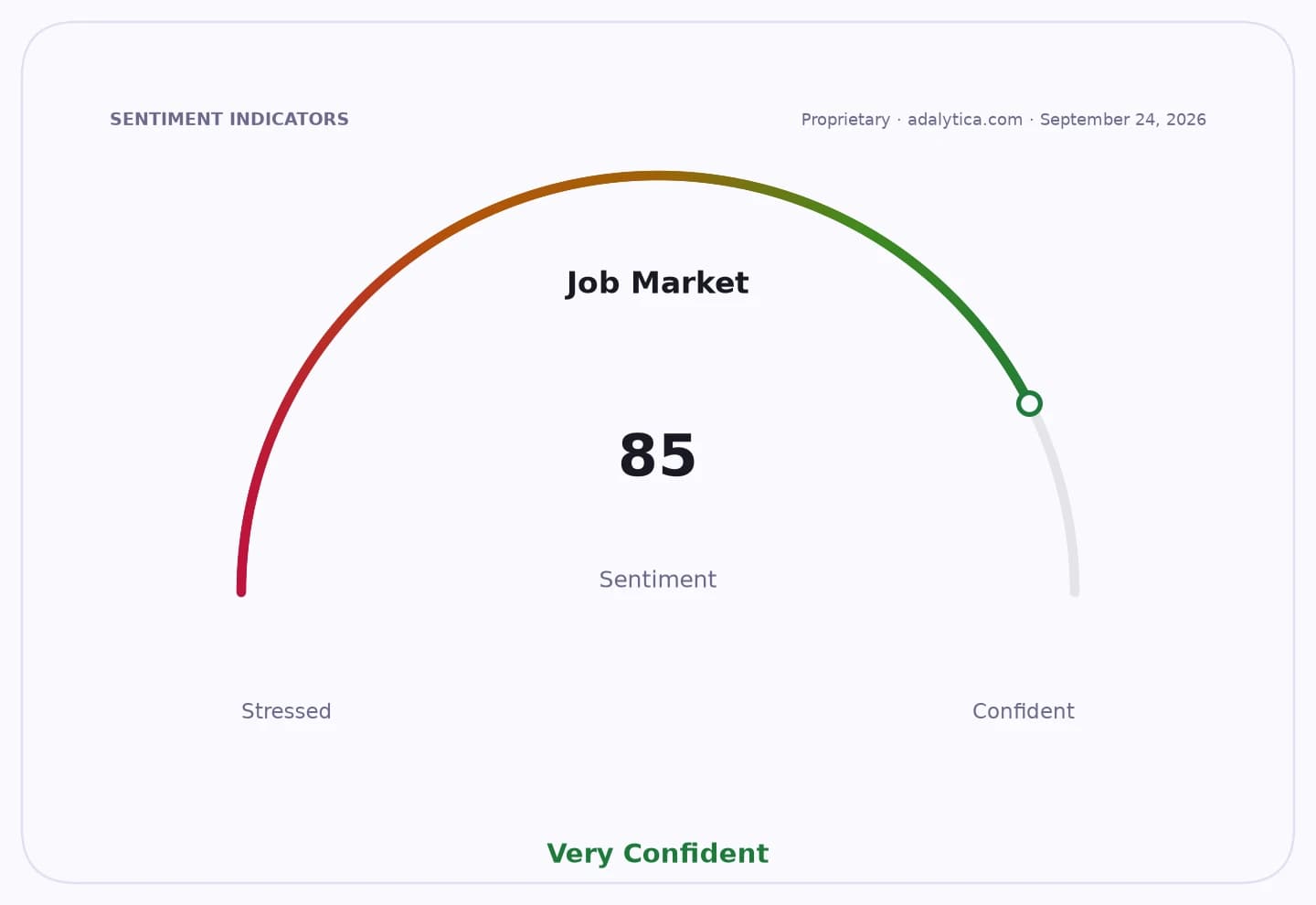
Sentiment IndicatorsⓘProprietary · adalytica.com · September 12, 2026
This is a snapshot — live sentiment, awareness and momentum for 130+ markets update continuously in the dashboard.Open AlphaPulse
That mismatch is increasingly visible in the numbers. The labour ministry said employers have posted 845,000 vacancies on Enbek.kz since the start of 2026, including 432,000 for blue-collar roles. Yet 30% to 40% of vacancies still go unfilled, a sign that the problem is structural rather than cyclical. Prime Minister Olzhas Bektenov said domestic companies are being forced to bring in thousands of specialists from abroad to keep work moving, while the government says around 300,000 foreign workers enter Kazakhstan each year.
For investors, the implications run well beyond employment statistics. Persistent shortages can lift labour costs, slow project execution and reduce margins in sectors that depend on skilled trades — especially construction, energy and manufacturing. They also increase the risk that large infrastructure or industrial projects miss timelines if contractors cannot secure welders, electricians, engineers or machine operators quickly enough. That matters for productivity, inflation and capital formation, particularly in a country trying to diversify away from commodity dependence.
The construction sector appears to be one of the most acute pressure points, with an estimated shortage of about 100,000 workers. The energy industry says it needs qualified staff continuously, while employers in manufacturing and farming are also struggling to recruit. Business representatives quoted in the report said younger Kazakhs increasingly prefer delivery or ride-hailing jobs over factory, farm or building-site work, a shift that points to changing expectations around pay, flexibility and informal income. That in turn makes it harder for traditional sectors to attract labour even when vacancies are plentiful.
The government has tried to frame the issue as one of opportunity rather than scarcity, declaring 2025 the Year of Working Professions and pressing for more attention to vocational education. That push is economically rational: Kazakhstan expects demand for labour to reach 2.9 million people by 2035, including nearly 2 million in working professions. Unless training systems improve and wages, conditions and hiring practices become more competitive, the country risks importing labour to compensate for a domestic skills gap that could otherwise cap growth.
For now, the message from the jobs market is clear: Kazakhstan has work, but not enough workers with the right skills to do it. That keeps the labour market tight, supports demand for foreign labour and raises the stakes for education policy, industrial strategy and project execution across the economy.
| Entity | Gains | Losses |
|---|---|---|
| Employers needing skilled labour | ▲Faster hiring from abroad | ▼Higher labour costs |
| Foreign workers | ▲More openings in Kazakhstan | ▼Pressure from domestic resentment |
| Construction and energy firms | ▲Access to needed workers | ▼Delay risk and margin pressure |
| Vocational colleges and policymakers | ▲Stronger case for training reform | ▼Accountability for skills mismatch |