African governments are pressing Ukraine to return nationals captured after joining Russian forces, turning what Kyiv views as enemy combatants into a widening diplomatic and human-trafficking dispute that could complicate prisoner exchanges and expose Moscow’s reliance on foreign recruits.
Kenya, Botswana Seek Return of Citizens Held in Ukraine
Kenya said it is negotiating for the return of five of its citizens held in Ukrainian custody, while Botswana said it is working to repatriate one of its nationals. Kenya’s foreign minister, Musalia Mudavadi, told lawmakers in Nairobi that President William Ruto had discussed the issue by phone with Ukrainian President Volodymyr Zelenskiy. The governments of Zimbabwe and other African states have also raised alarms about deceptive cross-border recruitment practices.
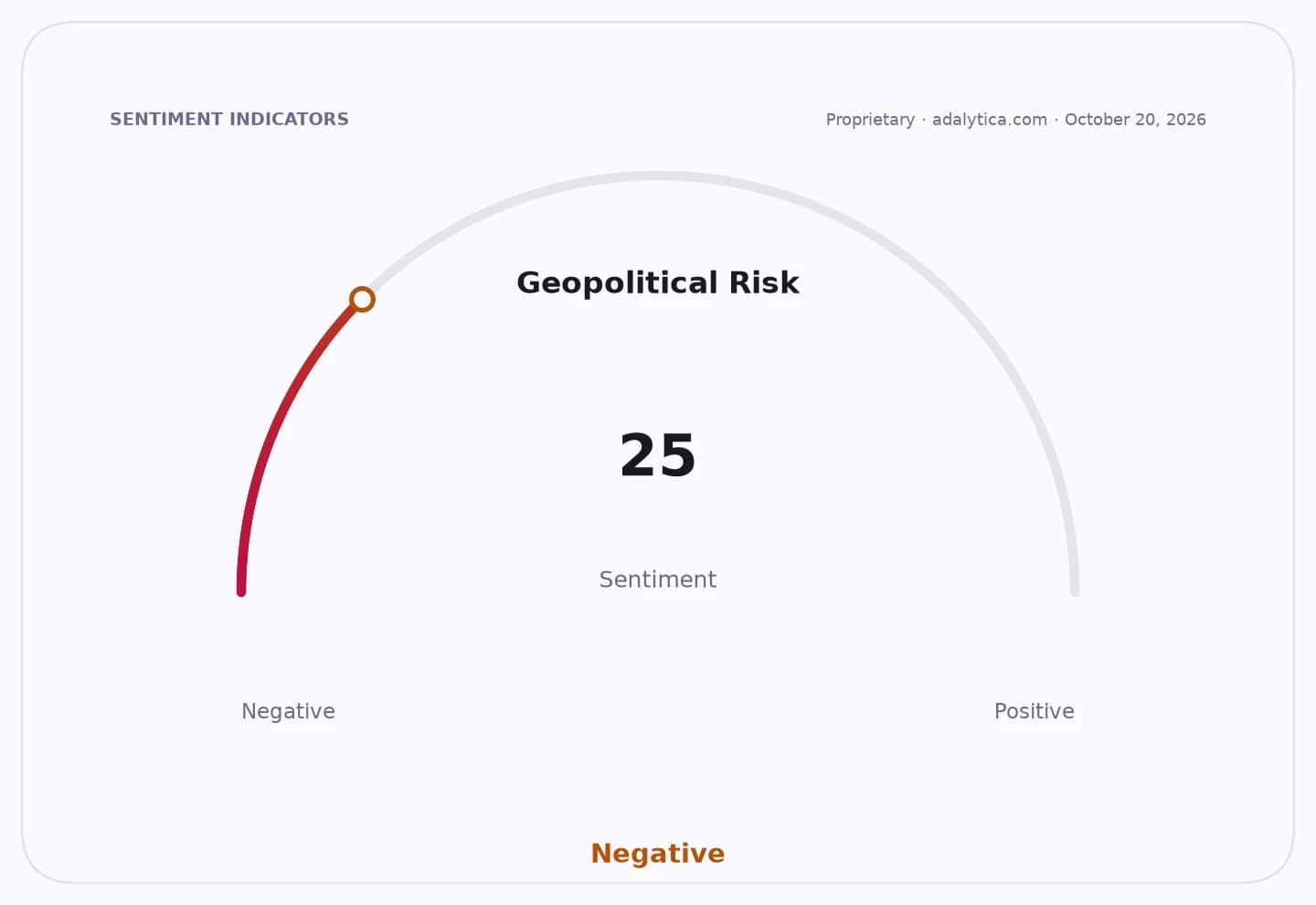
Sentiment IndicatorsⓘProprietary · adalytica.com · October 10, 2026
This is a snapshot — live sentiment, awareness and momentum for 130+ markets update continuously in the dashboard.Open AlphaPulse
The issue matters economically and geopolitically because it points to the strain Russia’s war is placing on manpower, and to the growing use of foreign labor markets as a pool for wartime recruitment. Kyiv says Russia has enlisted more than 28,000 foreign nationals from 135 countries, with more than 5,000 reported killed, underscoring the scale at which Moscow has widened its search for fighters as the conflict drags into its fourth year. Ukraine says it is holding at least 213 foreign prisoners of war, including 37 Africans, excluding Russians and North Koreans.
For investors, the immediate market impact is limited, but the story reinforces the war-risk premium across European assets, energy markets and safe-haven trades. The conflict is increasingly feeding on recruitment networks that span Africa, Asia and the Middle East, raising the odds of more diplomatic friction, more sanctions scrutiny and a longer war than markets would prefer. That tends to support demand for havens such as gold, where prices have remained elevated and recent technical readings show the metal has been under pressure but still trading close to key longer-term averages.
Kenya says many of its citizens were lured to Russia with promises of civilian jobs — drivers, guards or cooks — before being pushed into military service. Mudavadi said the government wants them recognized as victims of international trafficking rather than prisoners of war, a distinction that could affect whether they are swapped for Ukrainian captives held by Russia or returned through other legal channels. Ukraine, however, says the men should be exchanged under standard prisoner-of-war procedures.
That dispute leaves the repatriation path unclear. Kenya said 62 of its nationals have already been brought home, while officials estimate 84 Kenyans are dead or missing and 34 are receiving treatment in Russia. Botswana said it has already intercepted attempts to recruit eight citizens, and Zimbabwe has detained several people suspected of running recruitment schemes, including two Russians.
The broader narrative is that Russia’s labor shortage in the war is no longer just a military problem; it is becoming a diplomatic one. As Moscow continues to deny large-scale foreign recruitment, African governments are being forced to deal with the fallout at home, where allegations of trafficking, deception and battlefield deployment could sharpen scrutiny of travel brokers, recruitment networks and Russia’s wartime manpower model.
For markets, the main implication is persistence: a longer conflict, a broader set of state actors drawn into the fallout and continued support for defense spending, energy security and safe-haven demand. The key catalyst now is whether any of the African cases are resolved through prisoner swaps or consular returns, which would set a precedent for how non-Russian foreign fighters are handled in the war.
| Entity | Gains | Losses |
|---|---|---|
| Ukraine | ▲Leverage in prisoner talks | ▼Consular burden |
| African governments | ▲Diplomatic visibility | ▼Domestic pressure |
| Russia | ▲Manpower from recruits | ▼Reputation and scrutiny |
| Safe-haven assets | ▲War-risk demand | ▼Risk-on sentiment |