Klarna and other buy-now-pay-later providers are being forced to tighten lending checks as a new law that took effect Friday requires credit companies to more often verify whether customers can afford their purchases.
Klarna Shares as BNPL Lending Rules Tighten

The rules strike at the core of the fast-growing consumer credit model that has let shoppers split payments for everything from shoes and phones to food deliveries, often without an upfront affordability test. For lenders, that means less frictionless growth; for regulators, it is a direct attempt to curb rising indebtedness among households using short-term credit for everyday spending.
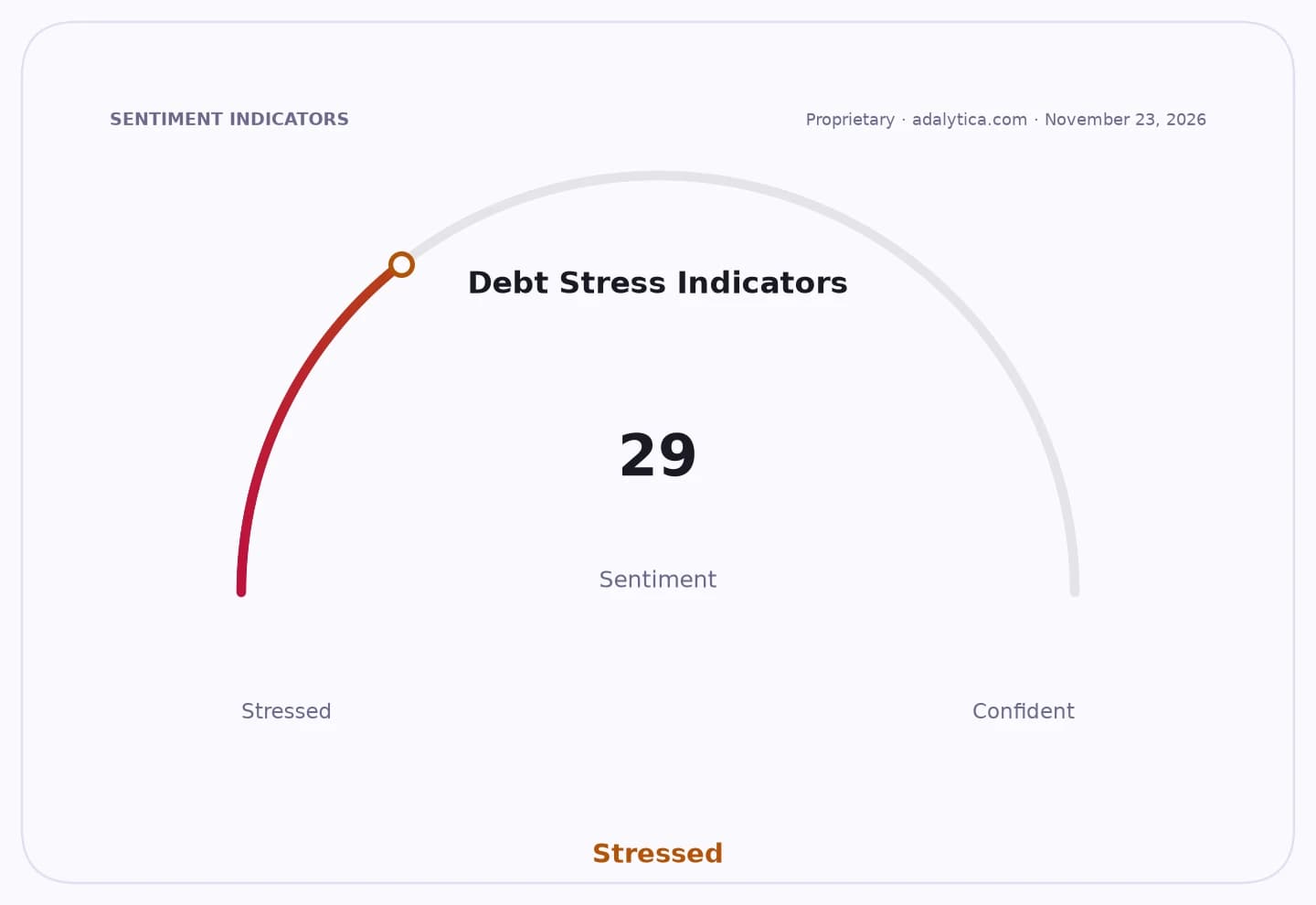
Sentiment Indicators
The change also broadens oversight to include many interest-free and fee-free payment deferrals, bringing products that were previously treated more lightly under tighter supervision. That matters because these offerings have become a common entry point into debt for consumers who may already be strained by higher living costs and borrowing expenses.
Klarna shares were last at $13.67 on Nov. 27, above their 50-day moving average of $13.23 but still below the 200-day average of $15.32, with RSI at 50.5 and the MACD hovering near neutral. PayPal, another major digital payments player with exposure to consumer credit, closed at $59.14, also above its 50-day and 200-day averages, as investors watched for any spillover from tougher underwriting standards.
The policy shift lands against a broader backdrop of deteriorating consumer credit quality, with bad debt at many banks rising faster than lending growth this year. For investors, that raises the risk that tighter regulation and weaker repayment behavior will pressure loan volumes, fees and underwriting margins across the payments and fintech sector.
The next test will be whether stricter affordability checks slow originations without triggering a sharper drop in demand for installment credit, especially as households face still-elevated prices and financing costs.
| Entity | Gains | Losses |
|---|---|---|
| Consumers with weaker finances | ▲Lower risk of overborrowing | ▼Easier access to instant credit |
| Regulators | ▲Better control of household debt | ▼Less flexible lending market |
| Klarna and BNPL rivals | ▲Clearer compliance rules | ▼Faster growth, higher underwriting costs |
| Banks and cautious lenders | ▲Lower credit risk | ▼Potential loss of some loan volume |