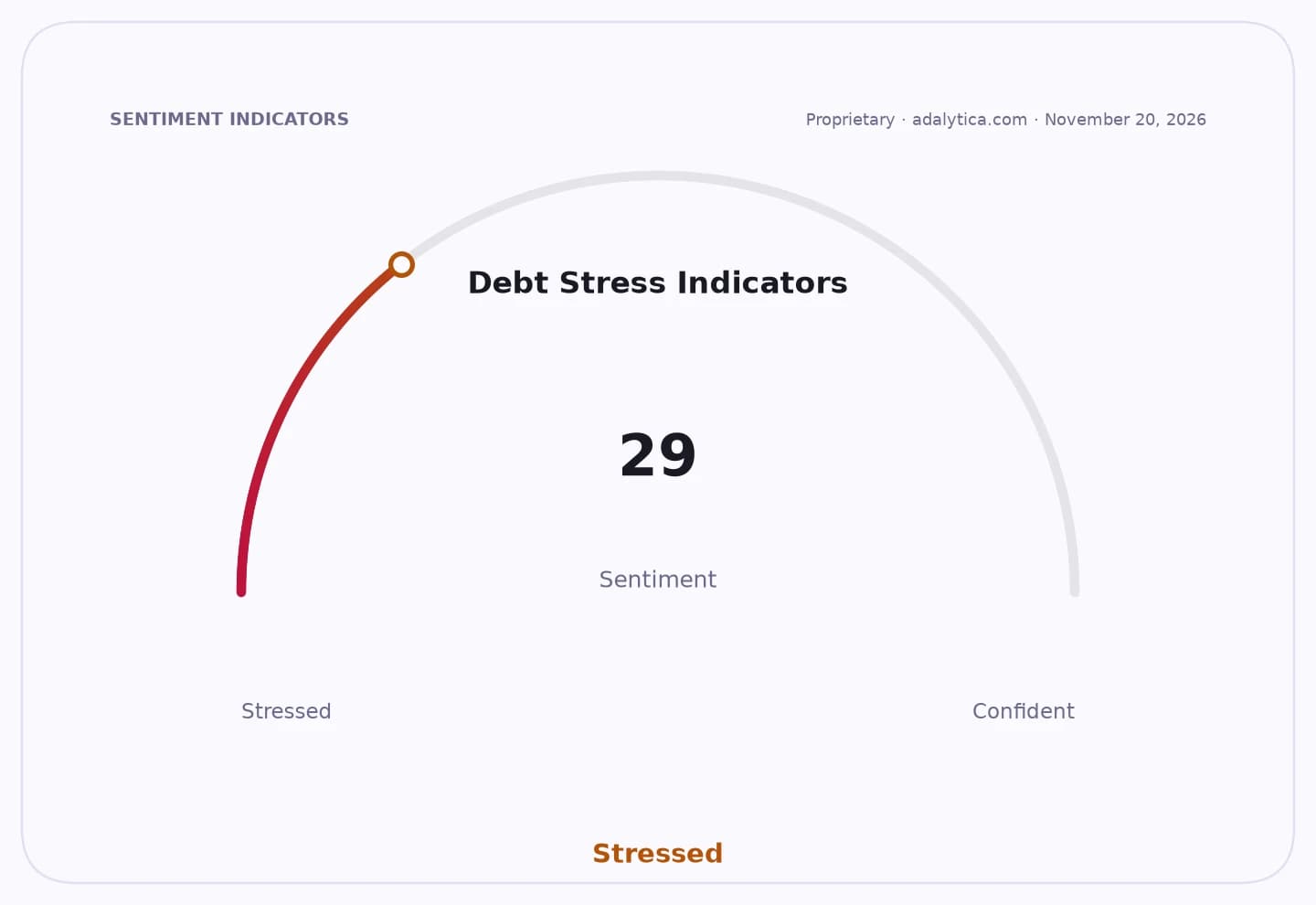
Almost half of young people say their first move on payday is to repay debt, a sign that consumer balance-sheet strain is reshaping spending behavior and putting a floor under financial stress across the economy.
Young Workers Prioritize Debt Repayment on Payday

That is the most important takeaway from a ZF social-media survey of more than 850 respondents, where 49% said they prioritize financial obligations before anything else when salary lands in their accounts. Another 26% said they set priorities only after payday, while 21% said they save first and just 4% treat payday as a chance to splurge. In other words, for a large share of younger earners, payday is less a consumption event than a debt-management event.
Sentiment Indicators
Economically, that matters because it points to weaker discretionary demand ahead. When households are using fresh income to catch up on arrears, they are not shopping, traveling or trading up. That can soften sales for retailers, restaurants and other consumer-facing businesses, but it also suggests lenders are facing a more cautious, repayment-focused borrower base. The pattern is consistent with a broader global backdrop in which debt burdens remain under pressure and servicing costs are crowding out spending power.
For investors, the implication is two-sided. Consumer-credit lenders and card issuers may see more payments being made, but that does not automatically mean healthier households. It can also reflect rising delinquencies, tighter budgets and a greater need for restructuring or payment plans. Capital markets have been reminding investors that debt risk is still live: high-yield credit spreads remain sensitive to stress, while banks and finance companies are being watched closely for signs of rising charge-offs and softer loan growth.
Among lenders, Capital One, Synchrony and Discover-type consumer finance names are the most exposed to any shift in repayment behavior, though the effects are not all negative. If more borrowers are prioritizing debt, that can support collections in the near term. But it also confirms that consumers are under enough strain to change how they allocate every paycheck, which is usually not the backdrop for strong credit expansion or robust discretionary demand.
The broader message is that younger workers are adapting to a world of sticky living costs and financial caution. Until wage growth clearly outpaces debt service and essential spending, the market should expect payday to remain a defensive event — and that favors lenders with disciplined underwriting, payment processors that benefit from recurring bill flow, and companies that serve budget-conscious consumers over those dependent on impulse spending.
| Entity | Gains | Losses |
|---|---|---|
| Consumer lenders | ▲More debt repayments | ▼Higher stress risk |
| Payment processors | ▲Steady bill-pay volume | ▼Softer discretionary spend |
| Young borrowers | ▲Lower arrears over time | ▼Less cash for spending |
| Retailers and leisure firms | ▲— | ▼Weaker impulse purchases |