South Korea’s household debt has climbed to 2,030 trillion won, and the latest warning sign is not the size alone but the cost of carrying it: mortgage rates have reached their highest level in 14 years, squeezing borrowers just as the economy becomes more dependent on a narrow, semiconductor-led expansion.
South Korea Household Debt Rises as Mortgage Rates Peak

That combination matters because debt service is now colliding with a recovery that is still uneven. The Korea Development Institute says the economy is being propped up by a boom in semiconductor exports and related capital spending, with growth forecast at 3.8% this year and 3.9% next year. But it also flagged that much of that growth is concentrated in one industry, while household consumption remains fragile. When borrowing costs rise in a debt-heavy economy, the first pressure point is not corporate investment, but household spending, mortgage delinquency and banks’ credit quality.
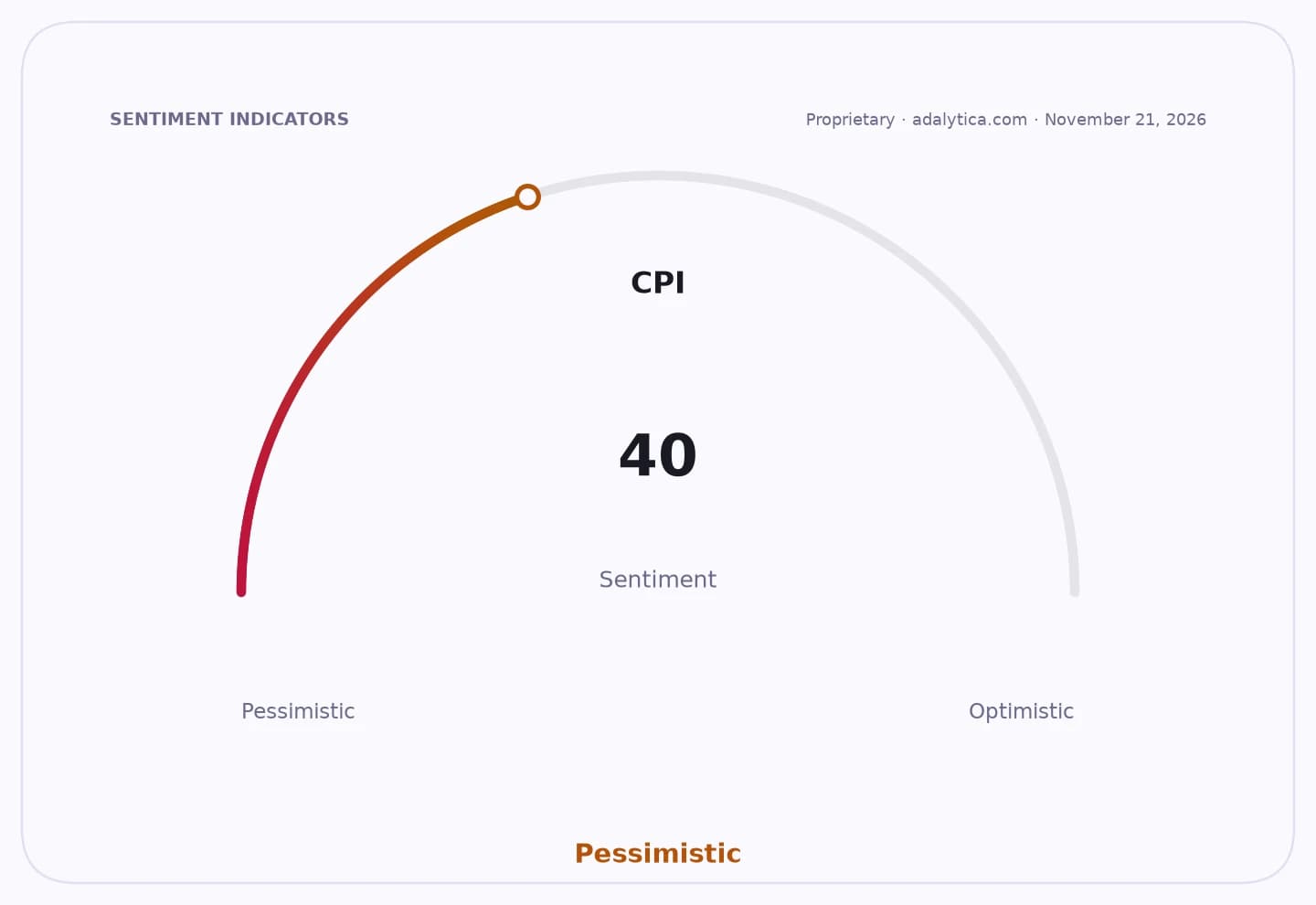
Sentiment Indicators
The risk is especially acute for vulnerable borrowers. The policy backdrop is turning more restrictive as the government pushes a housing-tax reset toward “resident-first” rules and lawmakers debate changes that could alter the burden on homeowners and landlords. At the same time, mortgage rates at 14-year highs mean borrowers are financing homes at a much steeper cost than they were in the ultra-low-rate era. That raises the odds of payment stress, refinancing pressure and a slower transmission of any growth from exporters to consumers.
For investors, the message is simple: Korea’s equity story may still belong to semiconductors, but its macro risk is increasingly concentrated in credit-sensitive sectors. Banks, nonbank lenders and housing-linked names face a tougher operating environment if delinquencies rise and loan growth slows. On the other side, the companies riding the AI and semiconductor capex cycle keep the best earnings momentum, which is exactly why the market is becoming more polarized.
This is the classic two-speed Korea trade: export champions benefit from global AI investment, while households and domestic-demand sectors absorb the drag from high rates and heavy debt. If the semiconductor boom broadens, the system can digest the leverage. If it fades, the leverage becomes the story. For now, the asymmetry still favors staying exposed to the AI infrastructure winners and underweighting the domestic balance-sheet risk tied to Korean household debt.
| Entity | Gains | Losses |
|---|---|---|
| Semiconductor exporters | ▲Higher earnings, capex tailwind | ▼Dependence on one cycle |
| Banks and lenders | ▲Higher loan yields, near-term margins | ▼Delinquencies, credit stress |
| Homeowners with mortgages | ▲Asset values if growth holds | ▼Higher debt service burden |
| Domestic consumption sectors | ▲Potential spillover if incomes rise | ▼Weak spending, rate pressure |