U.S. borrowing costs are still high enough to keep lenders cautious and force households and companies to confront debt burdens sooner rather than later, even as credit stress remains contained for now.
U.S. borrowing costs stay high as credit stress holds
That is the economic backdrop behind a Treasury yield that is hovering just above 5% and a high-yield credit spread that has widened to 3.52 percentage points, levels that together suggest the market is not pricing a credit freeze but is demanding more compensation for risk. The message is that financing remains restrictive enough to act as a brake on speculative borrowing, which can help prevent the kind of easy-credit buildup that turns into a debt trap.
Sentiment Indicators
Credit Card Usage
For investors, the significance is two-sided. Higher rates support savers and lenders by preserving deposit and loan margins, but they also raise the hurdle for borrowers rolling over debt or refinancing at lower cost. That is showing up in banks and credit-sensitive shares. The SPDR Financial Select Sector ETF fell to $54.57 on Friday, down from $59.20 earlier in the month, while regional-bank ETF KRE dropped to $68.32 from $74.13 on Nov. 4. JPMorgan Chase slid to $310.53 from $352.11 over the same period. The moves do not point to systemic distress, but they do underscore investor sensitivity to any sign that higher-for-longer rates are biting into credit quality or growth.
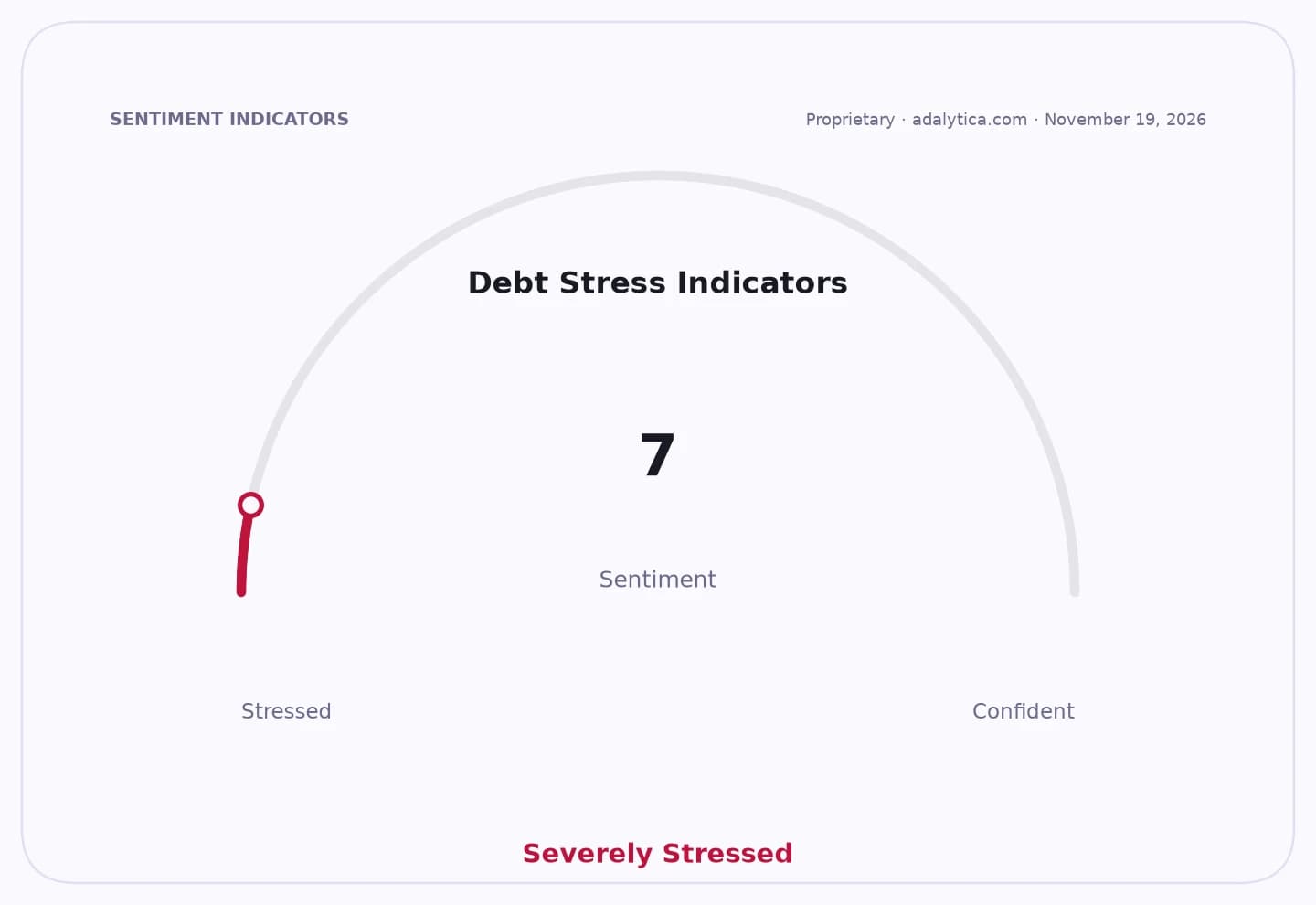
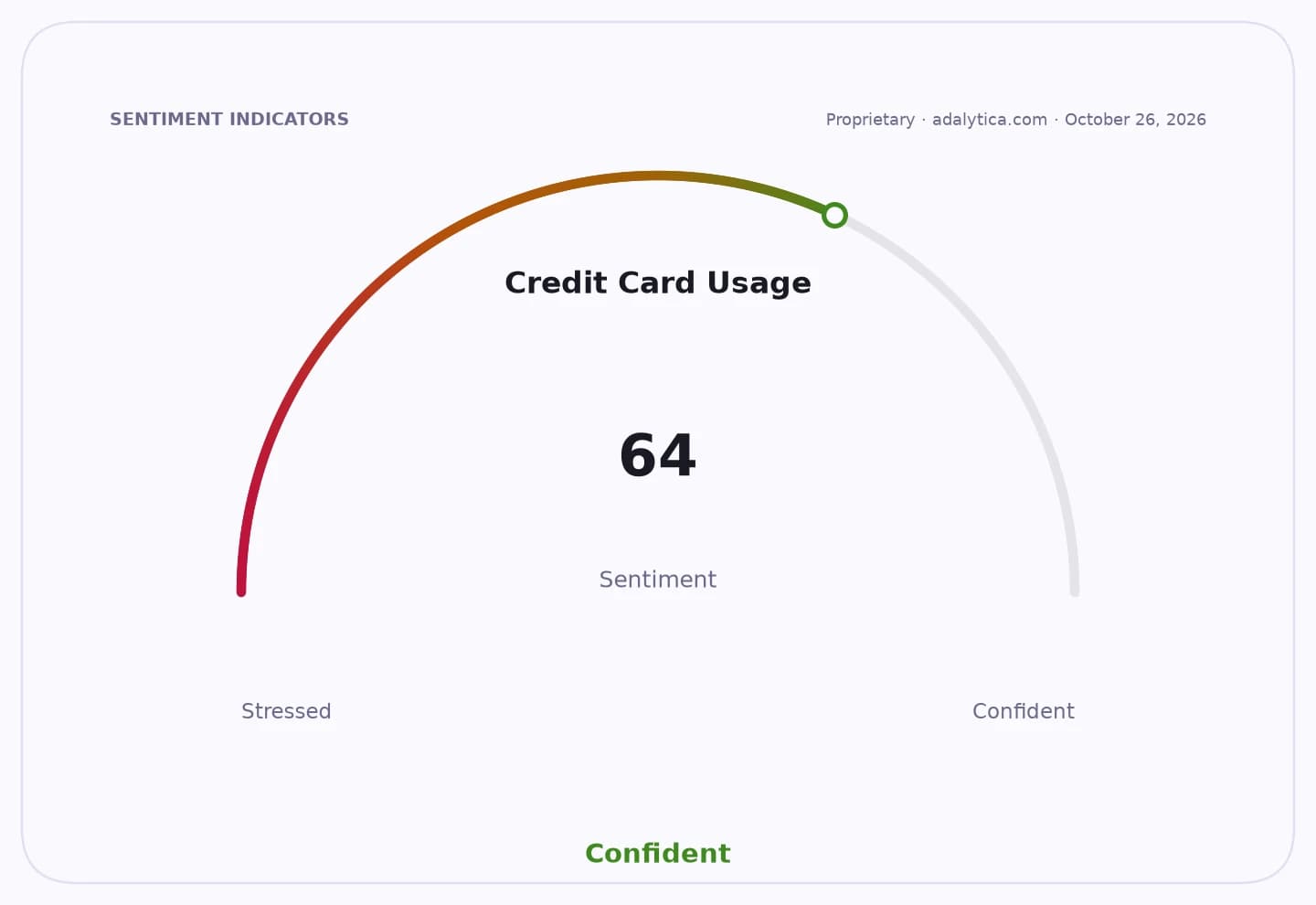
The data still point to a labor market that can absorb some of that pressure. The unemployment rate was 4.1% in October and is forecast at 4.11% for November, a level that is elevated from the post-pandemic lows but not consistent with a broad recessionary credit event. That gives households some income support even as debt service costs remain sticky, especially for revolving credit. Adalytica’s Household Debt Stress Sentiment gauge jumped to 79, reflecting persistent concern around consumer leverage, while its Credit Card Usage Sentiment stayed in “fear” territory at 21, even after a one-day rebound. Separately, U.S. credit card debt has climbed to $1.29 trillion, a reminder that consumer balance sheets are carrying more strain than the headline unemployment rate alone would suggest.
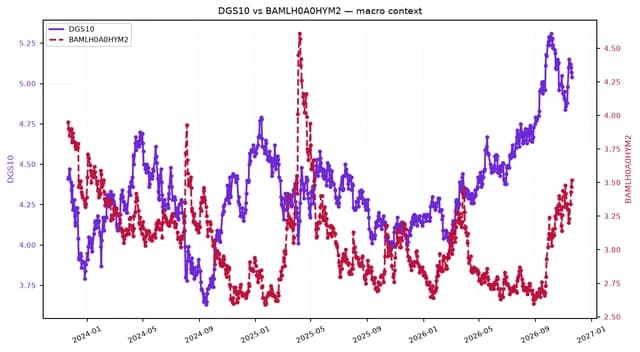
The clearest market implication is that the current rate level is acting as a guardrail, not a cure. It helps restrain the more aggressive forms of borrowing and limits the return of the “debt trap” dynamic that can emerge when cheap money masks weak cash flow. But it also means refinancing risk remains real for consumers, leveraged companies and sectors dependent on short-term funding. That is why the latest widening in high-yield spreads matters: it shows investors are still demanding a premium to hold lower-quality debt, even as the economy avoids a hard landing.
The bull case is that this is exactly what a normalization cycle should look like — enough restraint to cool excesses without triggering a wave of defaults. The bear case is that the lagged impact of 5%-plus rates continues to work through cards, auto loans, small-business credit and corporate refinancing, eventually feeding a larger rise in delinquencies. For now, markets are siding with the former, but only barely.
| Entity | Gains | Losses |
|---|---|---|
| Savers and lenders | ▲Higher interest income | ▼Higher borrowing demand |
| Households with debt | ▲Slower leverage buildup | ▼Higher debt-service costs |
| Bank stocks | ▲Wider lending spreads | ▼Credit-quality concerns |
| High-yield borrowers | ▲Fewer speculative borrowers | ▼Tougher refinancing terms |