Consumer lenders are under renewed pressure as signs of household strain and tighter credit conditions feed a sharp selloff in online lending shares, with SoFi Technologies and Upstart Holdings both trading well below recent highs.
SoFi and Upstart Fall on Consumer Credit Stress
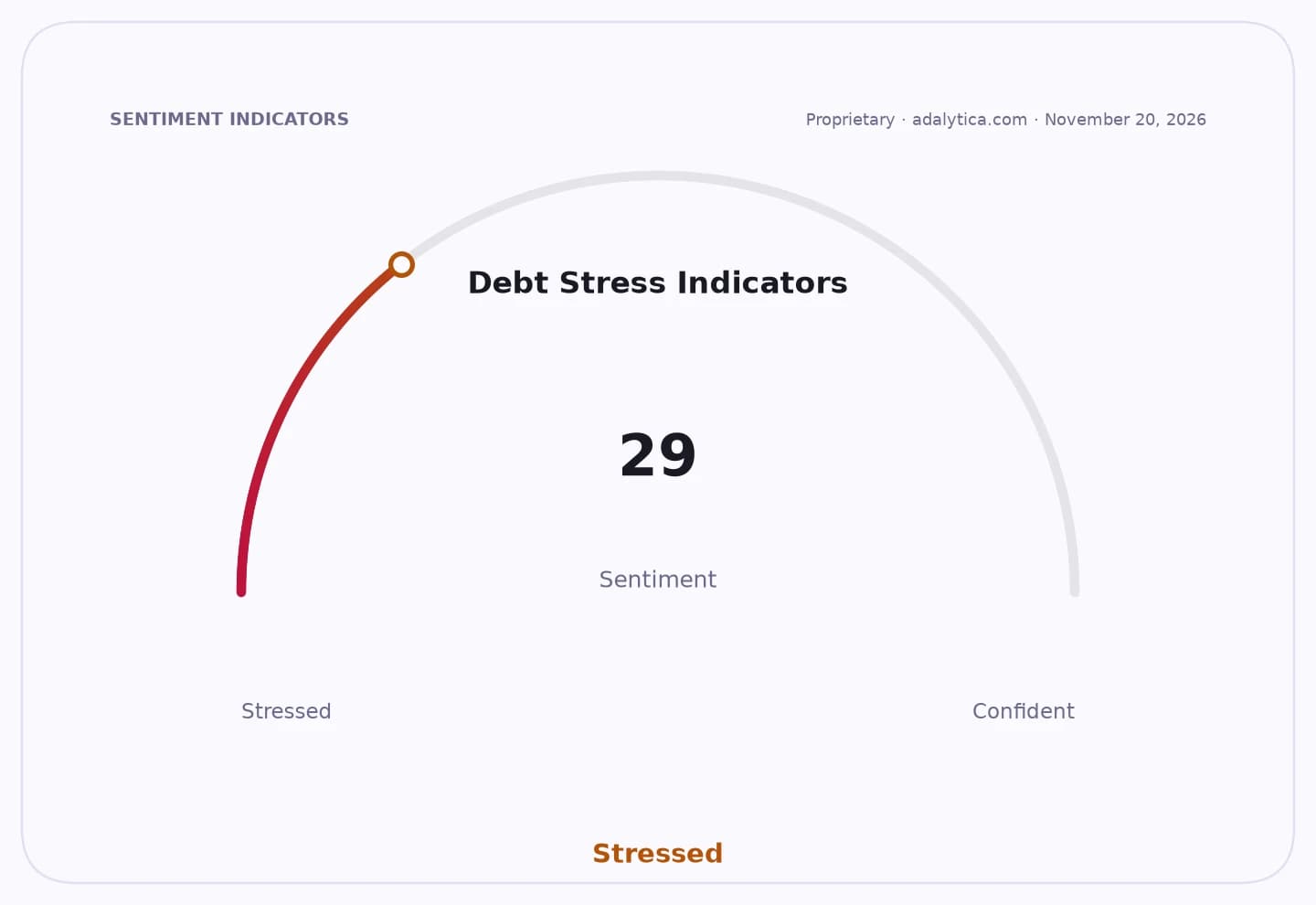
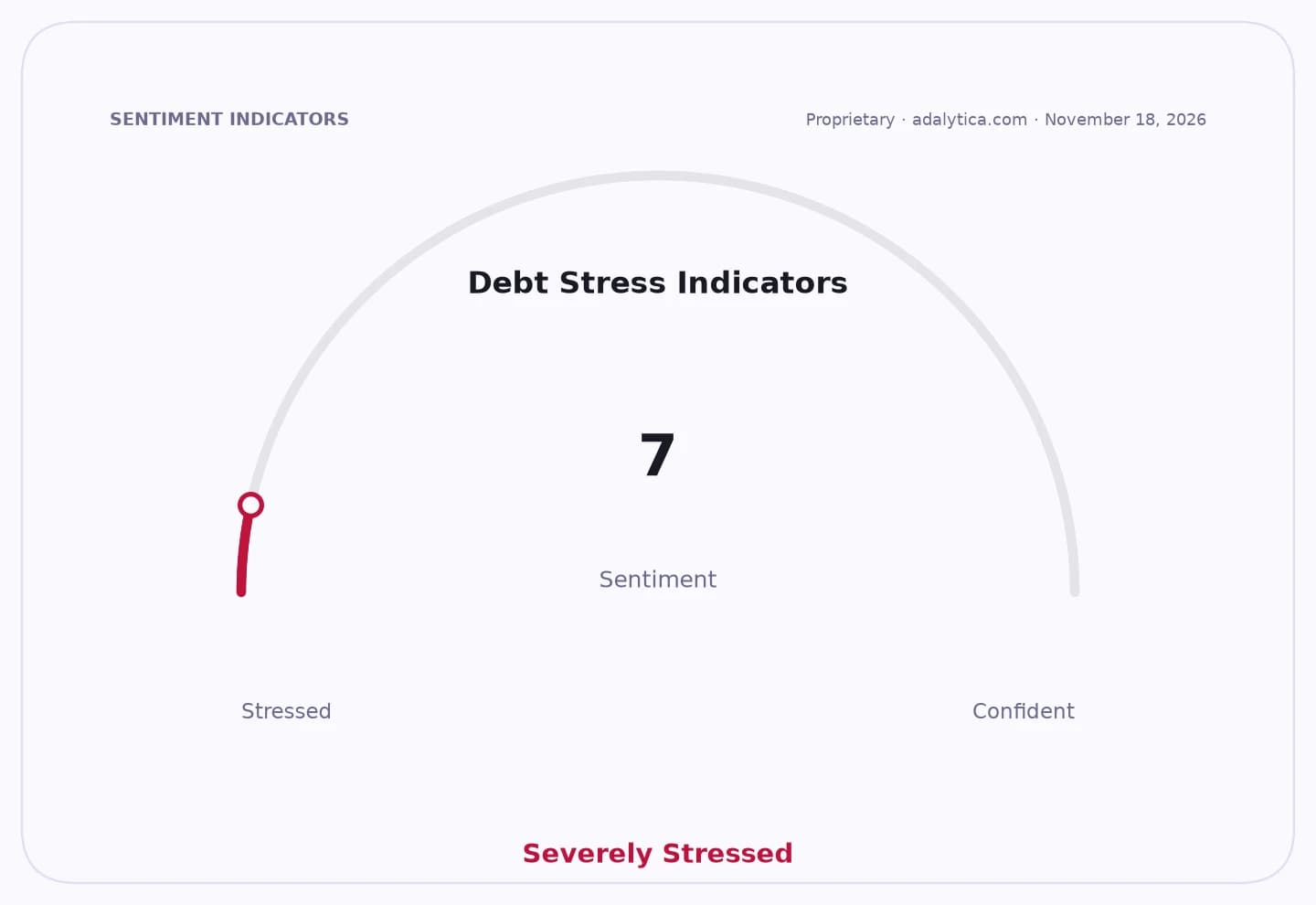
Debt Stress Indicators
The move matters because the market is increasingly pricing in slower loan growth, higher funding costs and a tougher credit backdrop for a sector that depends on healthy consumer balance sheets and steady risk appetite. When borrowers pull back, lenders do not just face lower origination volumes; they also confront weaker spreads, more expensive capital and greater scrutiny over asset quality.
Sentiment Indicators
SoFi ended Nov. 23 at $13.18, down from $17.38 on Nov. 4 and $29.28 in early January, while Upstart closed at $16.98 after tumbling from $28.86 in August and $45.05 in December. Both stocks remain below their 50-day and 200-day moving averages, a conventional technical sign that momentum has weakened. Upstart’s relative strength index was 33.0, while SoFi’s was 26.4, both levels that indicate deeply oversold conditions but also persistent selling pressure.
The selloff comes against a broader backdrop of fragile consumer credit sentiment. Adalytica’s Household Debt Stress sentiment gauge sits at 29, or “Fear,” after a 33-point drop over the past 30 days, while its Nonfarm Payrolls sentiment is in “Extreme Fear” at 15. That combination points to a labor market and household-income environment that is not yet recessionary, but is uncomfortable enough to make lenders more cautious and borrowers more selective.
Debt Stress Indicators — 30-day sentimentadalytica.com
Explore this data interactively — full history, time series and cross-market comparisons.
For online lenders, the macro implication is straightforward: a softer consumer environment can compress loan demand just as funding conditions remain tight. Recent industry reports have pointed to banks and nonbank lenders reviewing costs and considering lower lending rates as consumer borrowing slows. But rate cuts, if they come, would also squeeze margins unless credit quality improves enough to offset the pressure.
SoFi’s latest 10-Q underscored how much of its growth model still relies on expanding credit and platform usage, while Upstart’s filing highlighted the sensitivity of its loan portfolios to credit shocks. That helps explain why investors have been quick to punish the group when the outlook for household finances deteriorates.
The bull case is that lower rates and a steadier labor market could revive demand for unsecured personal loans and refinancing, giving online lenders a second-half rebound. The bear case is that rising stress among consumers, combined with slower deposit growth and higher funding costs, keeps credit conditions restrictive and leaves the sector vulnerable to another leg lower.
What investors should watch next is whether delinquency data, payroll trends and lender guidance begin to stabilize. Until then, the market is treating online lending less as a growth story and more as an early warning system for household stress.
| Entity | Gains | Losses |
|---|---|---|
| Borrowers | ▲Lower-rate offers | ▼Tighter approval standards |
| Online lenders | ▲Potential demand rebound | ▼Margin pressure and credit risk |
| SoFi and Upstart shorts | ▲Downside momentum | ▼Risk of sharp rebound |
| Banks and regulators | ▲More cautious lending standards | ▼Slower loan growth |