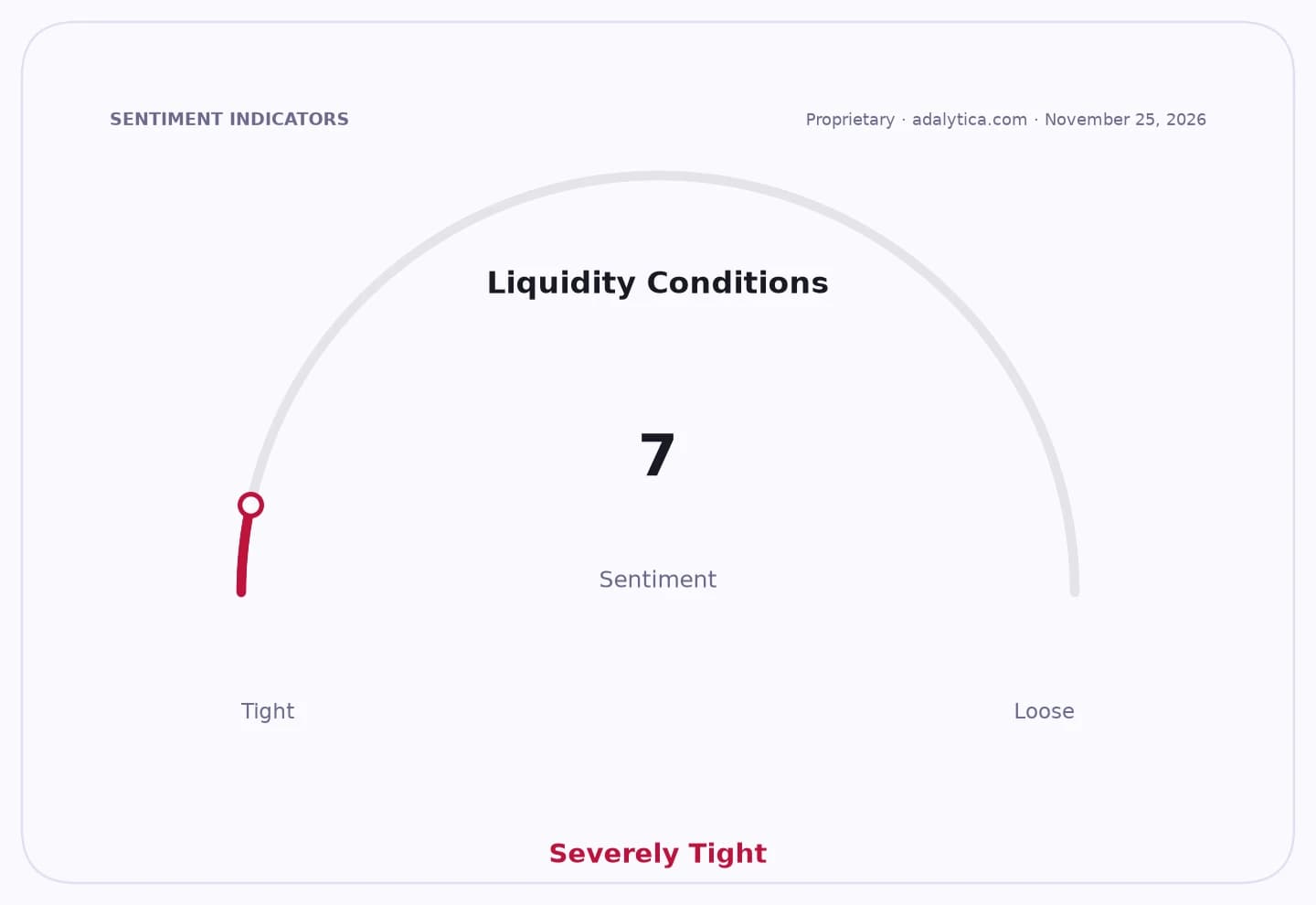
High borrowing costs are still punishing households that lean on credit cards and other revolving debt, and that matters for investors because it is changing the economics of consumer lending. The Federal Reserve’s policy rate is forecast around 3.89% in November, while the 10-year Treasury yield is still near 4.9%, leaving financing costs elevated enough to keep pressure on consumers who only make minimum payments and on lenders that must balance growth against credit losses.
Capital One and Synovus Face Credit Stress

For investors, the bigger story is that “refinancing” a life built on debt rarely fixes the underlying problem unless the borrower changes behavior. That is the financial-literacy lesson hiding inside this market backdrop: when rates are still above pre-pandemic norms, rolling balances, extending maturities or shuffling debt from one product to another can buy time, but it does not erase the compounding cost of interest. With U.S. credit card debt at about $1.29 trillion, the consequences are no longer theoretical.
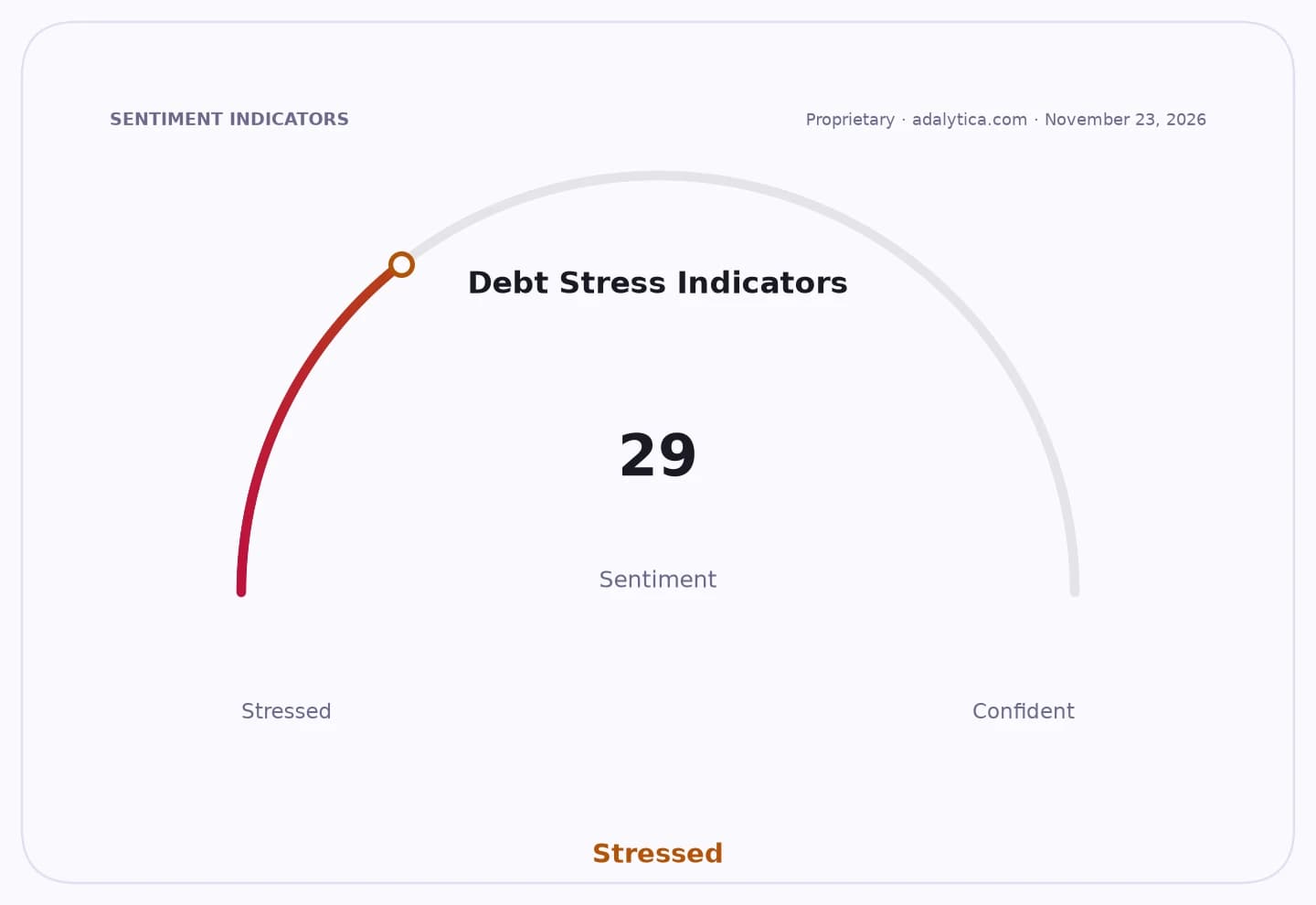
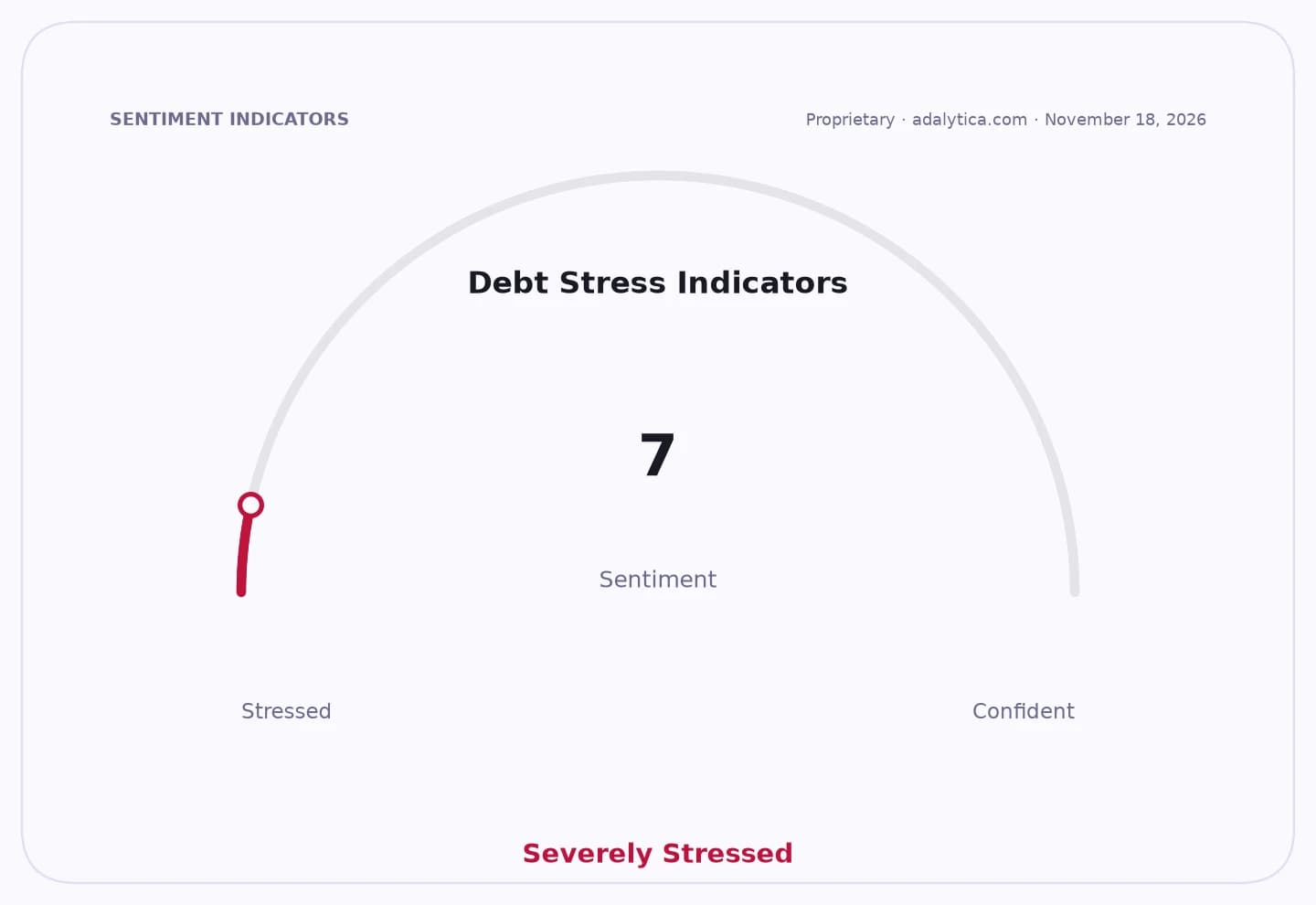
Sentiment Indicators

The consumer-credit names are already reflecting that reality. Capital One’s shares have been whipsawed, with recent price action showing a sharp drop from above $200 to about $181, while the stock’s 50-day moving average has slipped toward the 200-day line. Technical indicators also show the shares deeply oversold on the latest readings, a sign of stress rather than comfort. Synovus Financial has seen a similar slide, with the stock around $67.91 versus a 50-day average near $72.61. Both moves suggest investors are getting more cautious about credit quality and net interest margins as the rates backdrop stays restrictive.
Yet the banking data also show why this is not a simple bear story. JPMorgan recently reported lower 30-plus-day and 90-plus-day delinquency rates on credit cards, while Capital One disclosed active work on allowance for credit losses and financial-difficulty modifications. Synovus said its allowance for credit losses improved on better asset-quality trends and macro assumptions. In plain English, lenders are still earning their way through a tough environment, but they are not assuming consumers can borrow forever.
Debt Stress Indicators vs COFadalytica.com
Explore this data interactively — full history, time series and cross-market comparisons.
Debt Stress Indicators
That is what makes the “don’t live on credit” message so economically important. Households under strain tend to cut discretionary spending first, which can slow growth in retail, travel and small-ticket consumer categories. Lenders, meanwhile, face a trade-off: extend more credit and risk higher defaults, or tighten standards and sacrifice loan growth. Either way, the cost of leverage is higher when policy rates and Treasury yields stay elevated.
For long-term investors, the lesson is not to panic over every selloff in financial stocks. It is to recognize which companies have durable underwriting, diversified earnings and the discipline to price risk correctly. Those are the businesses that can compound through cycles. The borrowers who can’t adapt will keep paying for past decisions, and the lenders that ignore that reality will pay later in charge-offs.
In other words, this is a reminder that credit is not wealth. It is a tool that works only when the cost stays manageable and the borrower keeps control. That makes conservative balance sheets, steady cash flow and smart debt management worth watching for years, not days.
| Entity | Gains | Losses |
|---|---|---|
| Disciplined borrowers | ▲Lower interest burden | ▼Less need to roll balances |
| Credit card lenders | ▲Higher yields on receivables | ▼More default risk if stress rises |
| Capital One, Synovus, Discover peers | ▲Pricing power on lending | ▼Volatile stocks on credit fears |
| Consumers living on revolving debt | ▲Short-term spending flexibility | ▼Long-term compounding interest |