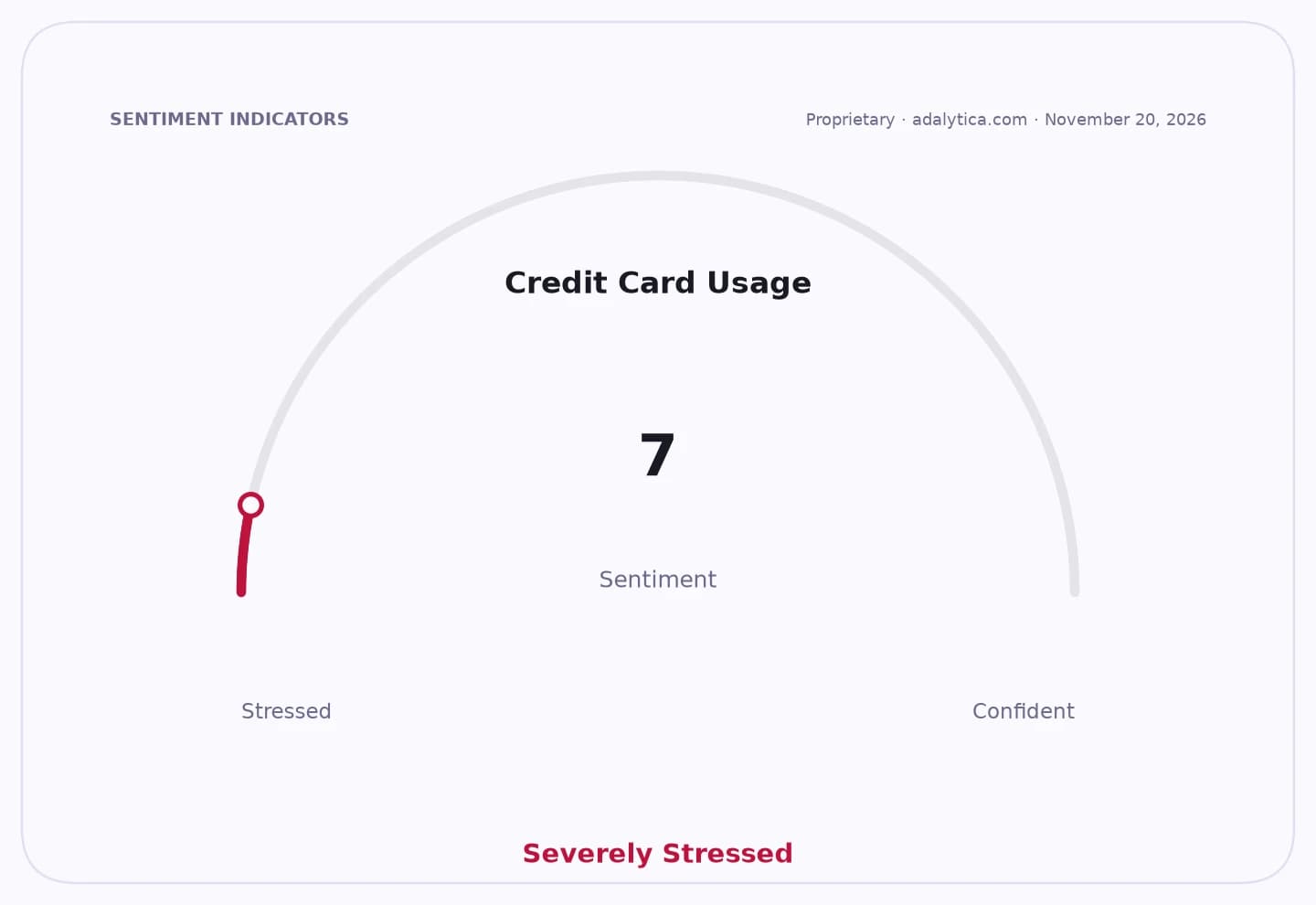
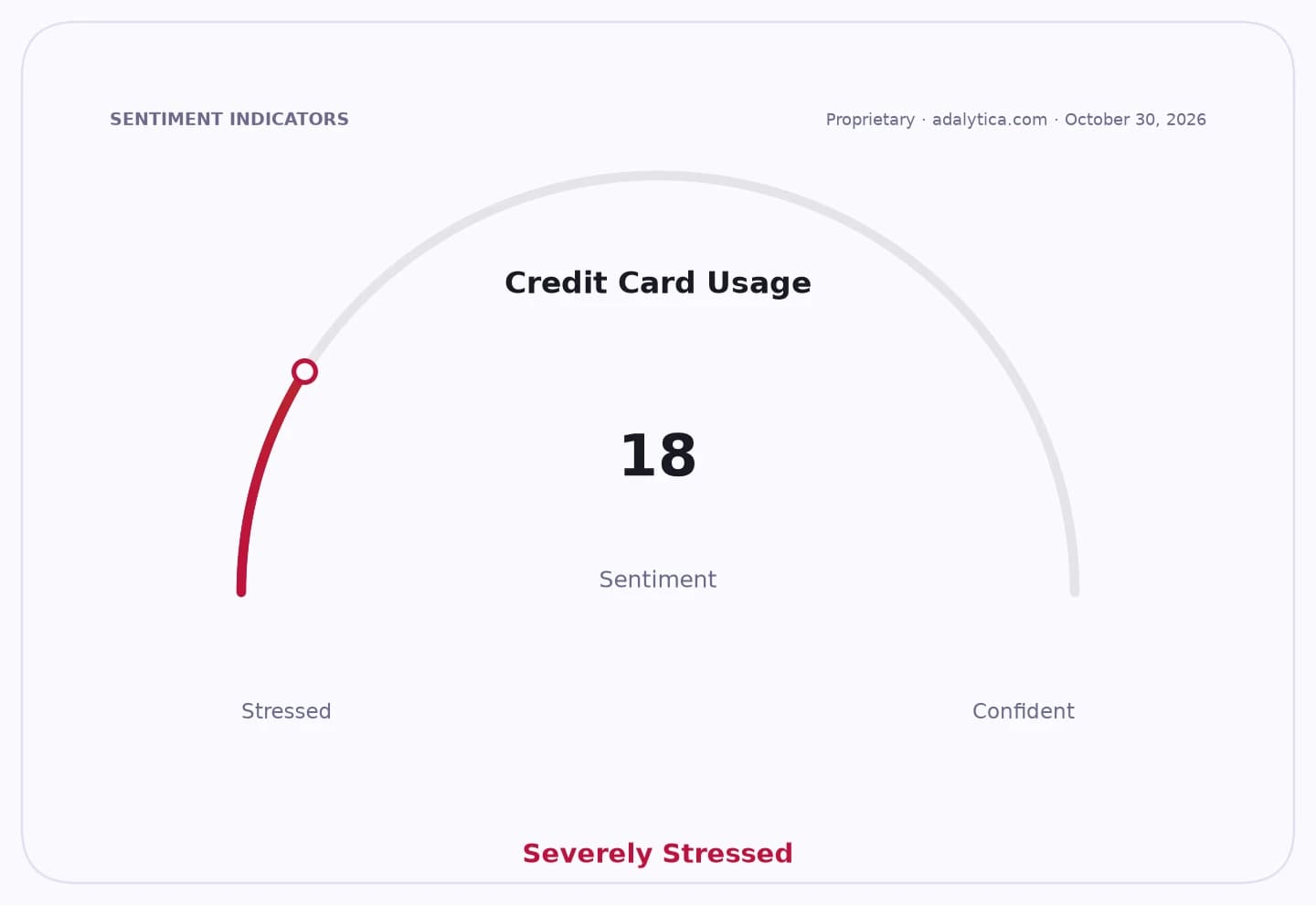
U.S. credit card balances have climbed past $1 trillion, a record that underscores how higher borrowing costs and persistent consumer spending are squeezing households even as card issuers continue to reap rich interest income.
U.S. Credit Card Debt Tops $1 Trillion
The Consumer Financial Protection Bureau said credit card debt reached $1 trillion in 2022, with late fees rising and a growing share of borrowers stuck in so-called persistent debt, where they pay more in interest and fees than toward principal. That dynamic matters because it leaves millions of consumers carrying expensive revolving balances longer, raising the risk of delinquencies if employment or wages weaken.
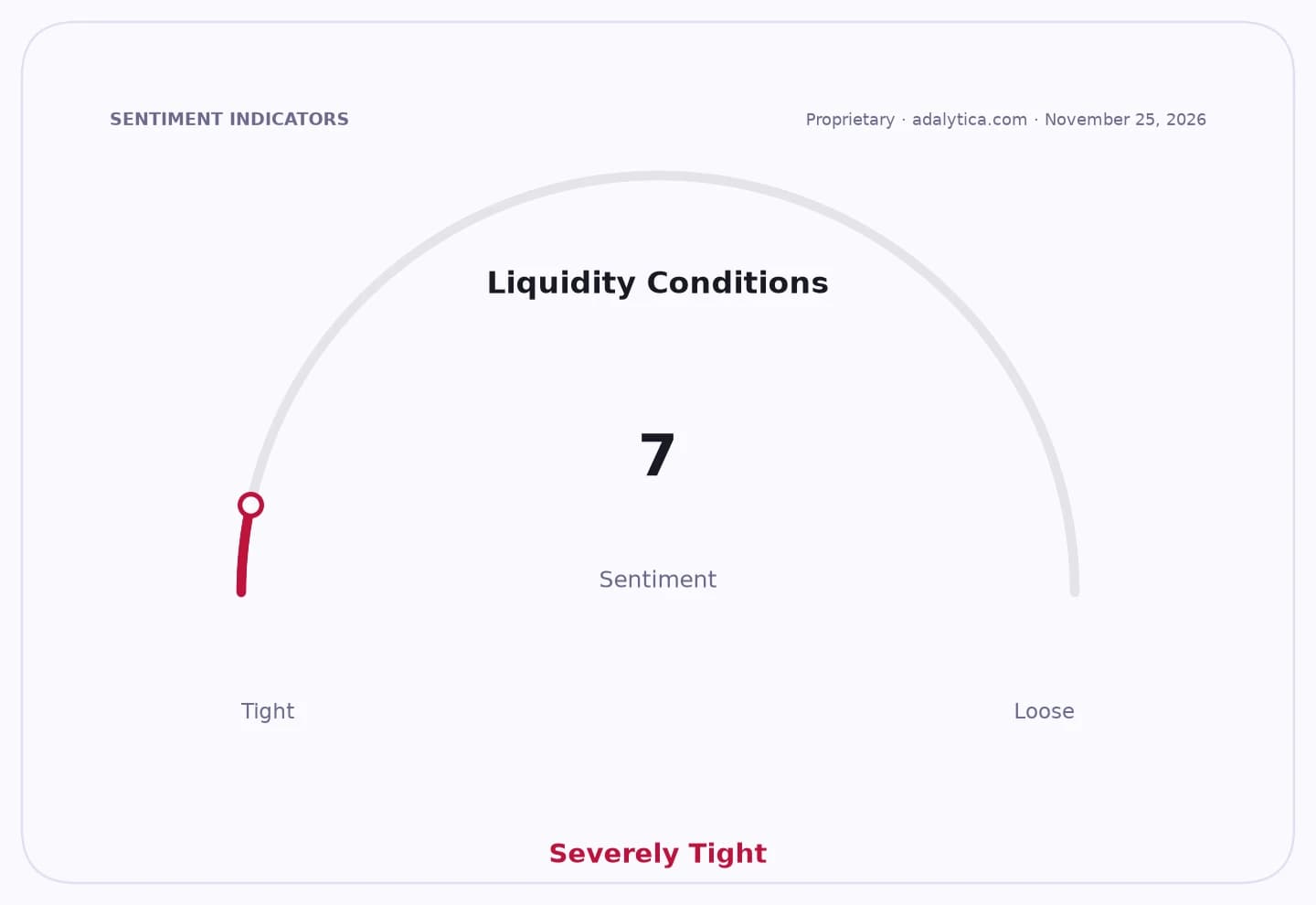
Sentiment Indicators
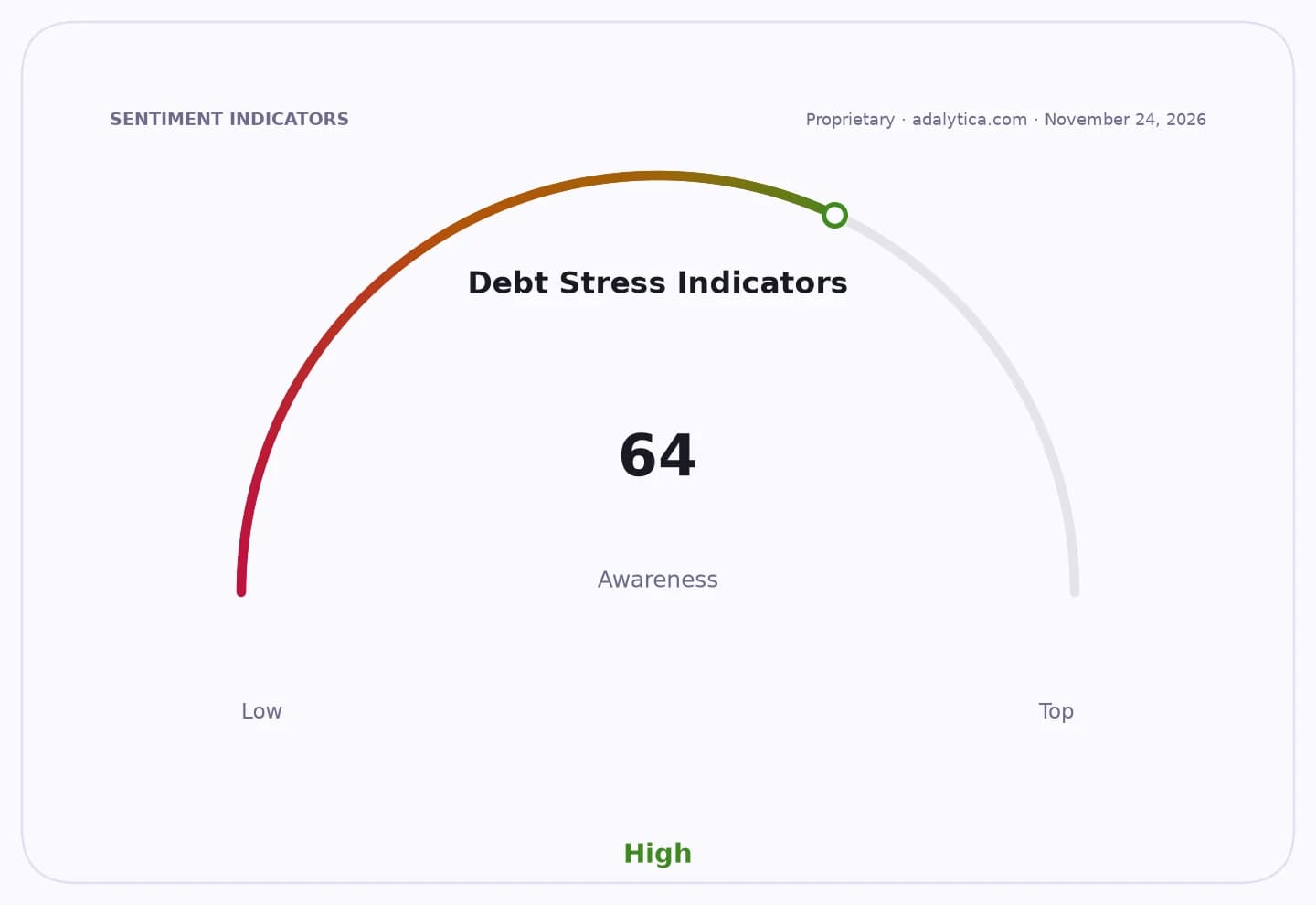
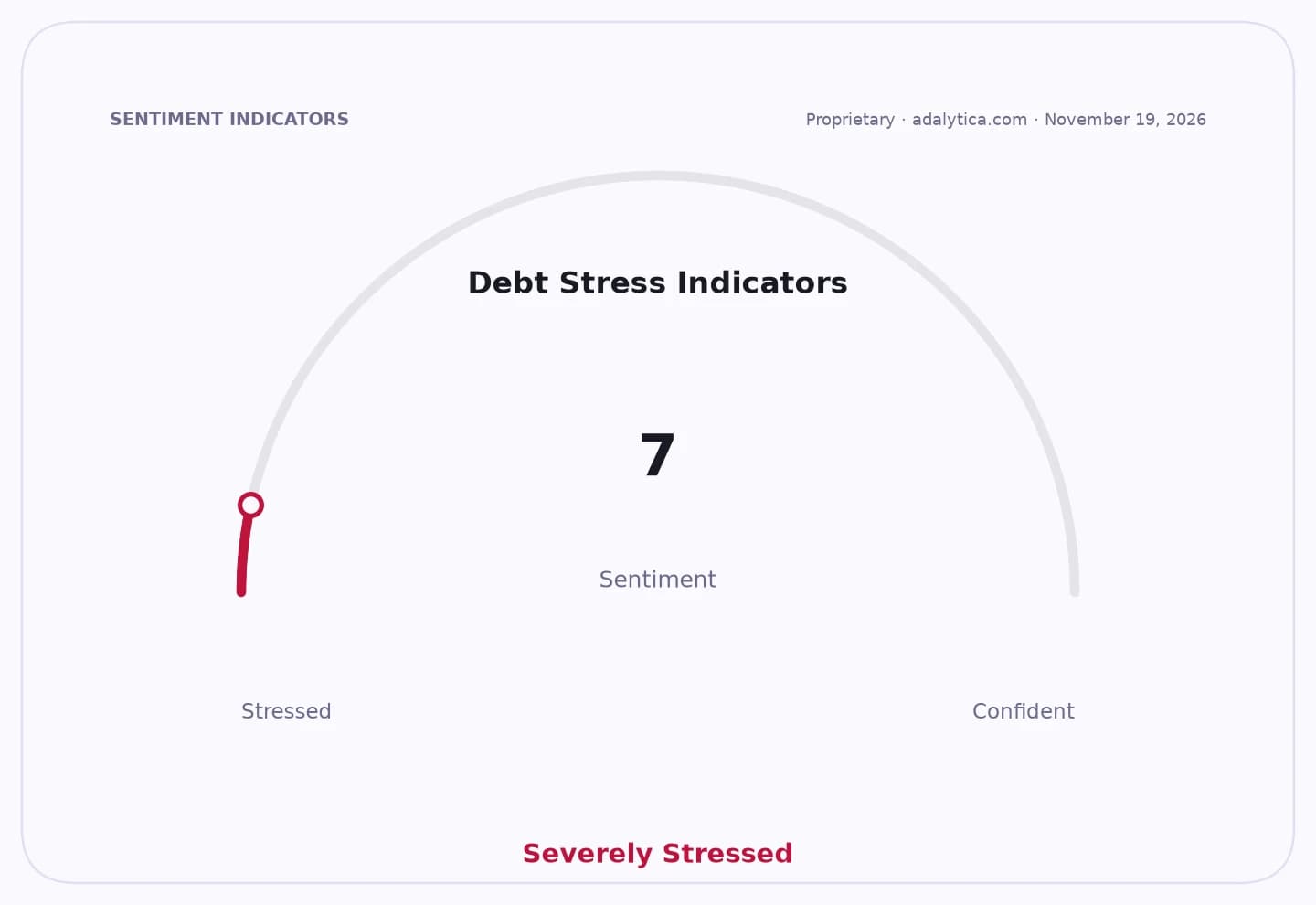
Debt Stress Indicators
For investors, the headline is a mixed signal. Card lenders benefit when APRs stay elevated and balances remain large, but the same environment can eventually pressure credit quality, trigger tighter underwriting and curb growth if borrowers max out or fall behind. The strain is already visible in the sector: American Express and Capital One have both shown sharp swings in share performance, while the Financial Select Sector SPDR ETF has been trading around its 50-day moving average after a volatile stretch, reflecting uncertainty about the durability of bank earnings and consumer credit.
The story also has a policy edge. Trump has renewed his push to cap credit card rates at 10%, a proposal that has drawn support from Senator Elizabeth Warren but would likely force banks to cut credit limits, tighten approvals or trim rewards if enacted. Lenders warn that would shift the pain from interest charges to reduced access to credit, especially for riskier borrowers.
Debt Stress Indicators
With consumer debt stress still a live issue and regulators watching fee practices more closely, the next catalyst is whether late payments and charge-offs keep rising as borrowing costs stay elevated.
| Entity | Gains | Losses |
|---|---|---|
| Credit card issuers | ▲Higher APR income | ▼Rising credit risk |
| Households with balances | ▲Short-term access to spending | ▼Interest and fee burden |
| Regulators and lawmakers | ▲Leverage for reform | ▼Pressure to curb abuse |
| Bank and financial ETFs | ▲Earnings support from rates | ▼Volatility from delinquencies |