Consumers are using 0% intro APR cards as a bridge over some of the highest revolving borrowing costs in years, and that makes the offers more than a personal-finance hack — they are a read on household stress, bank competition and the fragility of the credit cycle.
0% Intro APR Card Offers Stretch to 21 Months
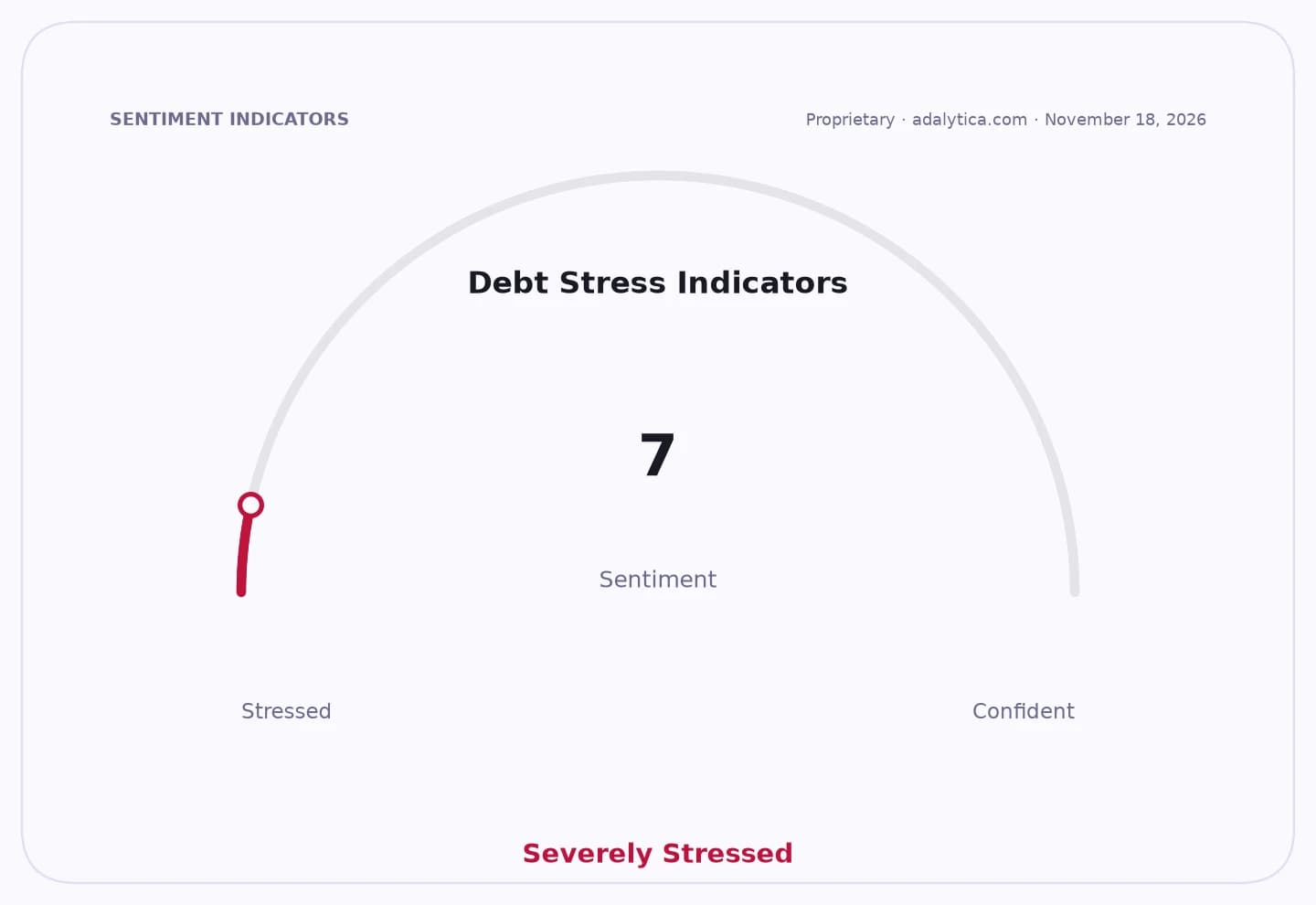
Debt Stress Indicators
This week’s longest promotional windows stretch to 21 months, giving borrowers nearly two years to move balances or finance purchases without interest before variable rates reset into the mid-teens to high-20s. That matters because credit card APRs above 20% have turned everyday spending into a compounding drag, forcing households to choose between paying down principal and servicing interest.
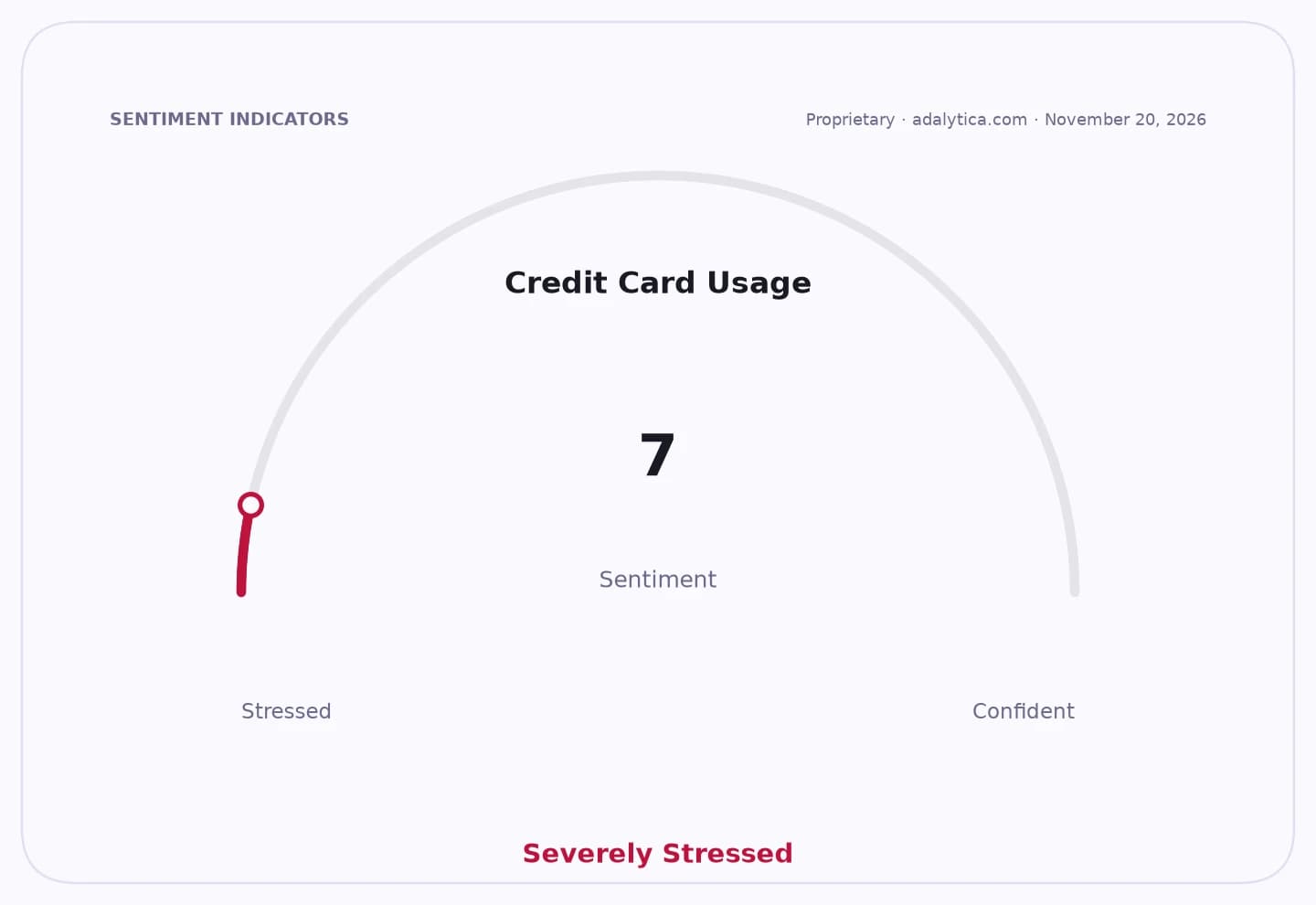
Sentiment Indicators
The timing is telling. The 10-year Treasury yield is hovering around 5%, keeping funding costs elevated, while high-yield spreads remain wider than earlier in the year. At the same time, unemployment is forecast around 4.1%, hardly a recessionary spike but high enough to keep consumer balance sheets under pressure. Adalytica’s household debt stress gauge is deep in fear territory, underscoring how sensitive borrowers remain to monthly payment relief.
For banks and card issuers, the race to offer 21-month promotions is a defensive move as much as a marketing one. Institutions such as Bank of America, Chase, Wells Fargo, Citi and others are using long teaser periods and fee waivers to win prime borrowers and lock in balances before competitors do. The economics are straightforward: attract quality revolving customers now, then monetize them later when the promo expires and the variable APR snaps back.
That is where investors should pay attention. Credit-card lenders thrive when consumer spending holds up and charge-offs stay manageable, but long 0% offers also hint at an intensely competitive market and at borrowers who are increasingly rate-sensitive. Capital One and Synchrony, for example, have seen their stocks swing sharply as the market weighs loan growth against the risk of a late-cycle deterioration in credit quality. American Express, with its more affluent customer base, remains better insulated, while pure-play lenders tied to broader credit demand are more exposed if stress intensifies.
The policy backdrop only raises the stakes. Donald Trump’s push to cap credit card rates at 10% has revived the political argument over revolving debt, even as banks warn that such a move would cut approvals, shrink credit lines and reduce rewards. If regulators or lawmakers eventually force repayment terms longer or rates lower, the economics of card lending would change quickly — and the value of teaser-rate acquisition strategies would rise even further.
For now, the message is clear: households are still looking for breathing room, banks are fighting for the best customers, and the credit cycle is not yet healthy enough for issuers to relax. The best positioning remains with lenders that can underwrite prime borrowers, fund cheaply and survive a tougher regulatory backdrop. I would watch the card names and the consumer credit ETFs closely — the longer these 0% offers stay near record lengths, the more they tell you about the pressure beneath the surface.
| Entity | Gains | Losses |
|---|---|---|
| Borrowers with revolving debt | ▲Interest-free runway | ▼Immediate APR burden |
| Card issuers with strong underwriting | ▲New accounts and future resets | ▼Near-term promo revenue |
| High-cost card lenders | ▲Balance growth from rate-sensitive consumers | ▼Margin pressure and credit risk |
| Borrowers under stress | ▲Temporary payment relief | ▼Fees after promo ends |