Kosovo’s 7.8% inflation rate has become a political and economic fault line, with opposition lawmaker Hykmete Bajrami accusing Prime Minister Albin Kurti’s government of failing to deliver any meaningful fiscal reform for households and businesses.
Kosovo Inflation at 7.8% Raises Pressure on Kurti
The criticism matters because inflation at that pace is eroding real incomes, squeezing consumer demand and raising the cost of doing business at a time when the government is still benefiting from higher VAT and tax receipts. Bajrami’s argument is that the state is capturing more revenue from higher prices without returning relief through structural tax or spending changes, leaving citizens to absorb the pain while firms face weaker purchasing power and higher operating costs.
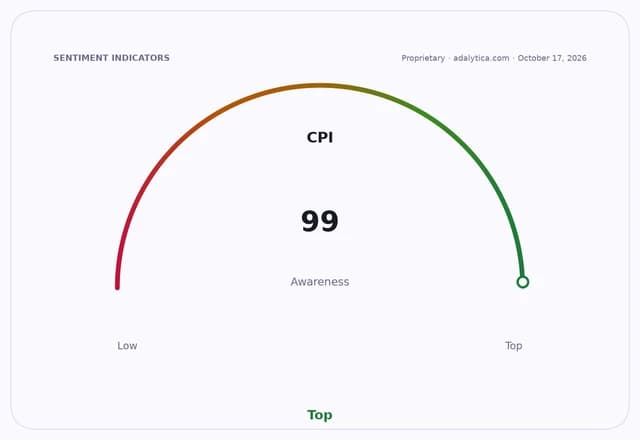
Sentiment IndicatorsⓘProprietary · adalytica.com · October 17, 2026
This is a snapshot — live sentiment, awareness and momentum for 130+ markets update continuously in the dashboard.Open AlphaPulse
That makes inflation not just a price-stability issue but a broader growth problem. When families are forced to spend more on essentials, they buy less in volume terms, which hits local retailers and service providers. Businesses then face a difficult combination of higher input costs, softer demand and little policy support, a mix that can delay hiring and investment. In small, import-dependent economies such as Kosovo’s, persistent inflation also tends to widen social pressure quickly because wages often lag price growth.
Bajrami’s attack also reflects a larger political narrative: whether the Kurti government has relied too heavily on buoyant tax intake rather than using the stronger revenue backdrop to ease the burden on consumers and companies. Her claim that there has been no structural or fiscal reform is likely to resonate with voters who feel the cost-of-living squeeze more directly than the budget’s revenue gains.
For investors, the implications are less about immediate market pricing than about policy credibility and domestic demand. Higher inflation with limited reform can curb consumption-led growth, complicate business planning and keep pressure on the government to consider targeted relief, spending shifts or tax changes. The regional backdrop only sharpens the comparison: Kosovo’s 7.8% rate is well above neighboring Serbia’s 4.1%, reinforcing the sense that price pressures remain elevated across the western Balkans, but that Kosovo is facing them more acutely.
The key question now is whether the government responds with measures that support real incomes without undermining fiscal discipline. If it does not, inflation is likely to remain a political issue and an economic drag, with the burden continuing to fall on households and small firms rather than on the state’s balance sheet.
| Entity | Gains | Losses |
|---|---|---|
| Kosovo government | ▲Higher tax revenue | ▼Public criticism |
| Households | ▲None | ▼Lower real purchasing power |
| Businesses | ▲None | ▼Weaker demand, higher costs |
| Opposition/LDK | ▲Political leverage | ▼None |