Krasnodar Krai has become one of Russia’s most important test cases for subsidized housing demand, with family mortgages totaling 755 billion rubles since the program began in 2018.
Krasnodar Krai Family Mortgages Reach 755 Billion Rubles
The scale matters because family mortgage lending is no longer a niche social policy tool; in the region it has overtaken every other major preferential home-loan program and become a central channel for housing finance. According to Dom.RF, lenders issued 151,000 family mortgages in the region, compared with 113,000 loans worth 437 billion rubles under the former subsidized mortgage program and 4,300 IT mortgages worth 33.8 billion rubles.
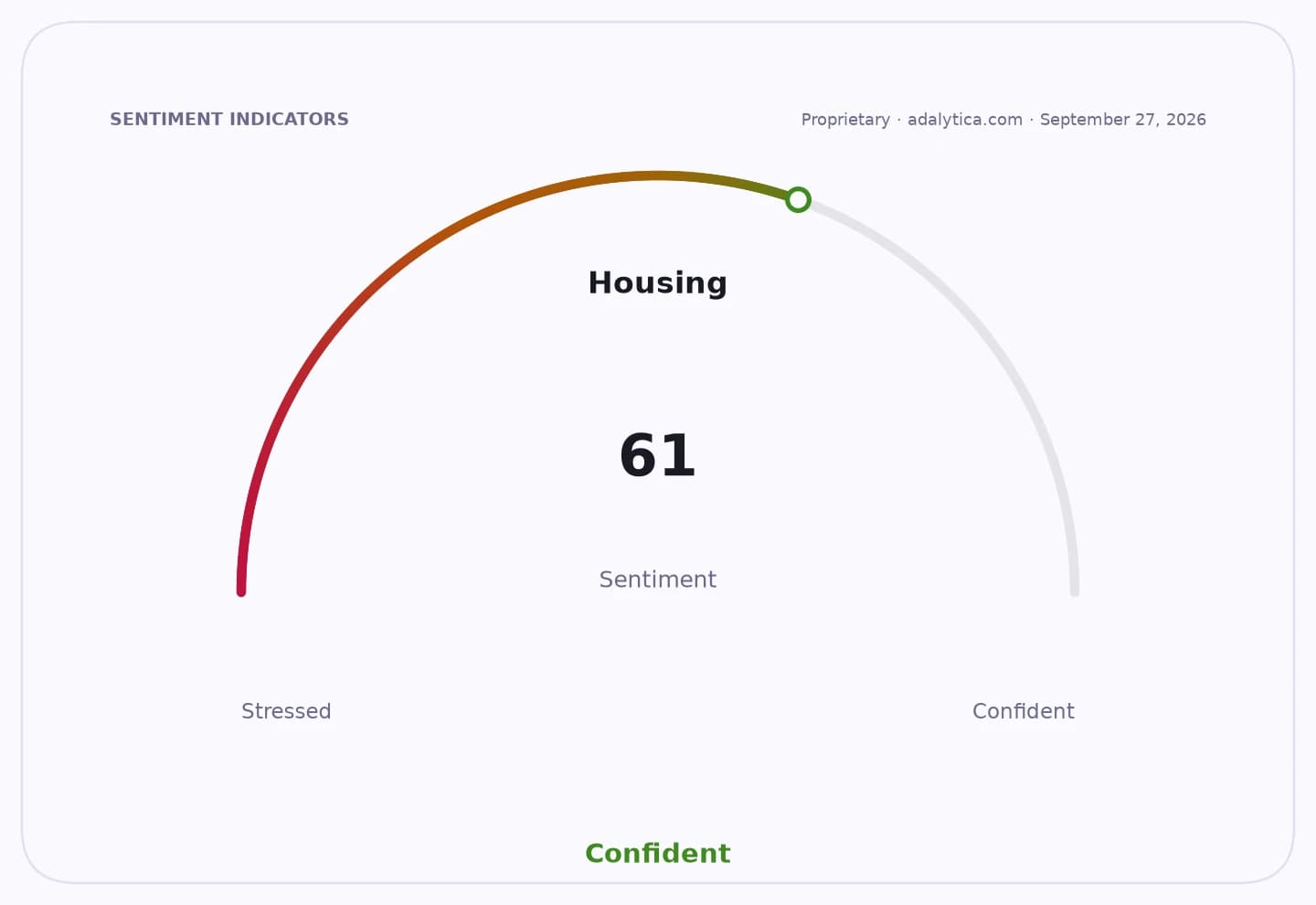
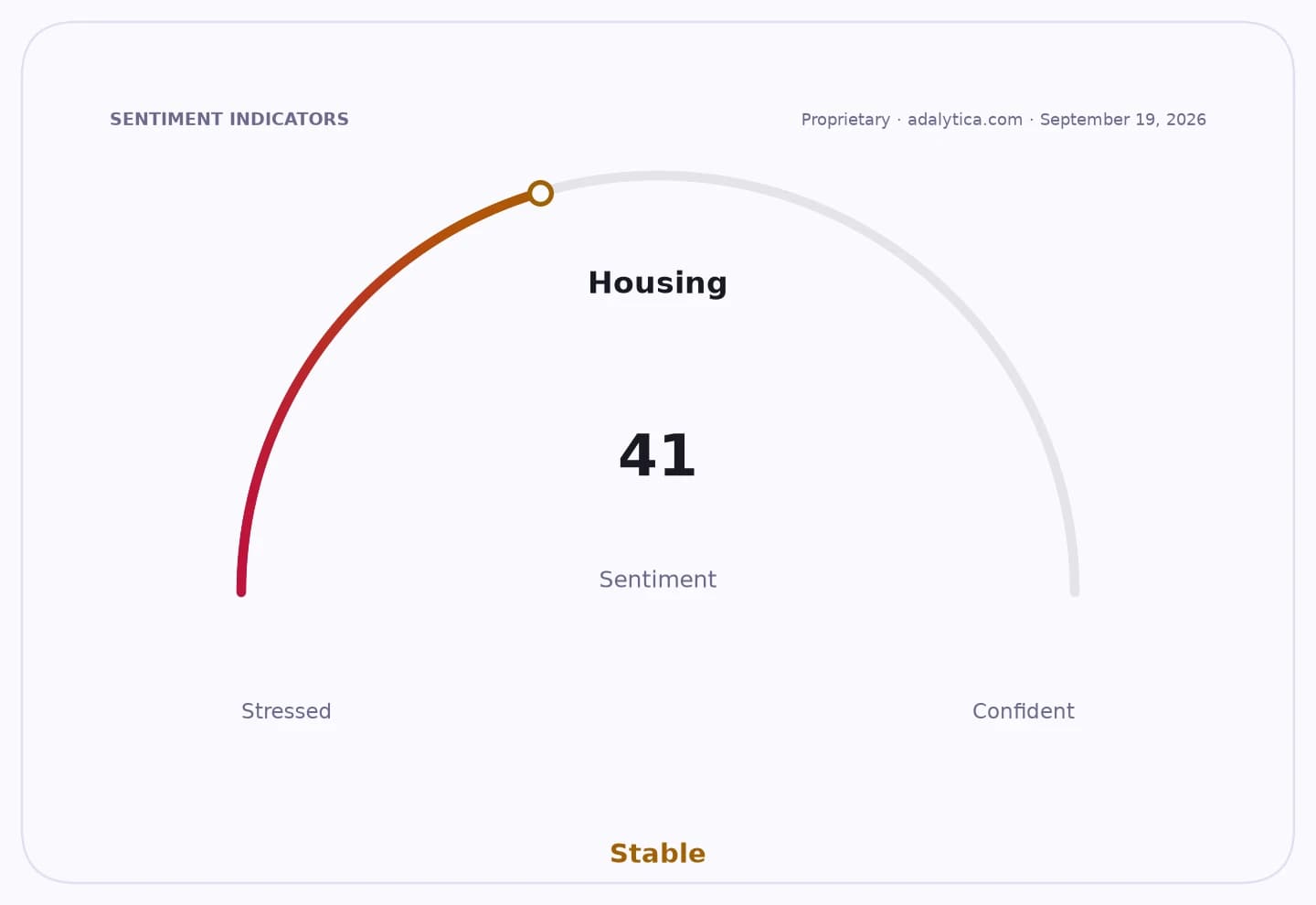
Sentiment IndicatorsⓘProprietary · adalytica.com · September 27, 2026
This is a snapshot — live sentiment, awareness and momentum for 130+ markets update continuously in the dashboard.Open AlphaPulse
That makes Krasnodar one of the clearest examples of how state-backed borrowing has shaped Russia’s residential market, especially in fast-growing southern regions. The program’s reach also underscores how dependent housing demand has become on concessional rates at a time when market mortgages are far less affordable. Nationwide, preferential mortgage schemes have generated 4 million loans worth 19 trillion rubles, with family mortgages accounting for more than 2 million of those loans.
For the economy, the numbers point to a policy that has become a stabilizer for construction activity, household formation and related spending. Subsidized mortgages support demand for new-build apartments, which in turn sustain developers, banks and local employment. In Krasnodar, where the housing market has benefited from migration, tourism-linked incomes and urban expansion, the family mortgage program has effectively acted as a demand floor.
For investors, the implications are clearest in banking and homebuilding. Lenders with large mortgage books benefit from volume, even when margins are compressed by subsidies and state support. Developers gain from a deeper pool of eligible buyers, particularly in regions where affordability is stretched. The flip side is that demand can be artificially front-loaded: when subsidy terms tighten or expire, transaction volumes can weaken quickly. Russia’s earlier “preferential mortgage” program ended on July 1, 2024, showing how quickly policy support can be withdrawn.
The latest figures also help explain why the government has been refining the family mortgage scheme rather than abandoning it. New parameters approved by the Finance Ministry and due to take effect on October 1 are meant to improve targeting, especially for larger families, while limiting abuse and making the subsidy more efficient. That suggests policymakers see family mortgages as too important to cut, but also too expensive to leave unchanged.
The broader narrative is a housing market increasingly shaped by the state, not the rate cycle. Krasnodar’s 755 billion-ruble tally shows that when market financing is expensive, subsidized credit becomes the main engine of home sales. The key question for investors is whether that support remains broad enough to keep volumes elevated without generating a sharper correction when eligibility narrows.
| Entity | Gains | Losses |
|---|---|---|
| Families with children | ▲Cheaper home loans | ▼Less access if rules tighten |
| Krasnodar developers | ▲Higher buyer demand | ▼Exposure to subsidy changes |
| Banks | ▲Mortgage origination volume | ▼Margin pressure on subsidized loans |
| Non-subsidized borrowers | ▲— | ▼Relative affordability gap widens |