Russian households shut out of subsidised family mortgages are being pushed toward the secondary market, where lower sticker prices and bargaining room can cut monthly payments enough to mimic preferential loan rates.
Russia secondary homes gain as family mortgage access tightens
That matters because housing affordability in Russia is becoming less about the headline mortgage rate and more about the gap between new-build and resale prices. With new apartments priced 15% to 20% above comparable secondhand homes on average, and sellers often willing to discount by another 10% to 15%, borrowers can partially offset the cost of borrowing even if they fail to qualify for the state-backed family programme.
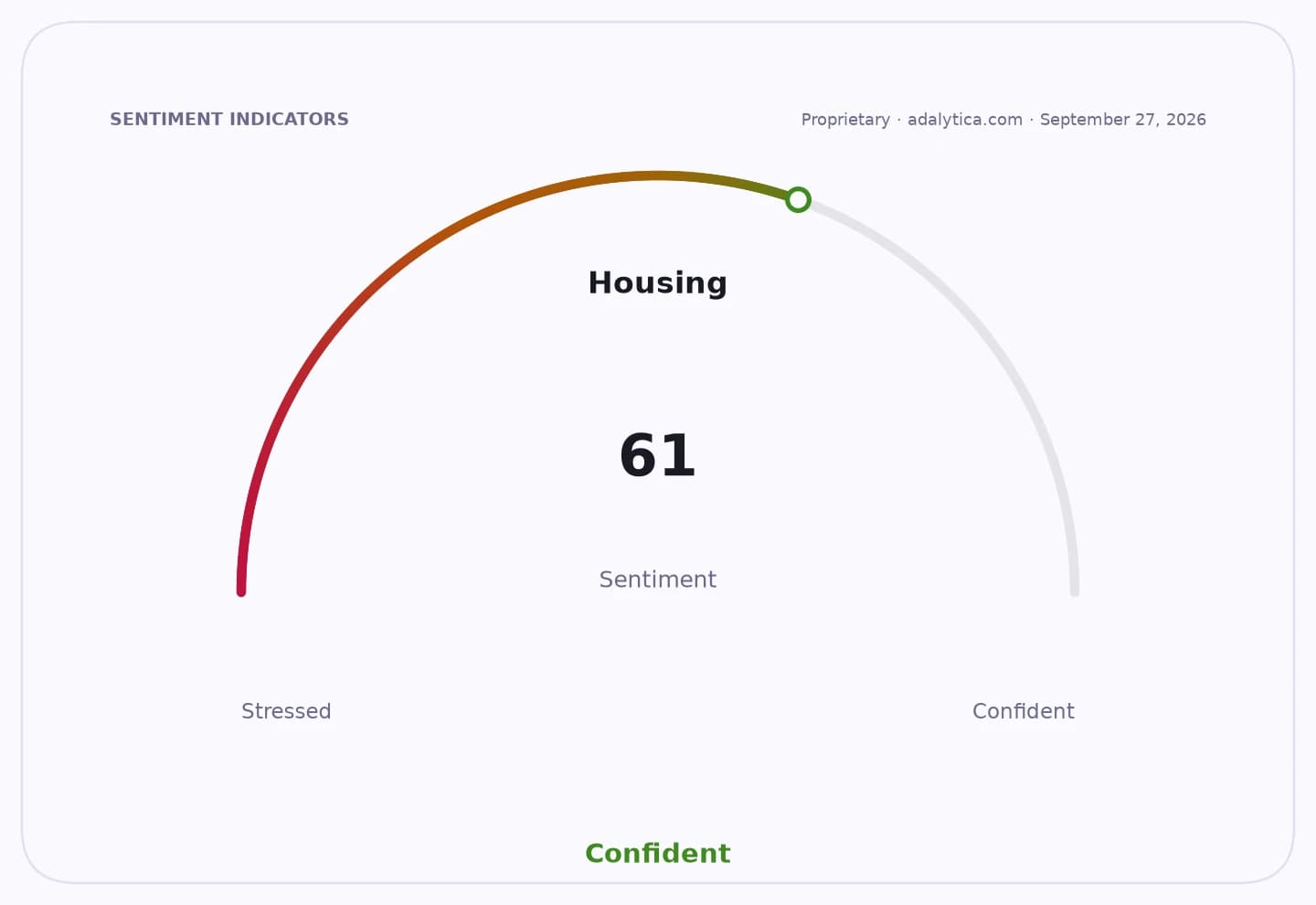
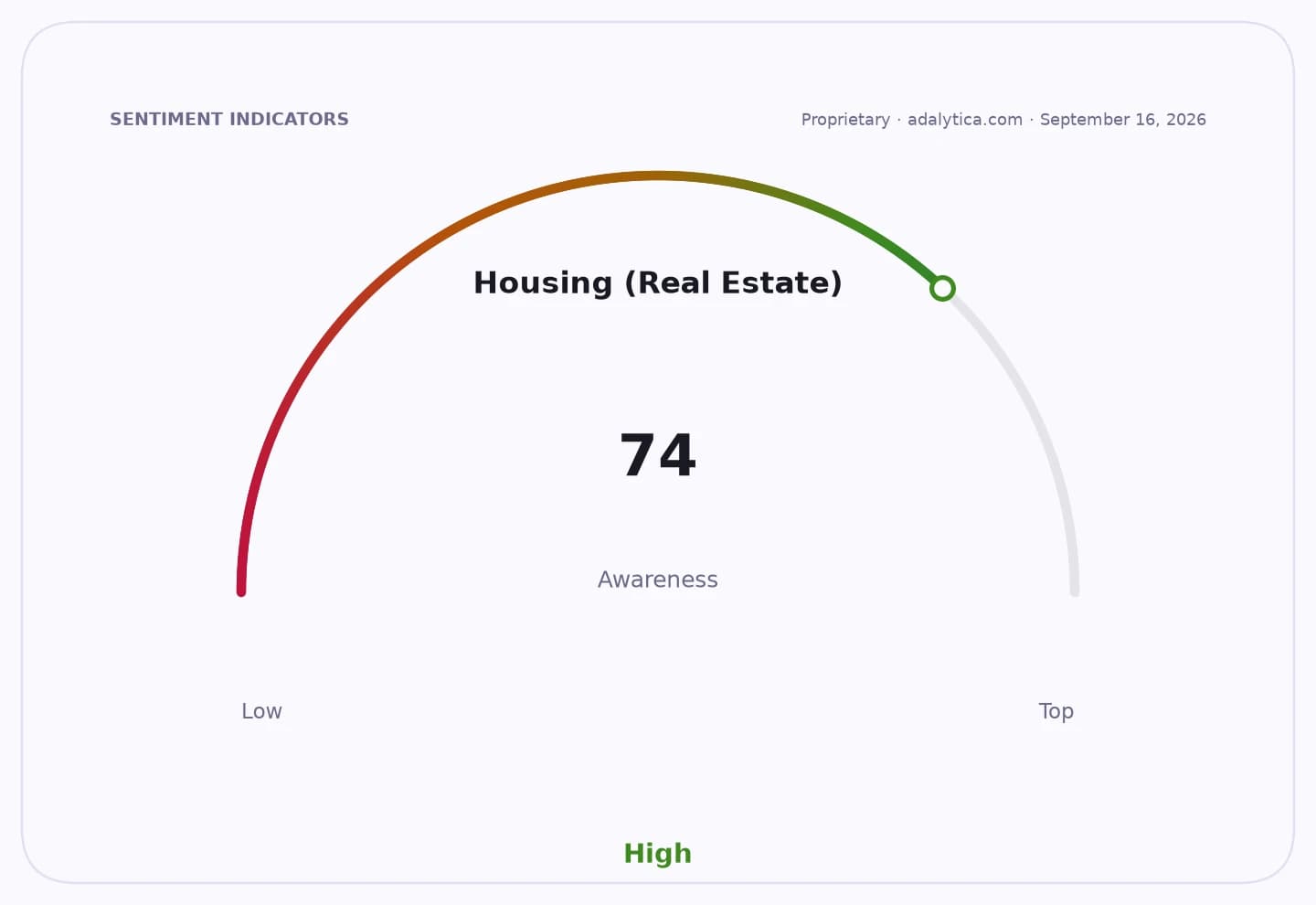
Sentiment IndicatorsⓘProprietary · adalytica.com · September 27, 2026
This is a snapshot — live sentiment, awareness and momentum for 130+ markets update continuously in the dashboard.Open AlphaPulse
The arithmetic is especially stark on longer loans. According to calculations cited by real estate firm Etazhi, a 20-year mortgage on a secondary-market apartment can be 44% cheaper than financing a new-build, with the discount widening to 49% over 30 years. Even on a 10-year term, the resale option is still said to be 31% cheaper. For families facing tighter lending criteria, that means the market itself is now doing some of the work previously provided by subsidy.
The shift also highlights how Russia’s housing market is being reshaped by policy rather than rates alone. The family mortgage programme remains one of the state’s main tools to support births and housing demand, but access is narrowing in some regions and among smaller households. In Kazan, the share of apartments that fit the programme’s price cap is said to be below 1%, underscoring how quickly a subsidy can become ineffective when local prices outrun the eligibility ceiling.
For developers, that is a warning sign. If buyers cannot fit within programme limits, demand tilts toward cheaper stock, while new-builds risk losing volume unless builders accept thinner margins or offer incentives. For owners of existing flats, by contrast, the policy squeeze improves pricing power, especially where homes require less renovation than bare-shell new construction.
Investors watching the Russian property market should see this less as a story about mortgage rates and more as one about affordability substitution. When state support becomes harder to access, households do not necessarily leave the market; they change segment. That can support secondary-market turnover, pressure new-home sales, and keep downward pressure on builders’ pricing power, even if broader housing demand remains intact.
The bigger question is whether Moscow responds with a broader expansion of housing support or with more targeted rules that favour larger families and specific regions. Either path would reshape demand again, but for now the clearest beneficiary is the resale market, and the clearest loser is the new-build segment.
| Entity | Gains | Losses |
|---|---|---|
| Secondary-market sellers | ▲Higher demand | ▼Less price pressure |
| New-build developers | ▲— | ▼Weaker qualified demand |
| Families denied subsidies | ▲Cheaper payment options | ▼Less access to concessional rates |
| State mortgage programme | ▲More targeted support | ▼Broader market reach |