Lam Research is still riding the most powerful capital-spending cycle in semiconductors, and DBS’s sharp increase in its price target to $416 from $343.50 underscores how aggressively the market is repricing AI infrastructure demand.
Lam Research rises on DBS price target boost

That matters because Lam sits at the center of the wafer-fab equipment stack, supplying tools that chipmakers need to expand memory and logic production. When banks lift targets this decisively, they are usually reflecting not just a better earnings outlook, but a longer runway for spending from customers that are scrambling to keep pace with AI demand. For investors, that makes Lam one of the cleaner ways to play the semiconductor buildout without taking direct product risk on any single chip designer.
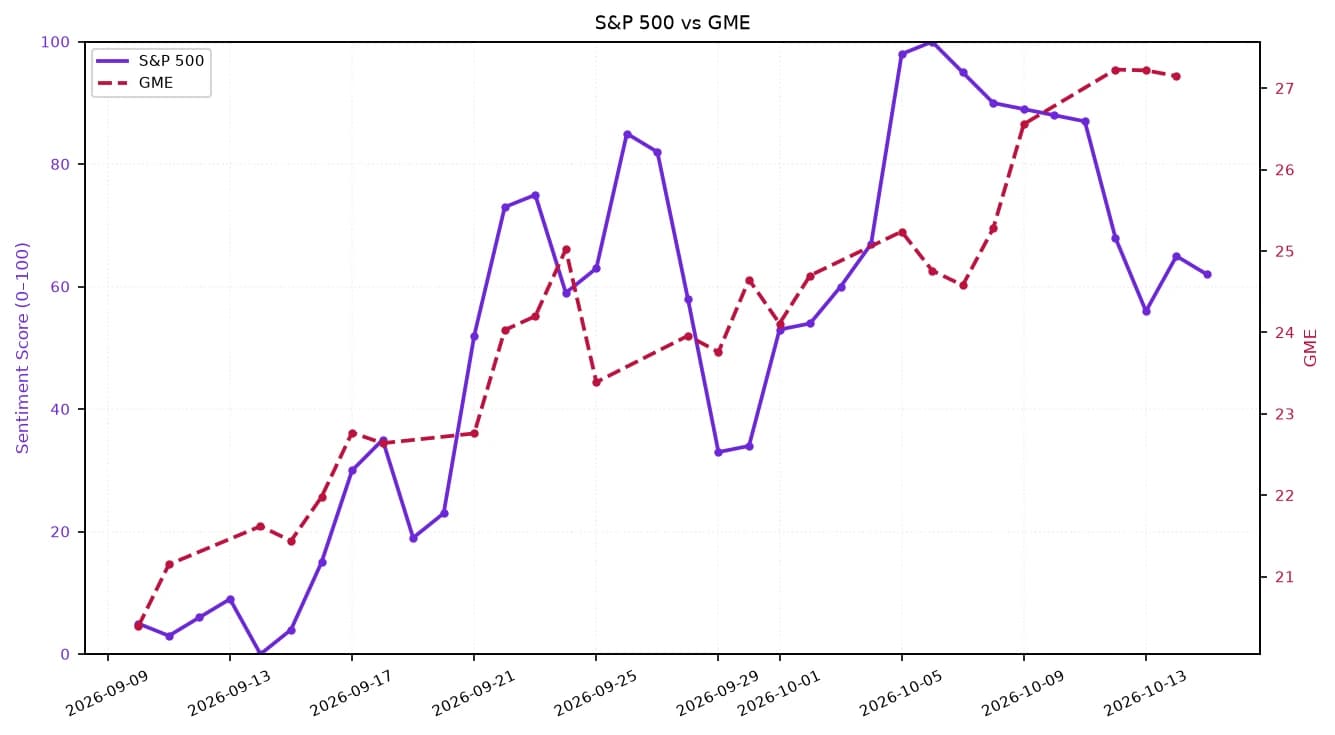
Sentiment Indicators
The stock’s recent trading action supports that view. Lam closed at $318.84 on Oct. 9, well above its 50-day moving average of $310.45 and its 200-day average of $278.72, showing the shares have recovered strongly from the spring pullback. The recent rebound also comes with elevated momentum readings, including an RSI of 60.2, which suggests buyers are back in control even after a volatile summer. In plain terms: the market is no longer treating Lam as a cyclical industrial name, but as a levered AI infrastructure play.
That is exactly where the opportunity lies. The market still tends to focus on the headline names in AI — Nvidia, Microsoft, Broadcom — while underestimating the toll-road businesses that benefit from the capex needed to make those chips. Lam sells the equipment needed to manufacture them. As memory makers and foundries keep expanding capacity, the winners are not just the chip designers but the suppliers of deposition and etch tools that get paid each time a new fab wave rolls through.
The macro backdrop helps as well. Semiconductor spending has remained firm even as broader markets have wobbled, and the appetite for AI compute has turned what used to be a boom-and-bust equipment cycle into something closer to a multi-year infrastructure theme. That is why target hikes like DBS’s matter: they reflect confidence that customers will keep spending through noise in the economy and into 2027 rather than pausing after one strong quarter.
For investors, the setup is asymmetric. If AI demand stays hot, Lam has room to keep compounding as fabs expand and utilization rises. If the cycle cools, the stock may still trade at a premium to history because the market is re-rating semiconductor equipment as a strategic enabler of AI, not just a proxy for memory pricing. Either way, the bigger trade is in the picks-and-shovels, and Lam remains one of the best-positioned names in the group.
The key takeaway is simple: DBS’s target boost is not just about one stock. It is a fresh signal that the AI capex wave is still rolling, and Lam Research remains one of the most direct ways to own it.
| Entity | Gains | Losses |
|---|---|---|
| Lam Research | ▲Higher valuation multiple | ▼Near-term volatility |
| AI chipmakers | ▲More equipment capacity | ▼Higher capex bills |
| Semiconductor tool rivals | ▲Sector optimism | ▼Margin pressure if share shifts |
| Short sellers | ▲Less compelling cyclical bearish case | ▼Rising momentum trade |