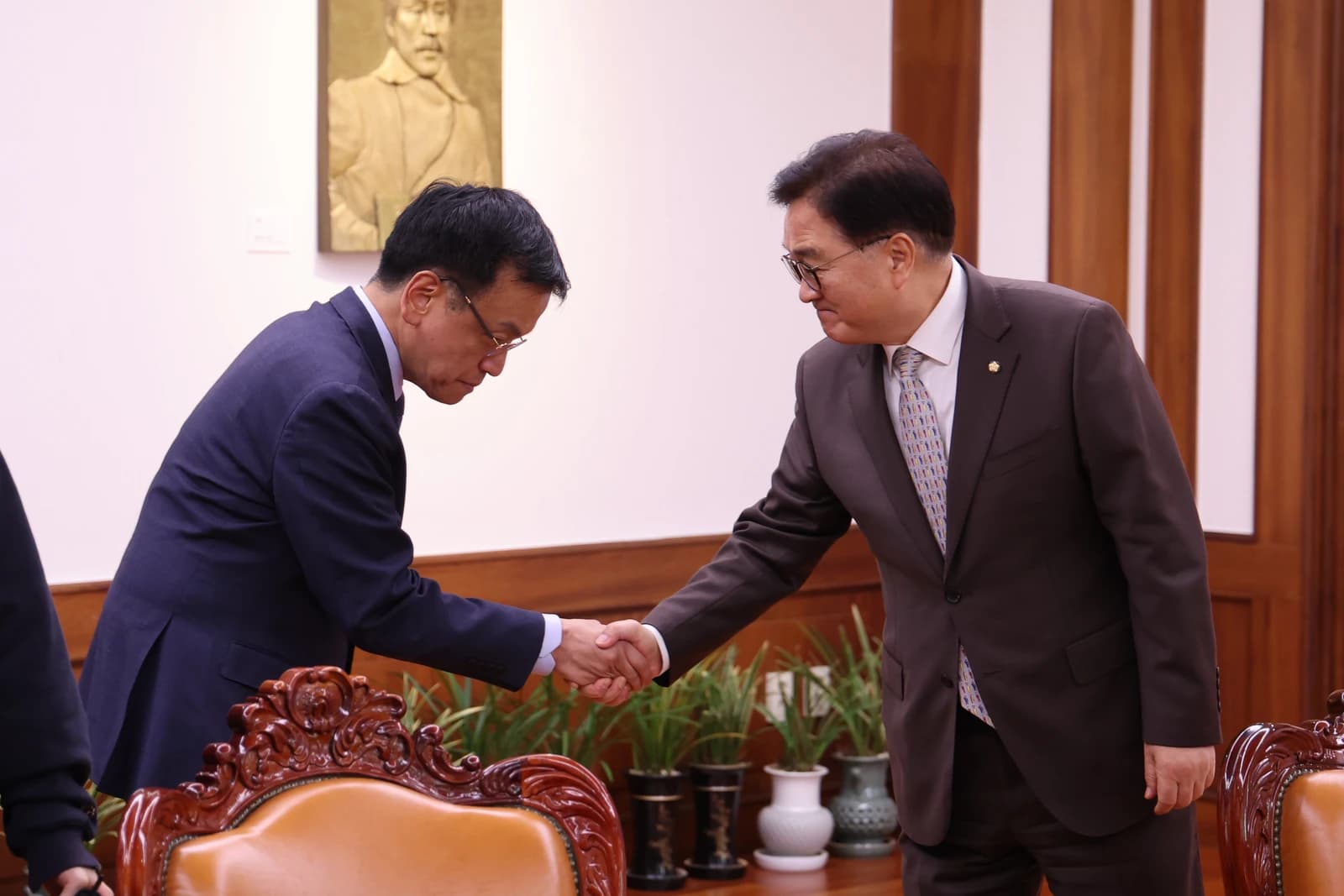
President Lee Jae-myung’s nomination of Choi In-ho, the head of Korea Housing and Urban Guarantee Corp., as senior secretary for political affairs points to a government that is putting housing policy and ruling-party coordination at the center of its next legislative push.
Lee Jae-myung names Choi In-ho to housing post
The appointment matters because the political affairs office is one of the most influential channels between the Blue House, the National Assembly and the government’s policy machinery. Choosing a sitting HUG president, rather than a career political operator, suggests Lee wants a senior aide who understands the housing market, public guarantees and the financing pressures around supply, reconstruction and rental policy.
Sentiment Indicators
That is significant for an economy where housing has become a policy and market fault line. Seoul’s apartment market remains tight even as prices soften in some districts, while reconstruction costs in affluent areas such as Gangnam continue to climb. At the same time, the government is trying to expand supply in the greater Seoul area and revive stalled win-win housing projects, including schemes that mix ownership and long-term rental units. HUG sits at the center of those efforts because it underwrites projects, assesses risk and helps determine whether politically sensitive developments can move ahead.
The timing also lines up with pressure for tax and housing reform. The Democratic Party has urged a standardized basic deduction of 1.4 billion won for Korea’s comprehensive real estate tax, regardless of residency status, in a move that would simplify the rules and potentially ease tax burdens for some homeowners. A political secretary with housing-sector credentials could help the administration negotiate that agenda through parliament while keeping the ruling bloc aligned on a market that affects households, builders, lenders and local governments alike.
For investors, the nomination is a read-through for policy continuity rather than a broad cabinet reset. It raises the odds that housing supply, guarantees, tax treatment and redevelopment approvals will remain high on the policy list. That could support sentiment for Korean builders, housing-related financials and guarantee-linked businesses if faster approvals and clearer tax rules improve project economics. The bull case is that a housing specialist in the presidential office helps unclog stalled projects and stabilizes a politically sensitive market. The bear case is that a more activist housing policy could intensify regulatory uncertainty, limit price gains and squeeze margins for developers still dealing with elevated construction costs.
The broader message is that Lee’s administration appears to be treating housing not just as a social issue but as a test of economic management and political discipline. With apartment demand still strong in the capital region and policy makers under pressure to deliver both affordability and supply, Choi’s appointment gives the presidency a more hands-on operator for one of Korea’s most market-sensitive dossiers.
| Entity | Gains | Losses |
|---|---|---|
| Lee Jae-myung administration | ▲Stronger policy coordination | ▼Political friction if housing rules tighten |
| HUG and housing projects | ▲Higher policy access | ▼Greater scrutiny over guarantees |
| Homebuyers and renters | ▲Possible supply support | ▼Risk of uneven policy outcomes |
| Builders and developers | ▲Faster approvals, clearer rules | ▼Margin pressure from regulation |