Lithuania’s climb to 22nd place in the Fraser Institute’s 2026 Economic Freedom of the World index is the clearest sign yet that the Baltic state is consolidating its reputation as one of Europe’s more market-friendly economies.
Lithuania Rises to 22nd in Fraser Freedom Index
The five-place rise matters because it speaks to the institutional foundations investors watch closely: lighter regulation, stronger property rights, more open trade and a business climate that can support faster private-sector growth. In a region often judged through the lens of geopolitics and labor-cost competition, Lithuania’s ranking suggests the country is improving on the less visible but more durable drivers of capital formation.
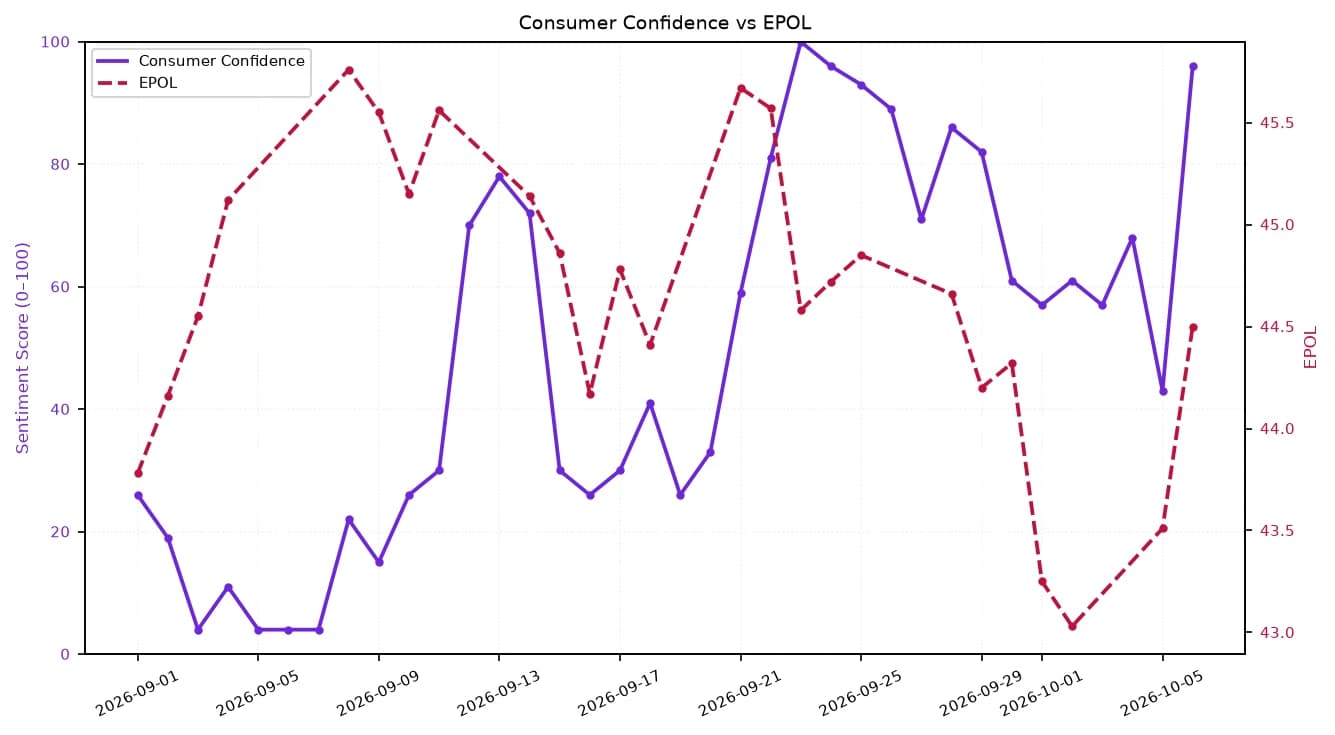
Sentiment IndicatorsⓘProprietary · adalytica.com · October 8, 2026
This is a snapshot — live sentiment, awareness and momentum for 130+ markets update continuously in the dashboard.Open AlphaPulse
The Fraser index measures economic freedom across five areas — the size and scope of government, legal structure and property rights, sound money, freedom to trade internationally and regulation of credit, labor and business. A jump of five places in a single edition is not just statistical noise; it indicates Lithuania is moving in the right direction relative to peers at a time when many European economies remain weighed down by slow productivity growth, heavy bureaucracy and tighter fiscal constraints.
For investors, that has practical implications. Higher economic freedom is typically associated with better long-run growth, stronger entrepreneurship and a more predictable operating environment for foreign direct investment. That can support valuations in sectors that depend on policy stability, from financial services and logistics to manufacturing and technology. It also strengthens the case for Lithuania as a regional hub inside the European Union and the euro area, where rule-of-law credibility and trade integration are critical advantages.
The backdrop matters too. With inflation dynamics still a central concern across global markets and interest rates elevated by historical standards, countries that can combine macro stability with pro-business policy are more likely to attract mobile capital. Lithuania’s progress will not insulate it from a weaker European cycle, but it does improve its relative positioning if investors continue shifting toward economies with clearer institutional guardrails.
The risk is that rankings can move faster than the underlying economy. Sustained gains will depend on whether reforms in regulation, labor flexibility and public-sector efficiency translate into higher productivity rather than a one-off improvement in perception. Still, for a small open economy exposed to external shocks, moving up the freedom table is a meaningful signal that the policy mix remains supportive of growth.
| Entity | Gains | Losses |
|---|---|---|
| Lithuania | ▲Higher investor appeal | ▼Less room for policy complacency |
| Foreign investors | ▲Better business environment | ▼Fewer excuses to wait on entry |
| Domestic firms | ▲Easier expansion | ▼Incumbents facing more competition |
| Regional peers | ▲Benchmark to match | ▼Relative ranking pressure |