The Chinese shipping-data platform Washington once warned could become a trade superweapon has effectively gone quiet, marking a setback for Beijing in the battle to control the information rails of global commerce.
LOGINK Goes Quiet as China’s Shipping Push Stalls
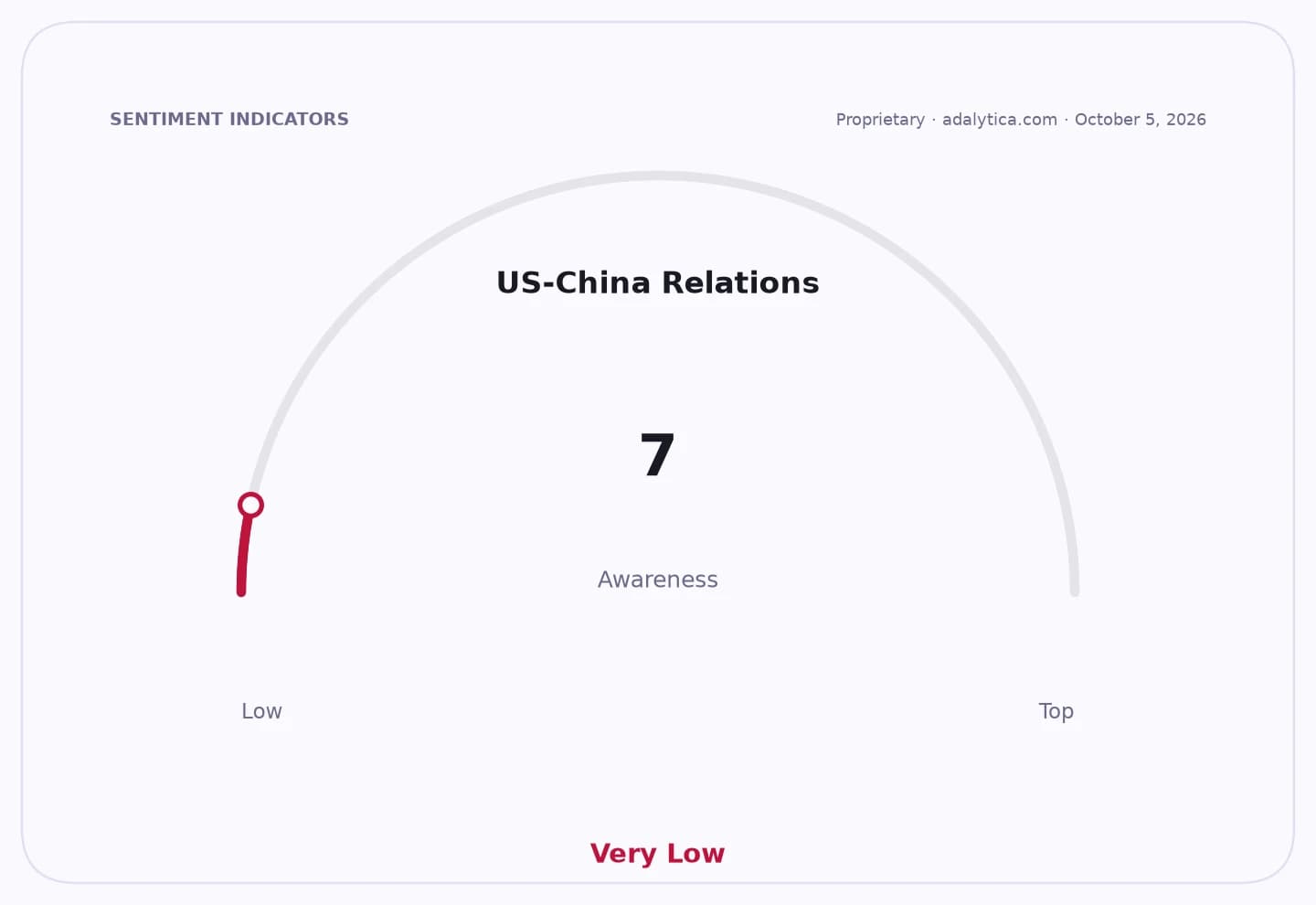
Reuters’ reporting shows LOGINK’s international expansion stalled, its website went dark around mid-2024, and its flagship partnerships with Japan, South Korea and a maritime industry association either withered or were severed. For investors and policymakers, the significance is less about one platform’s demise than about the limits of China’s ability to turn logistics data into strategic leverage over a sector that carries about 80% of world trade.
Sentiment IndicatorsⓘProprietary · adalytica.com · October 5, 2026
This is a snapshot — live sentiment, awareness and momentum for 130+ markets update continuously in the dashboard.Open AlphaPulse
That matters economically because shipping data sits at the center of freight pricing, cargo planning and supply-chain visibility. If Beijing had gained broad access to non-public cargo flows, it could have sharpened industrial policy, undercut rivals on pricing and potentially improved visibility into sensitive military shipments. The fact that LOGINK is instead mired in legal claims, unpaid bills and abandoned offices in Wenzhou suggests that Washington’s campaign to isolate the system worked, at least for now, and that China’s effort to build digital influence over maritime infrastructure has run into real resistance.
The retreat also underscores a broader shift in the US-China trade contest. American officials and lawmakers did not just object to LOGINK in theory; they prohibited use across US government and critical port infrastructure, pushed allies to avoid the system and leaned on industry groups that had explored cooperation. The result appears to have been a chilling effect on international adoption, especially in Europe, where ports in Rotterdam and Sines said discussions never amounted to meaningful collaboration.
For investors, the immediate read-through is mixed. The direct market impact is limited because LOGINK is not a listed pure-play and its collapse does not alter shipping demand on its own. But the episode reinforces a more investable theme: geopolitical scrutiny of logistics, ports and data infrastructure is intensifying, and companies exposed to cross-border trade technology will face higher compliance and sovereignty risk. That can support spending on alternative systems and domestic data networks, while also increasing costs for operators caught between US security demands and China’s push for greater control over supply-chain information.
The story also lands in a market environment already defined by tariff threats, export controls and widening trade frictions. A Reuters review found that LOGINK’s decline came as US pressure mounted and as Beijing’s transport ministry signaled a renewed focus on domestic data streams, not global integration. That suggests China may still seek to consolidate logistics information at home even as its international ambitions stall.
The bear case for Washington is that LOGINK’s opacity never proved the worst fears right and that China may simply rebuild the effort under a different name. The bull case for US policymakers is that the platform’s international rollback shows allied governments and private operators remain wary of handing strategic infrastructure data to Beijing. For investors, the key catalyst is whether China doubles down on domestic logistics digitization while foreign ports harden defenses — a split that could further fragment the global shipping technology stack.
| Entity | Gains | Losses |
|---|---|---|
| US government | ▲Reduces data-security risk | ▼Loses leverage if China relaunches project |
| China’s transport ministry | ▲Gains push for domestic data integration | ▼Loses international reach |
| Ports and logistics operators in allies | ▲Gain policy clarity | ▼Lose cheap/fast data-sharing options |
| Global shippers and trade-tech vendors | ▲Gain demand for alternative systems | ▼Face higher compliance costs |