Residential mortgage lending in Macao edged lower in August even as commercial real estate approvals rebounded sharply, highlighting a split in the property-financing market that matters for banks, developers and the territory’s broader recovery.
Macao Mortgage Lending Edges Lower in August

Banks approved MOP860.22 million of new residential mortgage loans last month, down 0.3% from July, according to the Monetary Authority of Macao. The pullback was driven by resident borrowing, which accounted for 97.7% of new approvals and fell 1.6% to MOP840.84 million. Lending to non-residents jumped 135.1%, but from a low base.
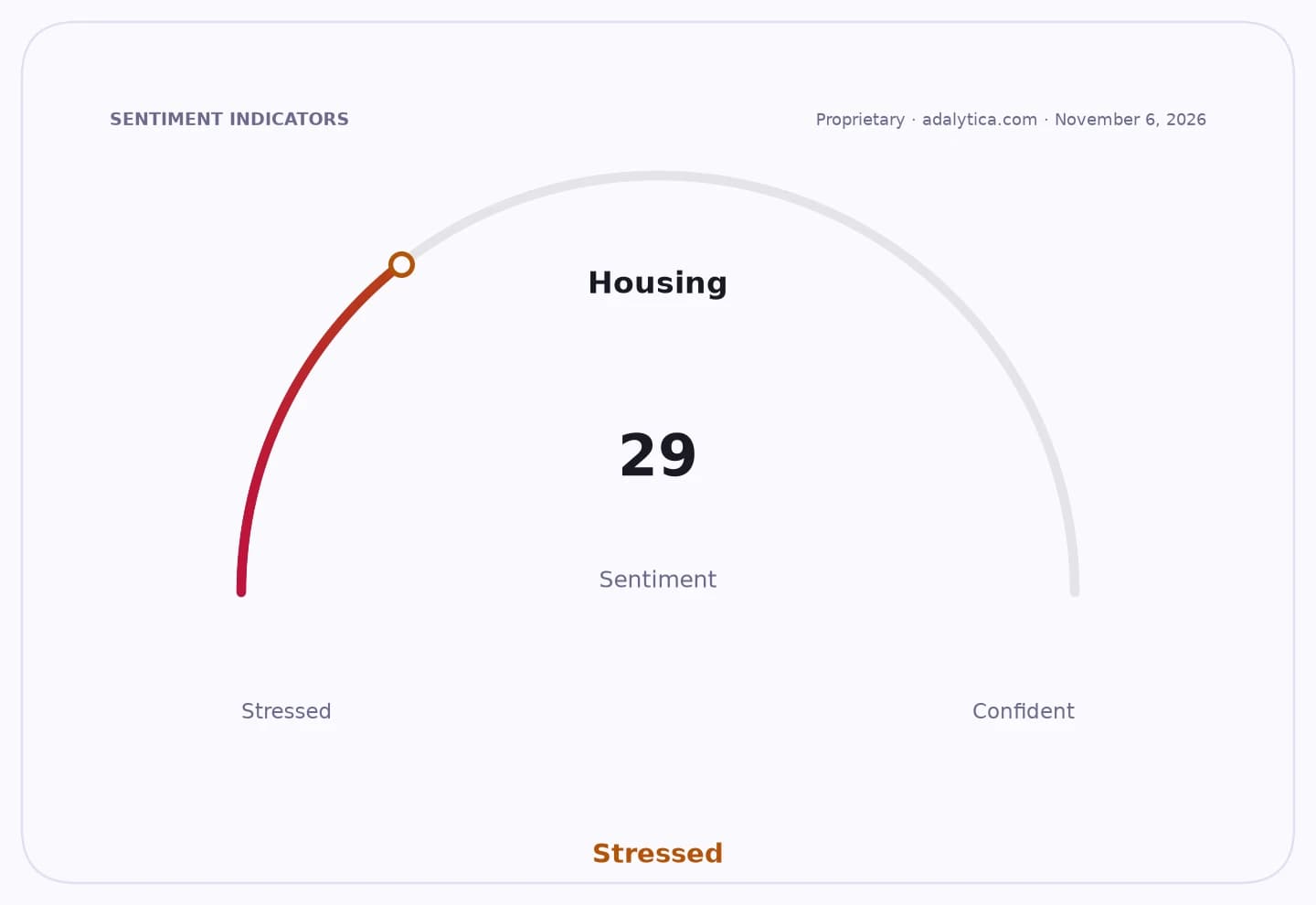
Sentiment Indicators

Commercial real estate lending moved in the opposite direction. New commercial real estate loan approvals rose 13.9% month on month to MOP3.45 billion, entirely to resident borrowers, and the three-month average climbed 62.7% from the prior period to MOP2.50 billion. That suggests financing appetite is holding up better in the commercial segment than in housing, even as both loan books continue to shrink year on year.
Outstanding balances fell in both categories. The residential mortgage portfolio dropped 0.4% from July to MOP200.31 billion and was down 4.6% from a year earlier. The commercial real estate portfolio fell 0.7% on the month and 8.5% year on year to MOP131.36 billion.
Delinquencies remain a watchpoint for lenders. The residential mortgage delinquency ratio rose to 3.7% at the end of August, while the commercial real estate ratio held at 5.6%, slightly above a year earlier. For investors, the data point to a market where loan growth is uneven, credit quality is still under pressure and banks are likely to remain selective as borrowing conditions and property demand stabilize.
The next read-through will come in September approvals and delinquency figures, which will show whether August was a one-month swing or the start of a broader turn in Macao property finance.
| Entity | Gains | Losses |
|---|---|---|
| Macao banks | ▲Commercial loan momentum | ▼Mortgage volume softness |
| Homebuyers | ▲Possible policy support | ▼Tighter borrowing demand |
| Developers/commercial borrowers | ▲Easier funding access | ▼Higher delinquency scrutiny |
| Regulators | ▲Signs of lending activity | ▼Ongoing credit-risk pressure |