Malaysia’s Budget 2027 gives the health ministry RM47.7 billion, but the bigger story is that the government is leaning more heavily on private providers to relieve pressure on public hospitals while leaving long-standing underfunding largely intact.
Malaysia Budget 2027 Boosts Private Hospital Outsourcing

The allocation rises by just RM1.2 billion, the smallest increase in five years, and still falls well short of the ruling coalition’s pledge to lift public health spending to 5% of GDP. At 2.1% of GDP and 10.3% of the federal budget, the ministry’s share has barely moved in recent years, suggesting the public system will remain under strain from inflation, staffing shortages and rising demand.
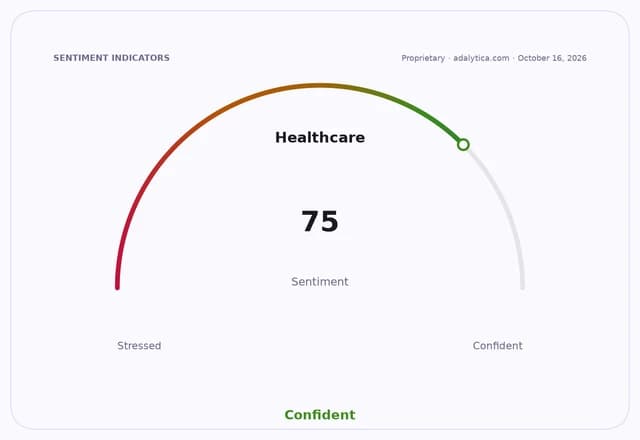
Sentiment IndicatorsⓘProprietary · adalytica.com · October 16, 2026
This is a snapshot — live sentiment, awareness and momentum for 130+ markets update continuously in the dashboard.Open AlphaPulse

That is why the most consequential changes in the budget are not the headline spending figures but the expansion of public-private healthcare programmes. Funding for outsourced treatment climbs from RM144 million to RM200 million, a move that could pay for tens of thousands more patients to be treated in private facilities and trim waiting times in public hospitals. The Hospital Services Outsourcing Programme now covers 14 specialty areas, a sign that the state is increasingly using private capacity as a pressure valve.
For investors, that points to a more durable revenue channel for private hospital operators and insurers, even if the government stops short of outright privatization. Higher outsourced volumes should support groups such as HCA Healthcare’s local peers in Malaysia, while the emphasis on price transparency under MediAsas could help restrain medical inflation and improve patient acceptance of private care.
The budget also tries to address supply-side bottlenecks in the public system. More than 9,000 vacancies are expected to be created to absorb contract doctors and new housemen, a long-delayed move that should improve staffing and retention at the margin. Incentives for nurses and paramedics rise by just RM100 a month, however, underscoring how little the package does to tackle the wage gap with private-sector and overseas jobs that has driven a severe brain drain.
Ambulance purchases and direct permanent appointments for new doctors are practical fixes, but they do not alter the larger economic picture: Malaysia is relying on a mixed system in which public spending grows slowly while regulation and outsourcing do more of the work. That makes the next test less about budget size and more about execution — whether the government can manage pricing, access and staffing without simply shifting stress from one part of the system to another.
| Entity | Gains | Losses |
|---|---|---|
| Private hospitals | ▲More outsourced patients | ▼Price scrutiny |
| Public hospitals | ▲Shorter queues | ▼Still underfunded |
| Contract doctors | ▲Permanent vacancies | ▼Limited wage gains |
| Patients | ▲Better access to care | ▼Higher private dependence |