Marine Le Pen’s path to the French presidency matters less as a personality contest than as a potential break point for Europe’s second-largest economy and one of the euro zone’s anchor states.
Marine Le Pen and French election risk for euro assets
The threat for markets is not simply that a far-right candidate could win in 2027, but that France would be led by a politician who has spent more than 15 years trying to soften her image while keeping the core of her nationalist economic programme intact. That combination — political durability, anti-establishment appeal and a platform that would challenge parts of France’s integration with the European Union — is what makes investors uneasy.
Le Pen, now 58 and the long-time face of the National Rally, inherits a family brand once treated as electorally toxic. Her father, Jean-Marie Le Pen, founded the party’s predecessor and spent decades outside the political mainstream. Marine Le Pen’s strategy of “de-demonisation” has broadened the party’s reach and helped turn what was once a protest movement into a credible governing force. That is the real shift: not the survival of the far right, but its normalization.
For Europe, that is troubling because France is not just another member state. It is a core issuer in sovereign bond markets, a leading military power and a central partner in EU policymaking. Any French president with an agenda built around national priority over European compromise would immediately raise questions about fiscal discipline, treaty constraints and the future direction of the bloc. Investors would have to reassess the premium they demand for French assets, while policymakers in Brussels and Berlin would have to prepare for a less cooperative Paris.
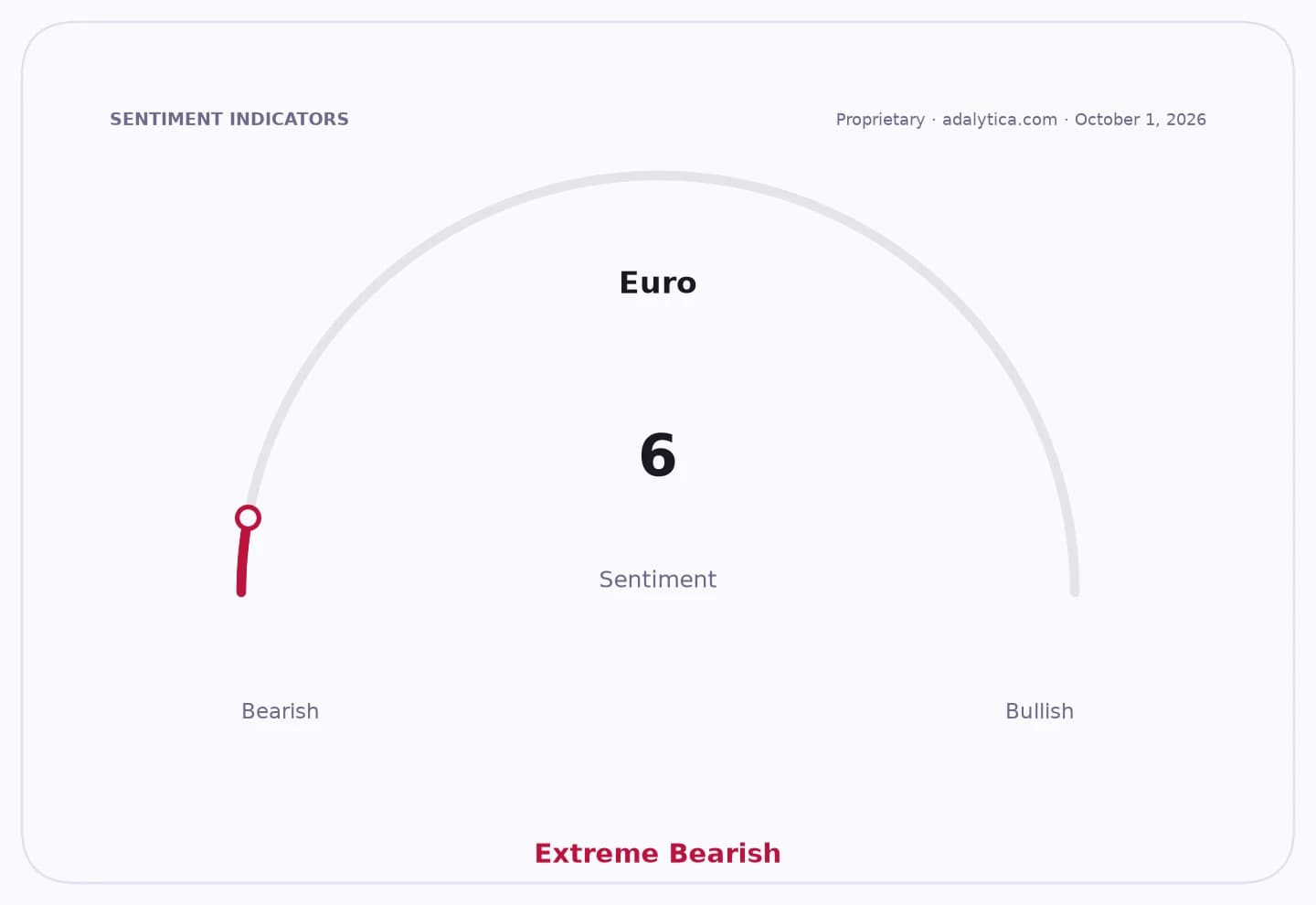
Euro — 30-day sentimentadalytica.com
Explore this data interactively — full history, time series and cross-market comparisons.Open AlphaPulse

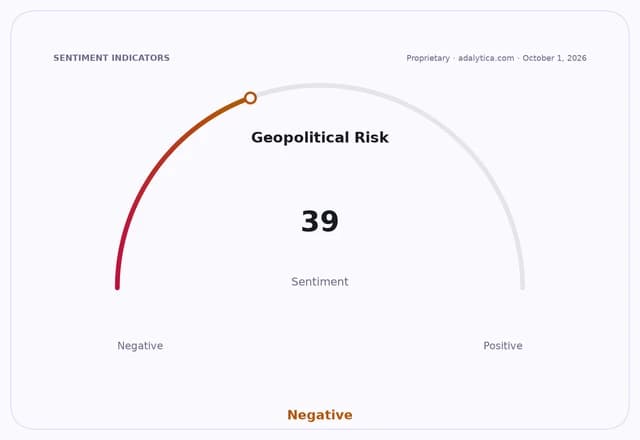
FXE, the euro ETF, has already been under pressure. It closed at 103.66 on Oct. 1, below its 50-day moving average of 106.29 and its 200-day moving average of 106.89, with a relative strength index of 7.6, a reading that points to deeply oversold conditions. Adalytica’s Euro Trade Signals snapshot shows sentiment at 6, labeled “Extreme Fear,” while broader global stability sentiment sits at 39 with an “Extreme Fear” awareness reading. Those measures do not predict the election, but they capture how fragile euro-area confidence already is when political risk in France comes into focus.
The market question is whether Le Pen’s rise is priced as a governing risk or still treated as an election-cycle headline. Bullish investors argue that French institutions, the constitution and the constraints of coalition politics make radical policy change harder than campaign rhetoric suggests. The bear case is that even without sweeping legislative change, a Le Pen presidency would be enough to unsettle the euro, widen French borrowing spreads and complicate EU decision-making at a time when the bloc is already struggling with growth, security and industrial policy.
What makes Le Pen different from earlier populist challengers is that she now represents a mainstream electoral possibility rather than an outside revolt. If polls continue to show her as the leading contender, Europe will be forced to confront a more unsettling reality: the far right is no longer only a protest vote, but a potential governing model in one of the EU’s pivotal capitals.
| Entity | Gains | Losses |
|---|---|---|
| Marine Le Pen / National Rally | ▲Electoral momentum | ▼Political isolation |
| French establishment parties | ▲A warning to reposition | ▼Centrist dominance |
| Euro and French assets | ▲Oversold rebound potential | ▼Risk premium, volatility |
| EU institutions | ▲Clarity on political risk | ▼Policy stability |