Europe’s political center of gravity is shifting as far-right parties turn migration and demographic anxiety into a durable governing force, and investors should treat that as more than a cultural story.
Europe migration politics and market risk

The economic significance is that identity politics is now feeding directly into policy risk, labor markets and capital allocation across the continent. When voters in Europe’s towns and peripheral regions increasingly see immigration as an existential issue, the result is pressure for tighter borders, harder integration rules and more hostile politics around foreigners, all of which can slow labor mobility even as aging economies need workers. That is the core tension the market underestimates: Europe is old, short on labor and structurally dependent on migration, yet its politics is moving in the opposite direction.
Sentiment IndicatorsⓘProprietary · adalytica.com · October 9, 2026
This is a snapshot — live sentiment, awareness and momentum for 130+ markets update continuously in the dashboard.Open AlphaPulse

The discussion aired this week on Al Jazeera captured the shift bluntly. Analysts described a far right that is no longer a fringe protest movement but a coalition of currents — nationalist, anti-immigration, secular and Christian-conservative — united by fear of future decline, demographic change and what some theorists call the “great replacement.” The point is not whether that framing is accurate; it is that it has become politically powerful enough to shape mainstream debate.
That matters for investors because the policy consequences can hit several tradable themes at once. A Europe that becomes more restrictive on migration faces a tighter labor supply, especially in services, construction, healthcare and industrial work. It also raises the odds of more fragmented coalition politics, weaker consensus around fiscal reform and a more uneven approach to integration, all of which can weigh on the region’s growth premium versus the U.S. and Asia. If the continent cannot resolve its labor shortage through migration, productivity gains must do more of the work — and that usually means more spending on automation, robotics, software and AI infrastructure.
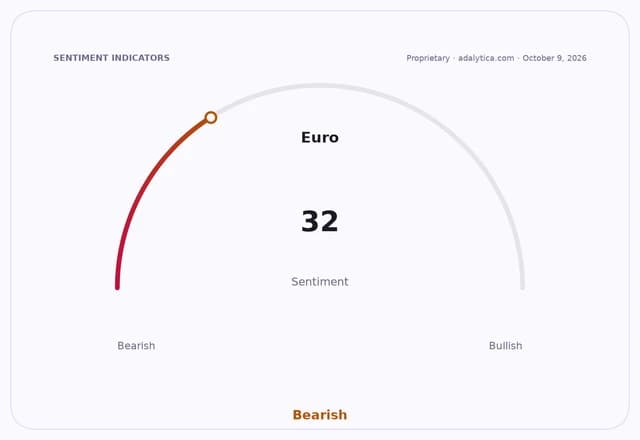
The price action reflects a market that is far from fully settled on the implications. The euro ETF FXE has fallen to $103.50 from an August high near $106.81, while the 50-day moving average sits above the current price and the RSI is deep in oversold territory, a sign sentiment has weakened sharply. The broader Europe ETF VGK has also slipped to $85.43 from $88.21 in mid-September and remains below its 50-day moving average, with momentum still negative. That does not scream collapse; it says investors are pricing caution, not conviction. In this environment, any rise in political fragmentation or anti-immigration policy could keep European assets under pressure relative to U.S. equities.
At the same time, the market may be missing the second-order winners. If Europe becomes more defensive on borders while demographics keep tightening the labor pool, the beneficiaries are not only defense and internal-security names but also firms selling labor substitution: industrial automation, warehouse robotics, AI software, cloud infrastructure and payment platforms that profit from a more digitized, less labor-intensive economy. The longer this political cycle lasts, the more the investment case shifts from cyclical Europe exposure to the toll roads of adaptation — the picks-and-shovels businesses that help companies operate with fewer workers and more control.
There is also a geographic divide investors should watch. The far right is strongest in rural areas and city outskirts, while younger, more urban voters remain comparatively open to diversity and migration. That split reinforces the likelihood of unstable politics rather than a clean ideological swing. In practical terms, Europe may not be heading toward a uniform nationalist bloc; it may be heading toward more polarized coalitions, weaker mainstream parties and repeated policy lurches. That is bad for valuation multiples in domestically exposed sectors and better for companies with pricing power, global revenue and low dependence on European political stability.
The clearest forward catalyst is whether mainstream parties continue absorbing far-right themes rather than defeating them. The panel discussion suggested that has already happened in several countries, meaning the market should no longer treat this as a temporary protest wave. Europe’s identity debate is now an investment variable. The actionable takeaway: stay selective on Europe, favor automation, defense and globally diversified quality names, and be cautious on assets that depend on an easy political path to growth or labor supply.
| Entity | Gains | Losses |
|---|---|---|
| Automation and robotics firms | ▲Labor-substitution demand | ▼ |
| Defense and security stocks | ▲More spending on borders and security | ▼ |
| Globally diversified quality companies | ▲Policy insulation | ▼ |
| Domestic Europe cyclicals | ▲ | ▼Political fragmentation risk |