Mastercard is deepening its push into business banking software by teaming with Extend to let financial institutions offer spend management tools alongside their cards, a move aimed at keeping more corporate payments and working-capital activity inside bank channels.
Mastercard teams with Extend on business banking software
The deal matters because spend management is becoming a higher-value layer of the payments stack, where banks and card networks can earn fees while helping companies control budgets, issue virtual cards and monitor purchases in real time. That is especially relevant as businesses lean harder on digital tools to manage cash flow and as banks look for ways to keep corporate clients from drifting to fintech platforms.
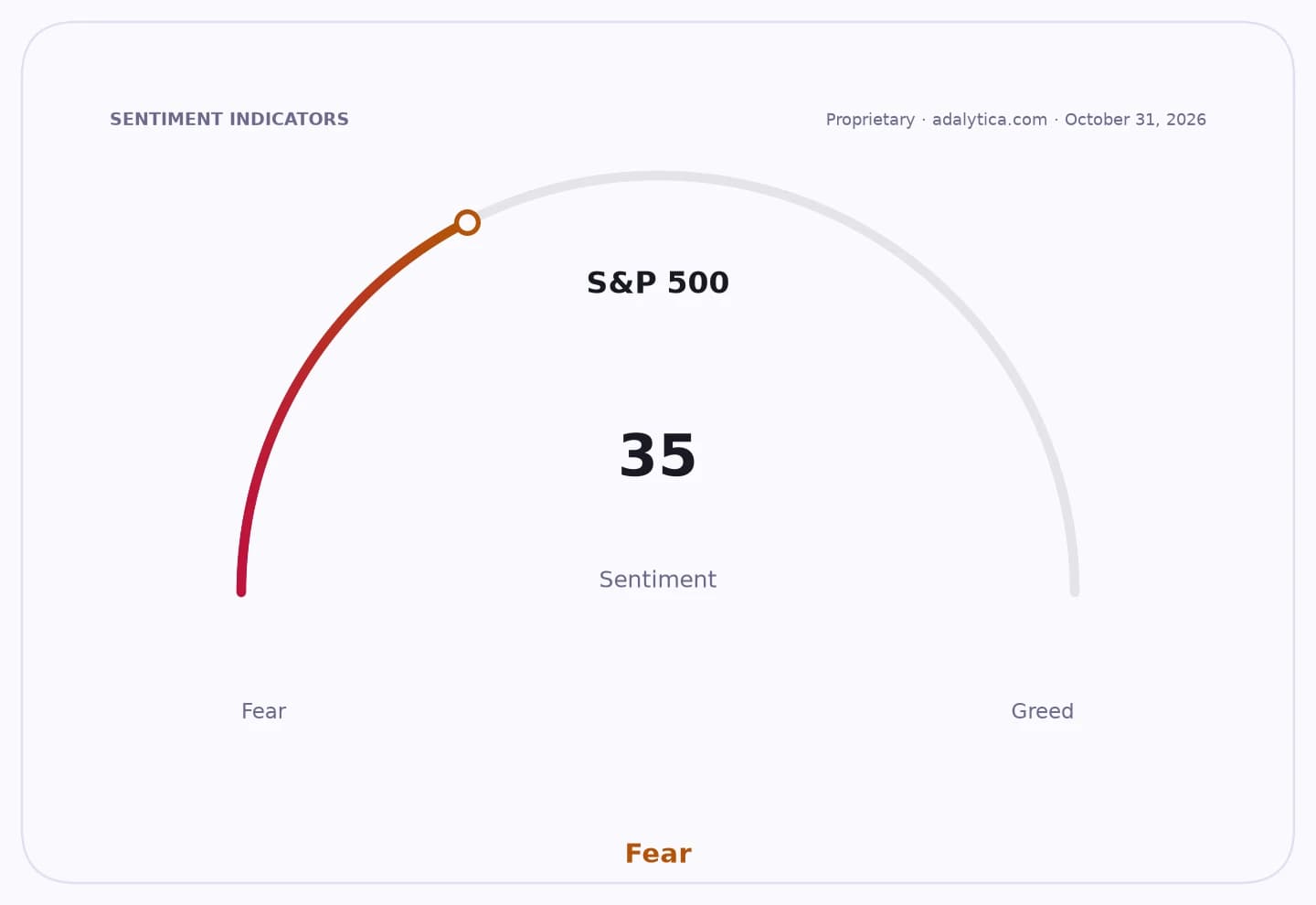
Sentiment Indicators
For Mastercard, the partnership extends a strategy of selling more software and services around the network rather than relying only on transaction volume. Mastercard’s latest stock action suggests investors are still rewarding that mix: the shares closed at $648.10 on Nov. 3, up from $550.19 at the start of December, and remain well above both the 50-day moving average and the 200-day moving average.
The stock has also held up even as technical readings cooled from overbought levels earlier in the year. The relative strength index stood at 69.7 on Nov. 3, down from 97.0 on Oct. 22, while the price stayed near the upper end of its recent Bollinger Band range.
For banks, the partnership offers a faster route into corporate spend tools without building the software in-house. For Mastercard, it reinforces a broader effort to embed itself deeper in enterprise payment workflows, where sticky products can support fee growth and customer retention.
The backdrop is a payments industry that is still benefiting from resilient consumer and business spending, even as investors remain selective about which fintech models can convert usage into durable profits. The next read-through will be whether Mastercard can keep pairing its network with higher-margin software products as competition intensifies from banks, card rivals and fintech specialists.
| Entity | Gains | Losses |
|---|---|---|
| Mastercard | ▲Higher-margin services revenue | ▼Reliance on pure transaction growth |
| Banks | ▲Faster spend-management rollout | ▼Need to build tools in-house |
| Extend | ▲Wider distribution through banks | ▼Less standalone differentiation |
| Fintech rivals | ▲— | ▼More competition for corporate spend tools |