Mercado Bitcoin suspended deposits and withdrawals after a security incident in one of its systems, while Tether said it froze more than 4.5 million USDT tied to the case, underscoring how quickly stablecoin issuers and exchanges are now acting to contain crypto breaches.
Mercado Bitcoin suspends transfers after security incident
Bitcoin
The immediate market significance is less about the dollar amount frozen than the operational response. When an exchange shuts off transfers, it is effectively prioritizing containment over liquidity, a move that can protect customer assets but also interrupts trading flows and raises questions about counterparty risk across the wider crypto market. For investors, the episode reinforces a persistent concern: in digital assets, security events can spread from one venue to another even when the underlying tokens are not broadly compromised.
Sentiment Indicators
Mercado Bitcoin said it identified the incident overnight on November 2 and halted transfers while it investigated and coordinated with authorities. The Brazilian exchange said customers were not financially affected and that no data had been lost, but it did not give a timeline for restoring full service. It later published destination wallet addresses across Bitcoin, Solana, Stellar, Tron and Ethereum-compatible networks to help trace funds, a sign that exchanges are increasingly using on-chain transparency to support recovery efforts.
Tether CEO Paolo Ardoino said the company froze the USDT linked to the case, another example of the issuer’s ability to block token movement at specific addresses. That power has become a key part of stablecoin risk management, allowing issuers to act fast when stolen funds are identified. But it also highlights the centralization risk embedded in a market that is marketed as decentralized: stablecoins can be immobilized by a single company, which may reassure users in an emergency while prompting scrutiny from regulators and crypto purists alike.
The incident lands during a volatile stretch for the sector. Binance has separately said it faced a potential security issue involving roughly $6.3 billion in funds, while BTCPay Server warned users that wallets hosted on affected servers were stolen from in a separate breach. Together, the episodes point to a broader security stress test across crypto infrastructure, from exchanges to payment software to token issuers.
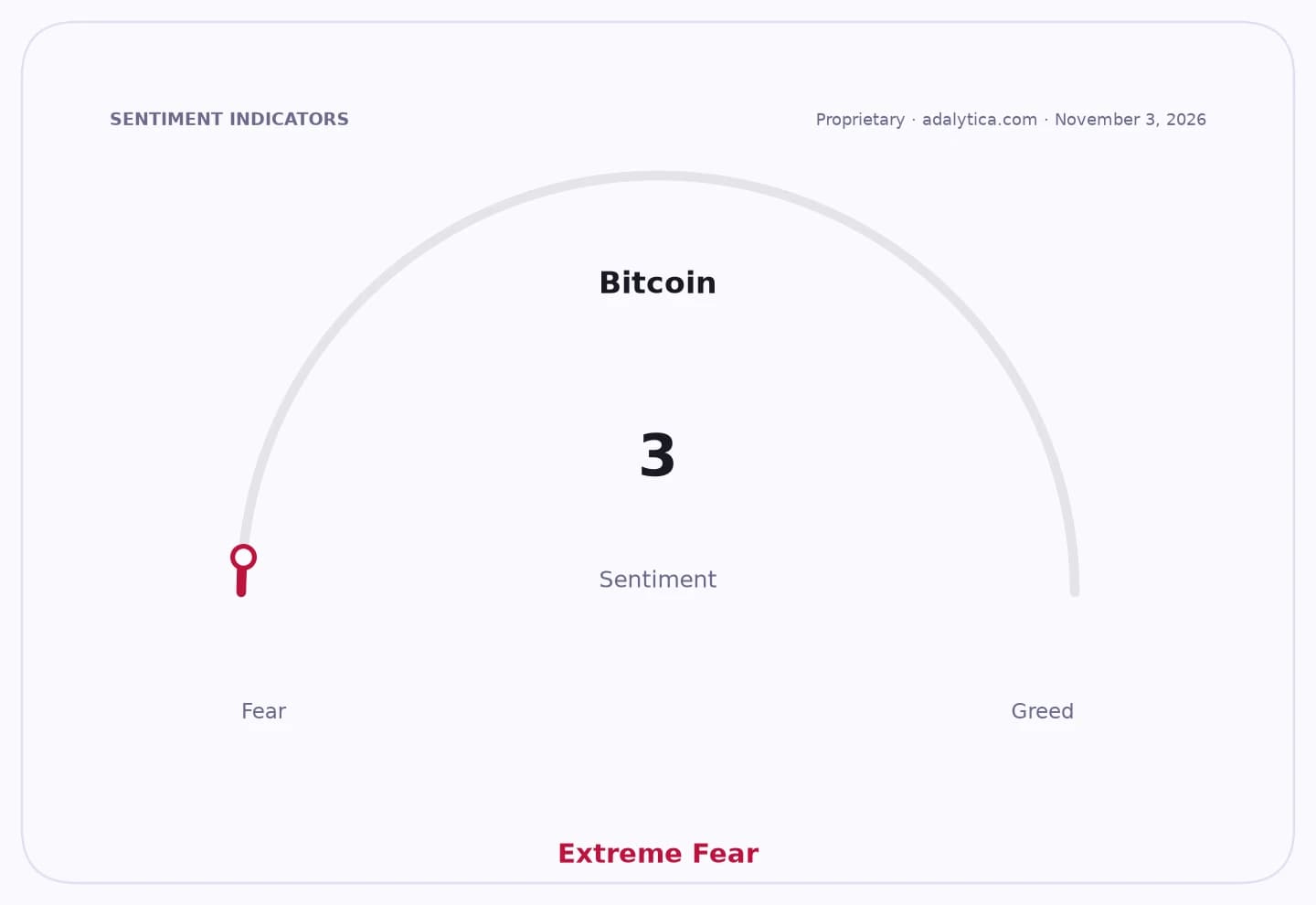
Markets have already shown signs of strain. Bitcoin has been trading below recent highs, and the Adalytica Bitcoin Fear & Greed Index showed “Extreme Fear,” while USDT trade signals pointed to sharp deterioration in sentiment. Even though Tether’s token remained pegged at $1 in the data provided, the broader read-through is that repeated freezes and exchange outages can tighten liquidity conditions, reduce risk appetite and push more activity toward venues and counterparties perceived as safer.
For investors, the key question now is whether this becomes another isolated incident or part of a pattern that forces exchanges and stablecoin issuers to harden controls further. If Mercado Bitcoin restores operations quickly and funds are traced, the damage may be contained. If not, the case could add to pressure on trading volumes, compliance costs and the premium investors place on exchanges with stronger custody and incident-response capabilities.
| Entity | Gains | Losses |
|---|---|---|
| Tether | ▲Risk-control credibility | ▼Decentralization optics |
| Mercado Bitcoin customers | ▲Potential asset protection | ▼Temporary loss of transfers |
| Crypto exchanges | ▲Incentive to improve security | ▼Higher operational scrutiny |
| Hackers / illicit actors | ▲None | ▼Frozen funds, traceability |