Mark Zuckerberg’s 6,500-word defense of Meta’s unrestricted AI push matters because it turns a philosophical debate into an investment case: Meta is telling investors it will keep spending aggressively on frontier AI, even if that means near-term margin pressure and more volatility in the stock.
Meta AI spending keeps capex trade alive
That is the right frame for shareholders. Meta is no longer just a social-media ad platform with an AI side project. It is becoming one of the industry’s most important AI capital allocators, and the market is starting to price it that way. The company’s latest filing already warned that its artificial intelligence initiatives could reduce cash flow, operating margin and profitability, while leaving open the possibility that its AI bets simply do not work. Zuckerberg’s manifesto is the public version of that same message: Meta intends to stay in the race, and it does not want safety-first constraints slowing it down.
For investors, that creates a classic barbell opportunity. On one side is the risk that Meta overbuilds and compresses earnings power in the near term. On the other is the far larger prize: if Meta’s AI stack improves ad targeting, content ranking, creator tools and eventually consumer-facing AI products, the company can widen its moat while driving another step-up in monetization. The market underestimates how much leverage sits inside that formula. Meta does not need every AI initiative to work. It needs a few high-impact ones to reaccelerate engagement and ad yield across a user base that remains enormous.
The price action says the market is still trying to digest that trade-off. Meta’s shares have swung violently over the past few months, falling as low as $525.23 before recovering into the high-$500s, while standard technical gauges have flashed extreme overbought and oversold readings in both directions. That kind of churn is what happens when a stock becomes a proxy for a bigger theme: not just Meta earnings, but the durability of the entire AI capex cycle.
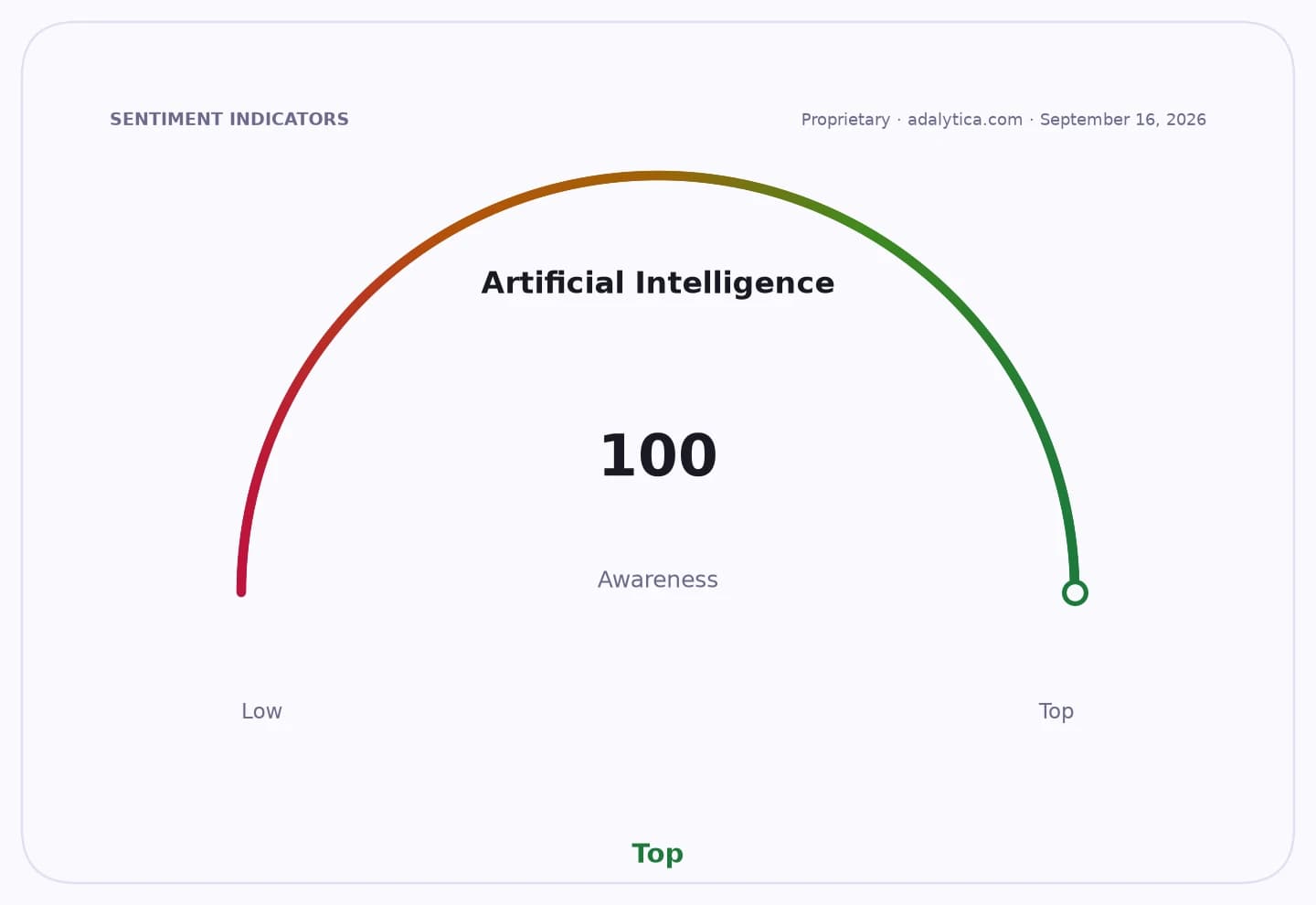
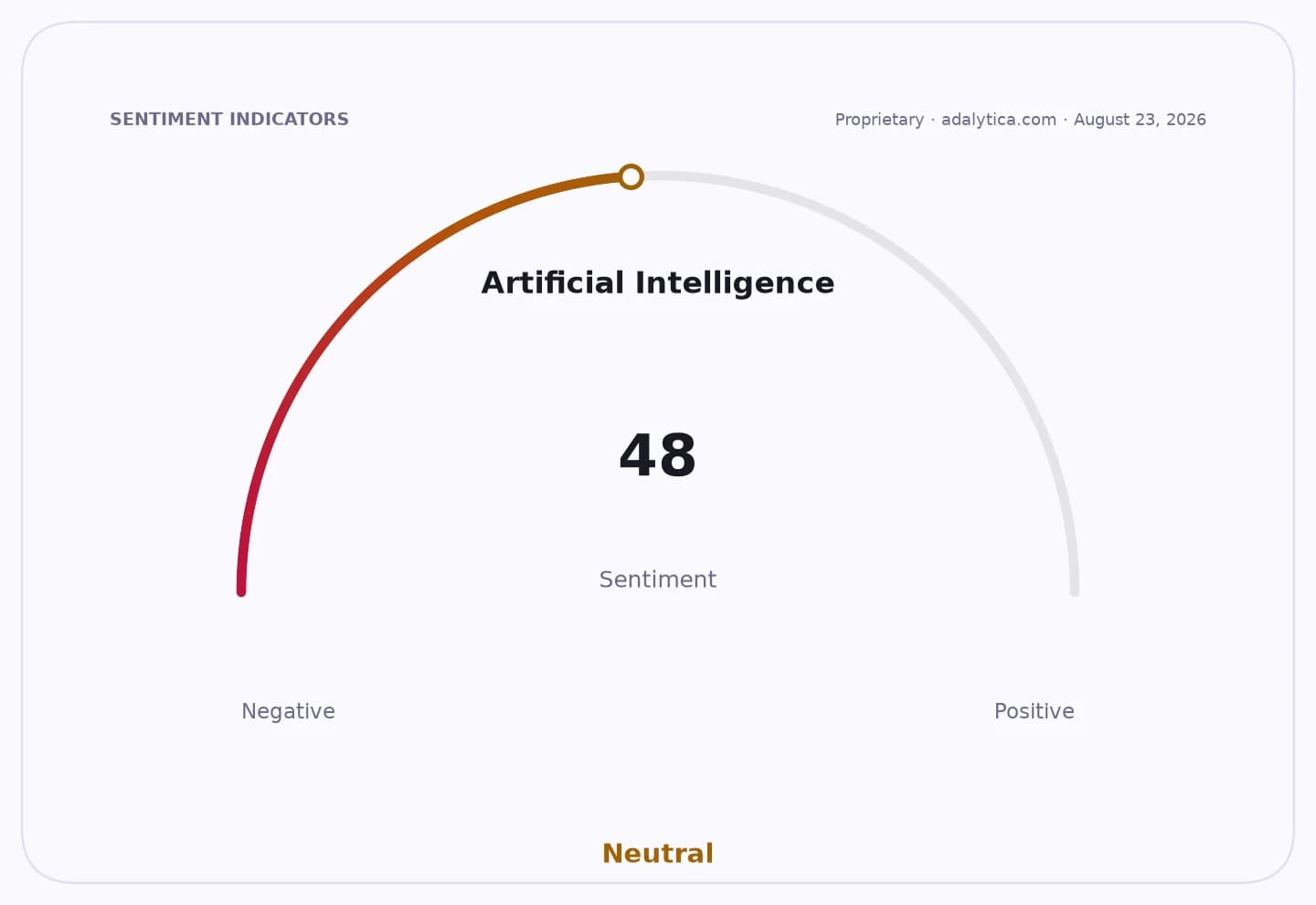
Artificial Intelligence vs METAadalytica.com
Explore this data interactively — full history, time series and cross-market comparisons.Open AlphaPulse
That makes Meta relevant well beyond Silicon Valley. Its spending shapes demand for GPUs, networking gear, data-center power, and the industrial plumbing behind the AI economy. Every dollar Zuckerberg commits to compute and model training is another dollar flowing through the supply chain that benefits the picks-and-shovels names of the AI buildout. Microsoft and Alphabet are making the same broad argument in their own filings: AI requires heavy investment, faces regulatory risk, and could hit near-term returns before it pays off. Meta’s manifesto simply makes the case more aggressively, and more publicly.
The market has also grown more sensitive to the governance side of AI, which is why Zuckerberg’s anti-restraint posture matters. A lighter-touch approach may speed product rollout and keep Meta ahead in the consumer AI race, but it also increases the odds of regulatory pushback around data use, frontier model release and content liability. Investors should expect more headline risk, not less. Yet for long-term holders, the bigger question is whether Meta can convert AI scale into an enduring operating advantage before rivals or regulators slow the pace.
The best way to own this story is not to treat Meta as a simple advertising stock. It is an AI infrastructure and distribution platform with optionality layered on top. If the company keeps spending, the beneficiaries include the suppliers that sell chips, servers, networking and cloud capacity. If the strategy works, Meta itself deserves a premium multiple for turning that capex into better ad performance and new revenue streams. If it does not, the stock will likely re-rate lower as margin pressure catches up.
My thesis is straightforward: investors should see Zuckerberg’s manifesto as confirmation that the AI spend cycle is still early, not late, and that Meta is determined to remain one of its anchor buyers. That keeps the AI trade alive, even if the path is messy. The opportunity is to position for the infrastructure winners now and stay selective on Meta itself until the market gets clearer proof that the buildout is converting into durable earnings power.
| Entity | Gains | Losses |
|---|---|---|
| Meta | ▲AI optionality | ▼Near-term margins |
| AI suppliers | ▲Capex demand | ▼Slower spend cycles |
| Long-term shareholders | ▲Platform moat | ▼Regulatory uncertainty |
| Shorts on AI spend | ▲Volatility trade | ▼Spending persistence |