AI can only go so far in policing online abuse, and that matters for Meta because content moderation remains one of the biggest operational and regulatory risks for social platforms as they scale.
Meta content moderation risks and compliance costs
The core problem is that automated systems are best at spotting volume, repetition and patterns, while the hardest calls still depend on context, intent and local norms. In large communities, spam, harassment and coordinated abuse can move faster than human moderators can review, but rules that are too aggressive risk false positives, especially around sarcasm, political speech and election periods.
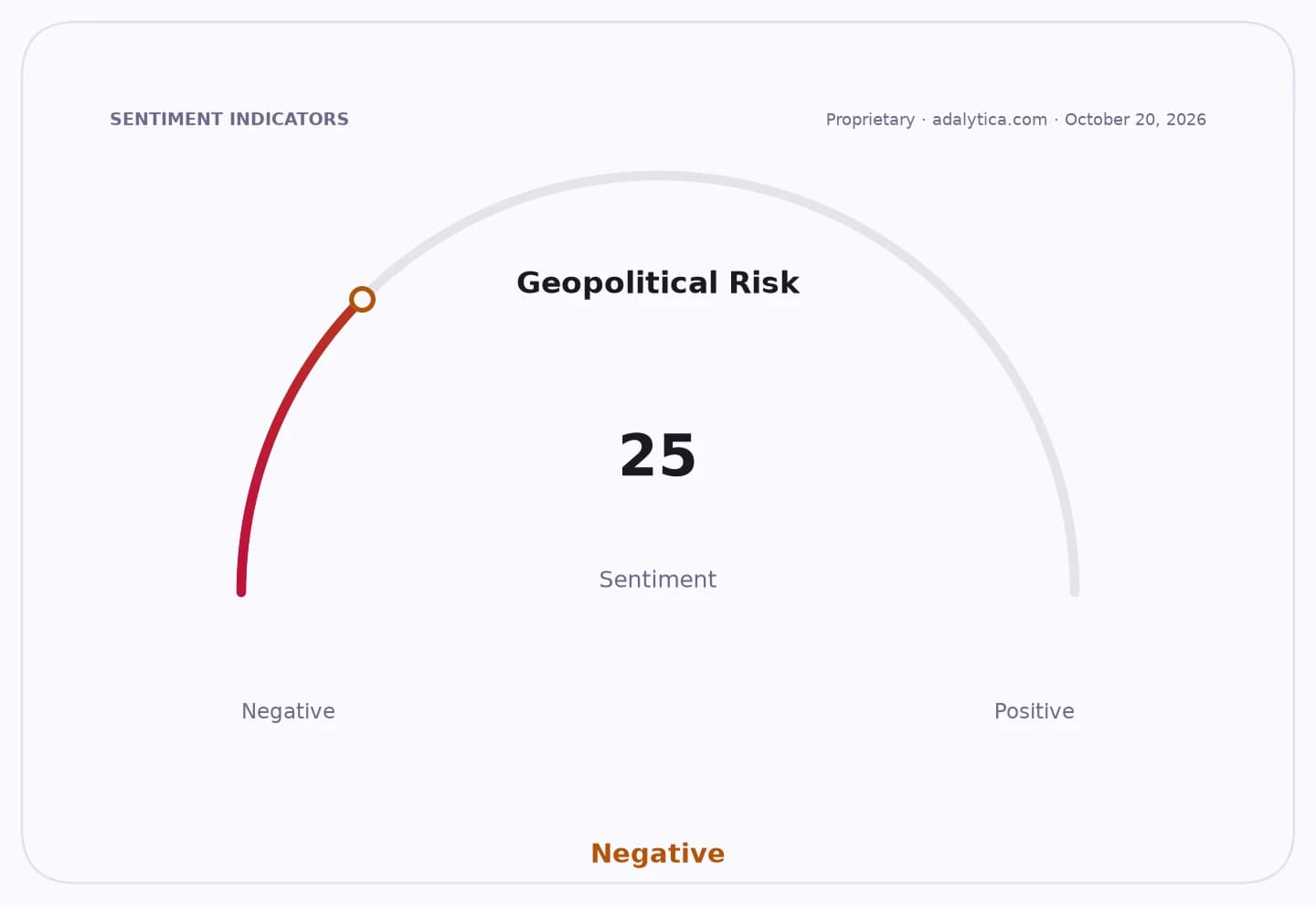
Sentiment IndicatorsⓘProprietary · adalytica.com · October 23, 2026
This is a snapshot — live sentiment, awareness and momentum for 130+ markets update continuously in the dashboard.Open AlphaPulse
That tension is rising at the same time Meta faces renewed pressure from watchdogs and election-focused groups to tighten enforcement and make moderation decisions more transparent. CyberWell has urged platforms to do more to curb antisemitic content, while an Elections MPF has called on Meta to protect free expression and disclose how it moderates content during vote cycles.
For investors, the issue lands in the middle of a familiar trade-off: stronger safety tools can reduce brand and legal risk, but they also raise operating costs and can trigger criticism from both regulators and users. Meta’s latest filing says legislation regulating content on its platforms could force product or business-practice changes, and that user behavior viewed as hostile, inauthentic or misleading can damage its brands.
The stakes are bigger because moderation failures can quickly turn into enforcement action, advertiser unease or political blowback. The company has increasingly leaned on automation to screen for spam, duplicate posts, abnormal account behavior and other signals, but the article’s central point is that human judgment is still needed when meaning depends on history or relationship context.
That makes moderation infrastructure, not just models, the real story. Large platforms need systems that can surface the right cases, show moderators why an issue was flagged and learn from reversals, rather than pretending every harmful or disputed post can be handled by a single AI rule.
Meta shares have been volatile in recent weeks, underscoring how closely investors are watching execution risks outside the core ad business. The stock closed at $642.62 on Oct. 23, below its 50-day moving average of $663.58, with the RSI at 24.3, a conventional technical reading that points to oversold conditions.
The next catalyst is whether Meta and peers can prove their moderation systems are accurate, scalable and defensible as election scrutiny, hate-speech complaints and AI-related legal obligations keep piling up.
| Entity | Gains | Losses |
|---|---|---|
| Meta | ▲Better risk controls | ▼Higher compliance costs |
| Regulators & watchdogs | ▲More transparency | ▼Less platform discretion |
| Users facing abuse | ▲Safer communities | ▼More automated removals |
| Advertisers | ▲Lower brand-safety risk | ▼Ongoing policy uncertainty |