The US Treasury has moved to cut MEXC Global off from the American financial system, a decisive escalation that could tighten compliance across the offshore crypto industry and force investors to rethink where liquidity, counterparty risk and regulatory exposure really sit.
MEXC Global Cut Off From US Financial System
The action, announced by the Treasury’s Financial Crimes Enforcement Network, or FinCEN, bars US financial institutions from processing any transactions or transfers to or from MEXC Global once the order takes effect 30 days after publication in the Federal Register. That makes the exchange effectively radioactive for dollar-based finance and puts a hard legal wall between MEXC and the world’s deepest capital market.
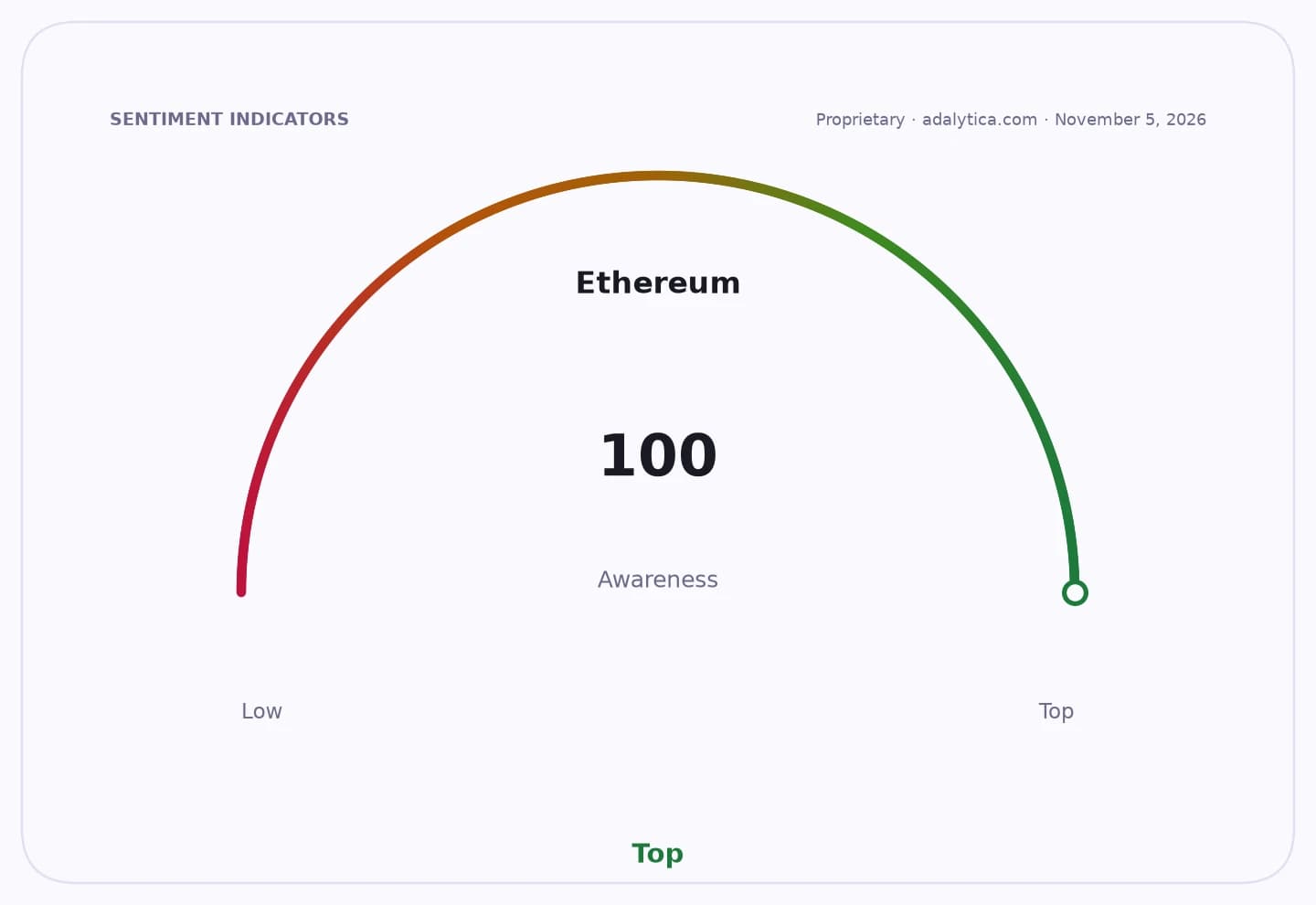
Sentiment Indicators
Washington says the platform processed at least $16 billion in illegal transactions between May 2021 and May 2026, linking the activity to sanctions evasion and cybercrime. MEXC, founded in 2018, is among the world’s 20 largest digital-asset exchanges, with daily trading volume above $1 billion and reserves around $5 billion as of September. In plain terms, this is not a niche enforcement case; it is a direct hit on a meaningful player in global crypto market plumbing.
For investors, the message is bigger than one exchange. The US is showing it can weaponize access to the dollar system against crypto intermediaries it deems tainted, and that raises the bar for every offshore venue still relying on bank relationships, payment rails and institutional counterparties. The immediate pressure will fall on firms that route stablecoin liquidity, custody, market-making and cross-border settlement through loosely supervised platforms.
That is why the market should care beyond the headlines. Crackdowns like this tend to accelerate the migration of trading flow toward exchanges with stronger compliance footprints, deeper fiat links and clearer regulatory standing. Coinbase, the most obvious US-listed beneficiary, may not capture every displaced dollar, but any tightening of the offshore ecosystem strengthens the case for regulated venues, cleaner counterparties and more institutional participation. It also reinforces the premium on exchanges, brokers and custodians that can prove they are not one enforcement action away from being severed from banking access.
The timing matters too. Crypto remains vulnerable to trust shocks, and the sector is still dealing with the aftershocks of hacks, freezes and counterparty failures. That keeps leverage in check, raises funding costs and makes investors more selective about where they place assets. In that environment, regulation is not just a threat; it is a sorting mechanism.
The investable takeaway is straightforward: the market underestimates how much value accrues to compliant infrastructure when regulators go after offshore weak links. The best positioned names are the ones with US banking access, institutional credibility and regulatory optionality, while exchanges living on the edge of the system face a rising probability of being cut off, de-risked or sidelined.
| Entity | Gains | Losses |
|---|---|---|
| Coinbase (COIN) | ▲Regulated flow migration | ▼Offshore rivals |
| MEXC Global | ▲— | ▼Dollar access |
| US crypto regulators | ▲Enforcement leverage | ▼— |
| Offshore exchanges | ▲— | ▼Banking relationships |