Mexico’s formal labor market expanded to a record 22.93 million jobs in September, reinforcing the case that the economy still has enough momentum to support domestic demand even as growth remains uneven and the peso-sensitive manufacturing cycle cools.
Mexico formal payrolls hit record 22.93 million
The Instituto Mexicano del Seguro Social said employers added 128,803 positions in the month, taking year-to-date job creation to 410,200 and leaving payrolls 355,594 higher than a year earlier. Just as important for investors, 87.1% of the jobs on record were permanent, with permanent positions also reaching an all-time high of nearly 20 million. That matters because permanent hiring tends to be a cleaner read on underlying business confidence than temporary work.
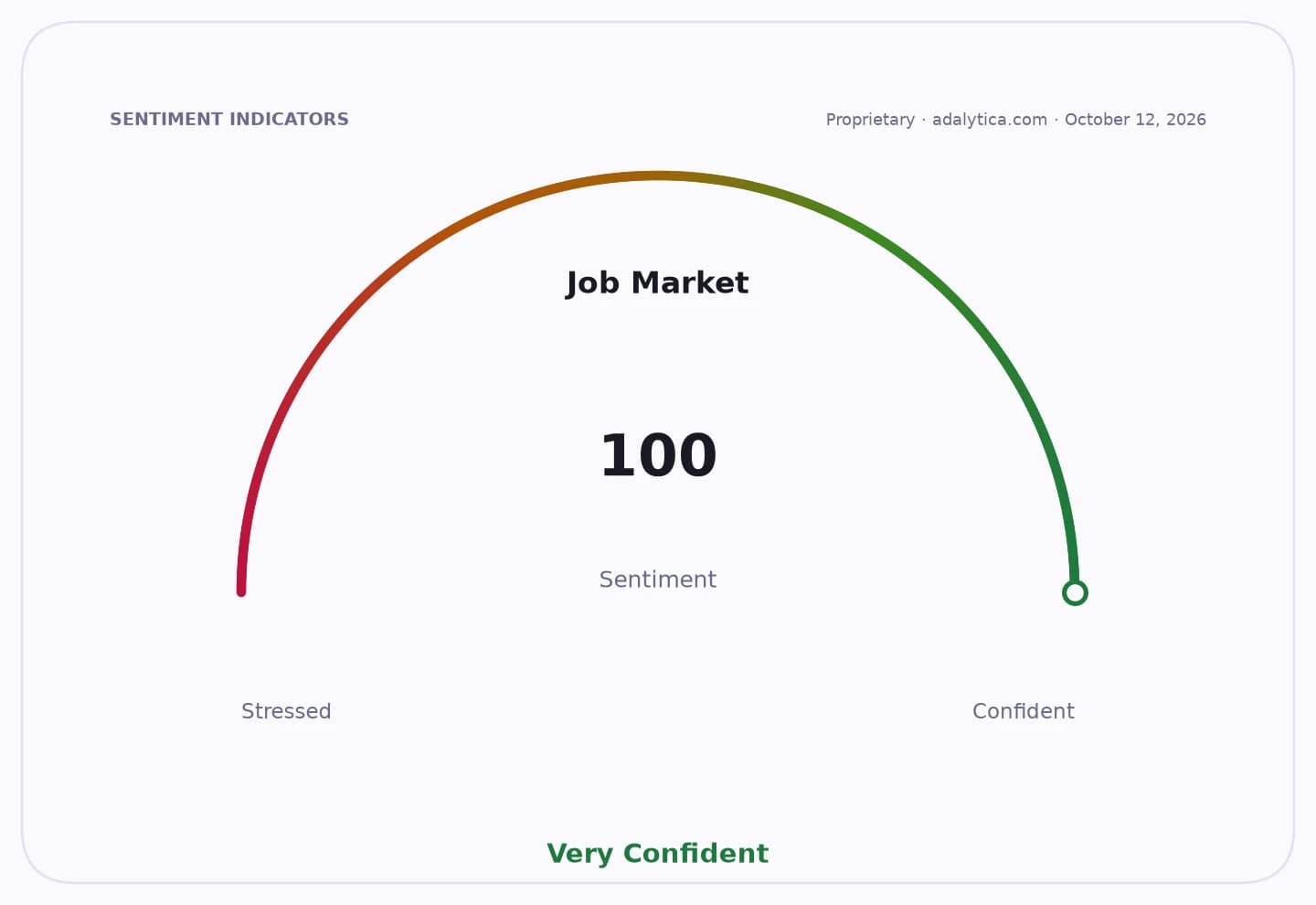
Sentiment IndicatorsⓘProprietary · adalytica.com · October 10, 2026
This is a snapshot — live sentiment, awareness and momentum for 130+ markets update continuously in the dashboard.Open AlphaPulse
The strongest annual gains came from extractive industries, transport and communications, and social services, while Baja California, Quintana Roo, Oaxaca and Tabasco all posted growth above 5%. That mix points to a labor market being supported not just by consumer-facing activity, but by logistics, energy-linked investment and regional service economies. For Mexico, that helps cushion the blow from weaker external demand and keeps wage income flowing into retail, housing and domestic consumption.
For investors, the message is straightforward: Mexico’s employment backdrop is still a tailwind for companies tied to household spending, freight, tourism and local services, even if the broader macro picture remains choppy. Exchange-traded funds such as the iShares MSCI Mexico ETF, or EWW, have already reflected investor interest in that story, though technical readings show the fund has been volatile after a strong run. The recent pullback does not erase the bigger theme — a labor market with record formal employment and a high share of permanent jobs is the kind of foundation that can sustain earnings for domestic winners.
The risk is that job growth eventually slows if exports and industrial output fail to reaccelerate. But for now, Mexico’s record payrolls argue against a hard landing narrative and suggest the market may be underestimating the durability of the country’s internal demand cycle. The best way to play it is to stay focused on the beneficiaries of steady wage growth, infrastructure-heavy activity and nearshoring spillovers rather than waiting for a cleaner macro headline.
| Entity | Gains | Losses |
|---|---|---|
| Mexican consumers | ▲Steadier wage income | ▼Less pressure relief from labor weakness |
| Domestic retailers/services | ▲Stronger demand | ▼Slower spending if hiring cools |
| Logistics/transport firms | ▲More freight and trade activity | ▼Weak export volumes if global demand softens |
| Mexico-focused ETFs/investors | ▲Support for earnings thesis | ▼Volatility if growth stalls |